Types of Floating Fish Feed Extruder Machines: The Ultimate Comparison Guide
Leave a message

In modern aquaculture, the type of fish feed extruder you choose directly impacts your Feed Conversion Ratio (FCR), production cost, and fish growth rate. Fish feed extruders are primarily classified by their processing method (Dry vs. Wet) and mechanical structure (Single vs. Twin-screw).
Quick Overview: Which Extruder Do You Need?
- Best for Startups/Small Farms: Dry Type Single-Screw Extruder (Low cost, no boiler).
- Best for Commercial Factories: Wet Type Single-Screw Extruder (High output, premium quality).
- Best for High-End/Specialty Feed: Twin-Screw Extruder (High fat/protein, precise control).
1. Classification by Processing Method: Dry vs. Wet
The most common way to categorize these machines is by whether they use steam during the extrusion process.
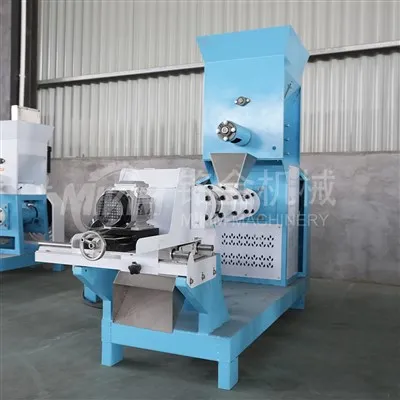
Dry Type floating Fish Feed pellet making machine
The dry type floating fish food extruder machine generates heat through high-speed screw friction and barrel pressure.
- Boiler Required: No.
- Key Advantage: Compact, easy to operate, and significantly lower initial investment.
- Ideal For: Small-scale production (<500kg/h) and farm-based feed making.

wet Type fish feed pellet extruder machine
The wet Type floating fish feed pellet maker machine includes a pre-conditioner that injects steam and water to pre-cook the raw materials.
- Boiler Required: Yes.
- Key Advantage: Achieve >90% starch gelatinization, better floating stability, and higher production capacity (up to 15t/h).
- Ideal For: Industrial feed plants and commercial-grade floating fish feed.

2. Classification by Mechanical Structure: Single vs. Twin-Screw
This refers to the number of shafts inside the extrusion barrel.
single screw floating fish feed making machine
Uses one screw to convey and compress material.
- Pros: Lower cost, simpler maintenance, and works well for standard floating feed.
- Cons: Lower mixing efficiency; struggles with recipes containing high levels of fresh meat or fat.
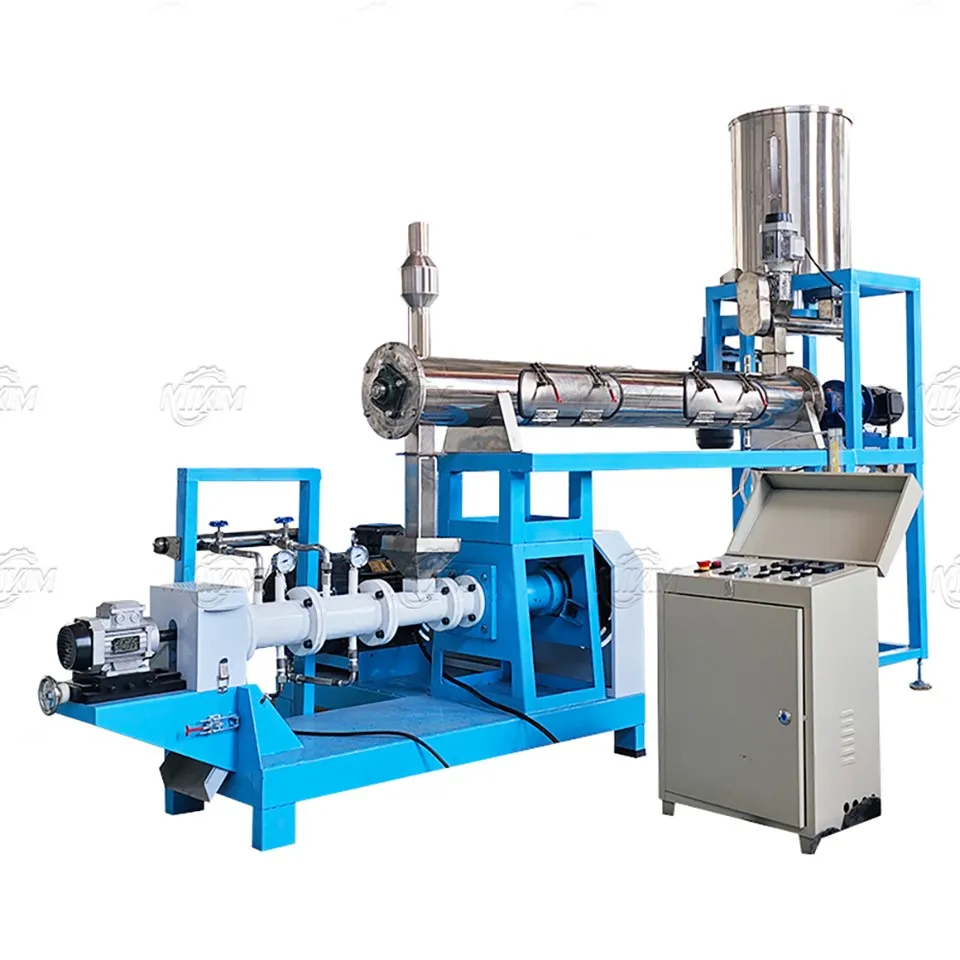
Twin screw floating fish feed extruder machine
Uses two intermeshing screws that rotate together.
- Pros: Superior mixing, self-cleaning ability, and handles complex formulas (high fat/high protein) with ease.
- Cons: High initial cost and more technical maintenance.
- Ideal For: Shrimp feed, premium pet food, and high-energy aquafeed.

3. Classification by Feed Performance: Floating vs. Sinking
While most modern extruders can produce both by adjusting the formula and die, some are optimized for specific densities.
Floating fish feed pellet extruder machine: Uses high temperature and high expansion to create porous, low-density pellets. Essential for surface feeders like Tilapia and Catfish.
Sinking shrimp feed pellet making machine: Uses lower expansion and higher pressure to create dense pellets. Essential for bottom feeders like Shrimp, Crab, and Sturgeon.
4. Technical Comparison Table
| Machine Type | Heating Method | Capacity Range | Best For | Boiler Needed? |
| Dry single screw fish feed extruder machine | Friction | 40kg - 1t/h | Startups/Farms | No |
| Wet single screw floating fish extruder machine | Steam + Friction | 1t/h - 10t/h | Commercial Mills | Yes |
| Twin screw floating fish feed pellet extruder machine | Steam + Friction | 0.5t/h - 15t/h | Premium/High-fat | Yes |
5. How to Choose the Right Machine?
Choosing the right type depends on your production goals and budget:
- Scale of Operation: If you produce for your own farm, a Dry Type is the most economical choice. If you sell to the market, a Wet Type is necessary for quality.
- Species Requirements: For standard Tilapia feed, a single screw floating fish food pellet maker machine is sufficient. For sensitive species like Shrimp or Salmon, a Twin-Screw provides better nutrient absorption.
- Local Regulations: Do you have the permit to operate a steam boiler? If not, you must choose a Dry Type machine.
6. FAQ
Can I make both floating and sinking feed with the same extruder?
Yes. Most fish feed extruders can produce both. By changing the screw configuration, adjusting the moisture level, and using a different discharge die, you can control whether the pellets float or sink.
Is a twin-screw extruder worth the extra cost?
It depends on your formula. If you are using high fresh meat content or need to produce very small pellets (like fry feed), a twin-screw extruder is worth the investment because of its precise control and superior mixing.
Do I need a dryer after using a floating fish feed pellet maker machine?
Yes. Regardless of whether you use a dry or wet extruder, the pellets come out with 15-25% moisture. To prevent mold and ensure shelf life, you must use a pellet dryer to reduce moisture to below 10%.
Why does my floating feed sink?
This usually happens due to insufficient starch gelatinization. If the temperature is too low or the starch content in your formula is too low, the pellets won't expand enough to float. Using a wet type extruder often solves this issue.
Which is easier to maintain, dry or wet extruder?
The dry type floating fish food pellet extruder machine is much easier to maintain because it has fewer components (no boiler or steam pipes). However, the wear parts (screws) in a dry extruder may wear out faster due to higher friction.
Conclusion
Understanding the different types of fish feed extruder machines is the first step toward a successful aquaculture business. Whether you prioritize the low cost of dry extrusion or the high quality of wet extrusion, selecting the right equipment will ensure your feed is both nutritious and cost-effective.
Need a customized production line?
Company Profile