


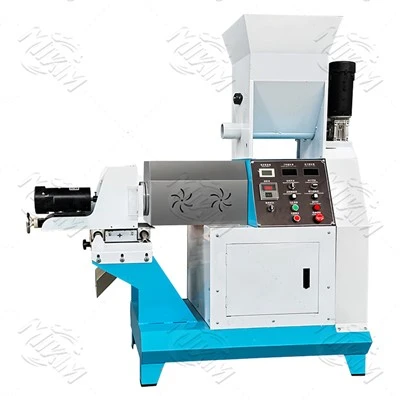
What Is Feed extruder machine?
An Feed extruder is a type of machinery used in manufacturing to create products by forcing materials through a die to shape them into a desired form. The process involves feeding a material into the extruder, where it is subjected to high pressure and temperature. The material is then pushed through a specific opening in the die to create a continuous profile. Extruders are versatile and can process a wide range of materials, including plastics, rubber, food, and metals, making them integral to industries such as construction, automotive, and packaging. Their efficiency and precision in shaping materials have made them a staple in modern production lines.
200kg/h floating fish feed pellet mill testing before packing
See Our Fish Feed Extruders in Action

Advantages of Extruder Machine
Consistency And Precision
Fish feed machine offer high levels of consistency and precision. By controlling the pressure, temperature, and feed rate, operators can achieve precise control over the shape, size, and texture of the extruded product. This precision is essential for maintaining product quality and ensuring consistent performance across different batches.
Tailored Equipment for Optimal Animal Nutrition
From high-protein shrimp feed to specialized floating fish pellets, our industrial aqua feed systems process nutrient-rich formulations into water-stable feed with precise float/sink characteristics. Engineered for optimal digestibility and minimal fines, our aqua feed mill equipment helps major aquaculture operations achieve consistent FCR improvements across species and growth stages.

Efficiency
Fish feed pellet machine are designed for high-volume production, making them extremely efficient. They can process large quantities of material quickly, often at rates exceeding those of manual or semi-automatic methods. This efficiency not only saves time but also reduces production costs, making extruders a cost-effective choice for many industries.
Customizability
Fish feed production machine can be customized to meet specific production requirements. Whether it's modifying the die to create a unique shape or adjusting the feed rate to optimize production rates, extruders can be tailored to fit unique needs. This customizability allows for a greater degree of creativity and flexibility in the manufacturing process.

Automation And Integration
Fish food making machine often feature automation features that simplify the production process. These features can include automatic feed systems, temperature control, and even integrated robotics for loading and unloading. Automation not only reduces the need for manual labor but also improves production consistency and reduces the potential for human error.
Quality Control
Extruder machines provide excellent quality control options. By monitoring and adjusting key parameters like pressure, temperature, and feed rate, operators can ensure consistent product quality throughout the production process. This level of quality control is essential for meeting strict industry standards and ensuring customer satisfaction.




Why Choose Us
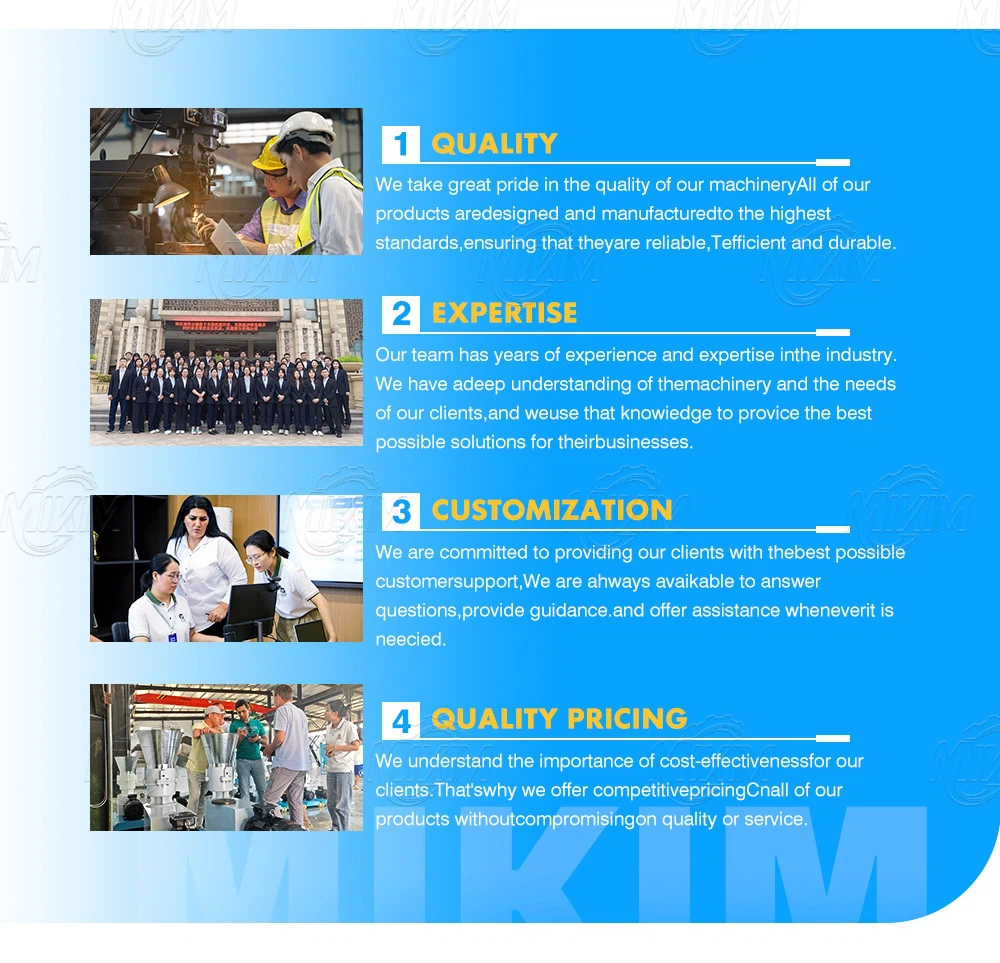
Advanced Equipment
A machine, tool or instrument designed with advanced technology and functionality to perform highly specific tasks with greater precision, efficiency and reliability.
High Quality
Our products are manufactured or executed to a very high standard, using the finest materials and manufacturing processes.


Professional Team
Our professional team collaborates and communicates effectively with each other, and is dedicated to delivering high quality results. We are capable of handling complex challenges and projects that require our specialized expertise and experience.
Customized Services
We understand that each customer has unique manufacturing needs. That’s why we offer customization options to cater to your specific requirements.
One-stop Solution
At our manufacturing facilities, we provide a complete package that includes everything required to get you started, including training, installation and support.And we will provide you with wearing parts and send professional technicians to your country every year.
24h Online Service
We try and respond to all concerns within 24 hours and our teams are always at your disposal in case of any emergencies.

Types of Extruder Machine
Single Screw Extruder
A single screw floating fish food pellet maker machine is the simplest and most common type of extruder. It consists of a barrel with a single screw conveyor inside. The material to be extruded is fed into the hopper and then pushed through the die by the rotation of the screw. The screw design and speed can be adjusted to achieve the desired output. Single screw extruders are widely used in the plastics industry for producing pipes, sheets, and profiles.


Twin Screw Extruder
A Twin screw floating fish food extruder machine consists of two intermeshing screws that rotate in opposite directions. This type of extruder offers better mixing and deaeration capabilities than a single screw extruder. It is often used for processing sticky, high-viscosity materials, or those that require complex mixing and reactions. Twin screw extruders are commonly used in the food, pharmaceutical, and chemical industries.


Dry type Extruder
A Dry Type floating fish feed pellet extruder machine is a continuous screw-type processing equipment that uses the material's own moisture content and relies on the friction, shearing, heating, and high pressure generated by the screw rotation to transport, mix, melt, plasticize, expand, or shape the material within the barrel.


Wet type Extruder
A wet Type floating fish feed pellet processing machine is a continuous processing equipment that transports, mixes, shears, and extrudes materials under high moisture and humid conditions, utilizing the mechanical force and extrusion pressure generated by a rotating screw. It differs from traditional "dry extrusion" in that it completes processing while the material is still moist. It is widely used in feed, food, pharmaceutical, chemical, and environmental protection industries.


How to Store Extruder Machine?
Cleanliness Is Key
Before storing the extruder machine, it is essential to clean it thoroughly. Remove any residual material from the barrel, screw, and dies. Use appropriate cleaning agents and solvents recommended by the machine manufacturer to avoid damaging sensitive components. Wipe down the exterior of the machine with a clean cloth to remove dust and dirt.
Dry Environment
Store the extruder machine in a dry environment to prevent corrosion and rust. Humidity can lead to condensation on metal surfaces, which can cause long-term damage. If possible, keep the storage area climate-controlled to maintain optimal humidity levels.
Protection From Dust And Debris
Cover the extruder machine with a breathable dust cover to protect it from debris and contaminants. This will prevent dust from settling on the machine and entering the moving parts, which could potentially cause wear and tear.
Lubricate Moving Parts
Apply a thin layer of lubricant to all moving parts of the extruder machine, including the screw, drive mechanisms, and gears. This will help prevent rust and maintain the smoothness of movement when the machine is next in use.
Secure the machine
Ensure that the extruder machine is securely fastened to a stable surface to prevent tipping or shifting during storage. Use appropriate tie-downs or weights to keep the machine stable.
Avoid direct sunlight
Direct sunlight can cause fading and deterioration of plastic components. Store the extruder machine in a shaded area or use uv-resistant covers to protect it from sun damage.
Temperature control
Avoid storing the extruder machine in extreme temperatures. Both very high and very low temperatures can cause materials to expand or contract, leading to warping or cracking of components.
Regular inspections
Even when stored, the extruder machine should be inspected regularly. Check for signs of corrosion, rust, or any other damage that may have occurred during storage. Ensure that all moving parts are still well-lubricated and that there is no accumulation of dust or debris.
Application of floating fish feed extruder machine

The floating fish feed extruder machine is widely used in various floating fish feed factories, aquatic feed factories, fish farms, pet feed mill, etc. mainly used for processing sea fish feed, ordinary fish feed, special fish (sea bass and eel), not only for floating fish feed factories, but also for other types of aquatic feed (shrimp, crab, and shellfish) and raw material pretreatment (soybean extrusion, cottonseed extrusion).

Precautions When Using Extruder Machine
Machine inspection
Before starting the extruder, perform a visual inspection of the machine to check for any signs of wear, damage, or misalignment. Ensure that all components, such as screws, barrels, and dies, are securely fastened and in good condition.
Safe material handling
Use proper techniques for loading and unloading materials into the extruder. Prevent dust or particles from the material from becoming airborne, which can be harmful to inhale and can affect machine performance.
Temperature control
Monitor the temperature inside the extruder closely. Overheating can degrade the material or damage the machine. Conversely, running the machine at too low a temperature can result in poor extrusion quality or incomplete melting of the material.
Emergency procedures
Be familiar with the machine's emergency stop mechanisms and know how to quickly power down the equipment in case of an emergency. Keep emergency exits clear and accessible.
Maintenance schedule
Follow a regular maintenance schedule to inspect and replace worn parts, clean the machine, and perform any necessary adjustments. Regular maintenance reduces the risk of unexpected failures and downtime.
Electrical safety
Handle electrical components with care. Ensure all electrical connections are secure and grounded properly to prevent shocks or fires. Do not attempt to modify or repair electrical components without the proper qualifications and tools.
Material Compatibility
The first step in choosing an extruder machine is to determine the type of material you will be processing. Different materials require different types of extruders, such as single screw, twin screw, or ram extruders. Each type has its own unique set of advantages and limitations, so it's important to choose an extruder that is compatible with your material.
Output Requirements
Consider the volume of material you need to process and the desired output rate. Higher output rates typically require larger, more powerful extruders, which can also be more expensive. It's important to balance the output requirements with the available budget and space constraints.
Final Product Specifications
Think about the final product specifications, such as the size, shape, and texture of the extruded product. The type of die and screw design will greatly influence the final product quality, so choose an extruder with the appropriate features to achieve the desired results.
Energy Efficiency
Energy consumption is a major factor in the operating cost of an extruder machine. Look for energy-efficient models that offer high performance with lower power consumption. Consider the long-term benefits of investing in an energy-efficient machine versus the initial cost savings of a less efficient model.
Quality And Reliability
When selecting an extruder machine, it's important to choose a reputable brand with a track record of quality and reliability. Look for manufacturers who offer a comprehensive warranty and excellent customer support. Reading reviews and testimonials from other customers can also provide valuable insights into the performance and durability of the machine.
Customization And Configuration Options
Consider the customization options available for the extruder machine. Some manufacturers offer a range of configurations and options to tailor the machine to your specific needs, such as different screw designs, heating and cooling systems, and automation capabilities. Working closely with the manufacturer to configure the machine to your exact requirements can help ensure optimal performance and productivity.
Production Methods of Extruder Machine
Direct extrusion:In direct extrusion, the raw material is fed directly into the extruder barrel, which houses a single or multiple screws. As the screws rotate, they convey the material forward, subjecting it to increasing pressure and temperature. The material is forced through a die, which shapes it into the final product. Direct extrusion is commonly used for thermoplastics, producing items such as pipes, sheets, and profiles.
Indirect extrusion:Indirect extrusion differs from direct extrusion in that the heating element is located outside the material path. The material is melted separately before being fed into the extruder. The molten material is then extruded through a die. This method is particularly useful for materials that cannot withstand the high temperatures of direct extrusion, such as some thermosetting plastics and filled compounds.
Blown film extrusion:Blown film extrusion is a specialized process used to produce films, usually made of polymers like polyethylene (pe) or polypropylene (pp). In this method, the molten polymer is extruded through a circular die and forms a tube-shaped bubble. Air is blown through the center of the bubble to expand it. As the film cools and solidifies, it is collapsed and wound onto rolls. Blown film extrusion allows for the production of thin films with high strength-to-weight ratios.
Pelletization:Some extruder machines are used to transform plastic waste into recyclable pellets. In this process, the waste material is first shredded and then dried. It is then fed into the extruder, where it is melted and extruded through a die cutting device into small pellets. These pellets can be reprocessed into new plastic products, contributing to a more sustainable manufacturing cycle.
Feeding techniques:Different feeding techniques can be employed depending on the material and product requirements. These include gravimetric feeding, where a fixed amount of material is weighed and fed into the extruder, and volumetric feeding, where material is fed based on volume. The choice of feeding technique affects the consistency and quality of the extruded product.
Cooling and solidification:After the material exits the die, it must be cooled and solidified. Cooling can occur through air cooling, water cooling, or contact with cooling surfaces within the extruder. The rate of cooling and the method used can significantly influence the physical properties of the extruded product.
Post-extrusion processing:Following extrusion, the product may undergo further processing to enhance its properties or appearance. Examples include annealing, where the product is heated to relieve internal stresses, or embossing, where patterns or designs are added to the surface of the extruded product.
What Are the Components of Extruder Machine?

Feed Section
This section is where the raw material enters the extruder. It consists of a hopper designed to hold the material before it is gravity fed into the barrel. The design of the hopper is critical to prevent blockages and ensure a consistent flow of material into the machine.
Drive Unit
The drive unit, typically a motor connected to a gearbox, powers the screw within the extruder. The motor's size and power rating determine the machine's capability to process various materials and the throughput capacity.
Screw
The screw is the heart of the extruder, responsible for pushing the material through the barrel and shaping it during the extrusion process. It is designed with a specific profile and pitch tailored to the material's properties and the desired output.
Barrel
The barrel encases the screw and provides the pressure needed to melt and homogenize the material. The inner surface of the barrel is usually coated to withstand abrasion and heat, and it often includes heating and cooling elements to maintain the required temperature profile along the screw length.
Heating And Cooling Systems
These systems are integral to controlling the temperature within the extruder, which is crucial for achieving the correct melt index of the material and preventing degradation. Heaters are typically electrical or oil, while cooling can be achieved through water or air jackets around the barrel.
Die
The die is a precision-engineered component located at the end of the extruder barrel. It shapes the extruded material into its final form, be it a pipe, film, sheet, or any other profile. The design and geometry of the die must match the desired cross-section of the product.
Extrusion Tip (draft)
This is the part of the die that directly impacts the shape of the extrudate. It often has a narrow opening or draft to control the thickness and surface finish of the product.
Screen Pack
Located between the feed section and the metering section of the extruder, the screen pack serves to filter out any impurities in the material and ensure a smooth, homogeneous flow of melt into the die.
Metering section
This portion of the screw near the end of the barrel meters the molten material toward the die. It ensures a constant pressure and flow rate, which are essential for maintaining the consistency of the extrudate.
Control System
Modern extruder machines are equipped with advanced control systems that regulate the temperature, pressure, and speed of the screw. These systems often include programmable logic controllers (plcs), human-machine interfaces (hmis), and sensors for real-time monitoring and adjustment of the process parameters.

What Is the Working Principle of an Extruder Machine?
An extruder machine operates on the principle of forcing a material through a controlled opening in a die to create a desired shape and profile. This process is widely used in the manufacturing of plastics, foodstuffs, and building materials, among others. The extrusion process begins with feeding the raw material, often in the form of granules or powders, into the extruder via a hopper. The material then enters the barrel, which is heated to the appropriate temperature for the material being processed. Inside the barrel, there is a rotating screw that compresses and warms the material as it moves towards the die. As the screw rotates, it applies both pressure and shear force to the material. The pressure forces the material towards the die, while the shear force helps to break down any agglomerates and improve the mixing of additives within the material. The combination of heat from the barrel and mechanical energy from the screw ensures that the material reaches a semi-liquid state known as the melt. The melt undergoes homogenization as it passes through various sections of the screw. Different zones of the screw are designed to progressively reduce the degree of mixing while ensuring uniformity of the melt in terms of color, concentration of additives, and thermal history. This homogenization step is crucial to ensure that the final product meets the required specifications. Towards the end of the screw, known as the metering section, the melt is metered and delivered at a constant rate to the die. The screw design in this section ensures consistent pressure and flow rate of the melt to the die, which is vital for maintaining the quality and consistency of the extruded product. The melt exits the extruder through a die, which is a specially designed opening that shapes the material into its final form. The shape of the die opening determines the shape of the extrudate, whether it's a rod, tube, film, sheet, or any other profile. As the melt exits the die, it is rapidly cooled and solidified, often by water or air, to set the shape before being wound onto a take-up roll or cut into specified lengths.


What Is the Role of the Die in an Extruder Machine?
The die is an integral component of an extruder machine, serving the critical function of shaping the extruded material into its final form. As the molten material, having been thoroughly mixed and uniformly heated by the preceding screw and barrel assembly, approaches the end of the extruder, it encounters the die. This precision-engineered component determines the cross-sectional profile of the extrudate, whether it be a simple shape like a tube or a more complex one such as a window frame or an intricate cable jacket. The design of the die must take into account not only the desired shape but also the material properties, flow behavior, and expected dimensional tolerances. The internal surface of the die is carefully machined to create a smooth transition from the cylindrical bore of the extruder barrel to the intricate contours of the finished product. This transition area is known as the "land" and its geometry must be optimized to minimize flow disturbances and ensure a uniform material distribution across the entire cross-section. As the molten material exits the die, it experiences a rapid pressure drop. To prevent premature cooling and solidification, which could lead to flow disruptions and defects in the final product, the die is often equipped with external heating elements and insulated from the surrounding environment. Additionally, the design of the die lip, known as the "draft," controls the rate of solidification as the extrudate is pulled away from the die by downstream equipment such as a puller or winder. The die must also accommodate variations in the extrusion process, such as changes in screw speed or material temperature, without compromising the integrity of the extrudate. This requires robust construction materials capable of withstanding high temperatures and corrosive environments, as well as precision machining to ensure tight tolerances and long-term durability.


Company Introduction
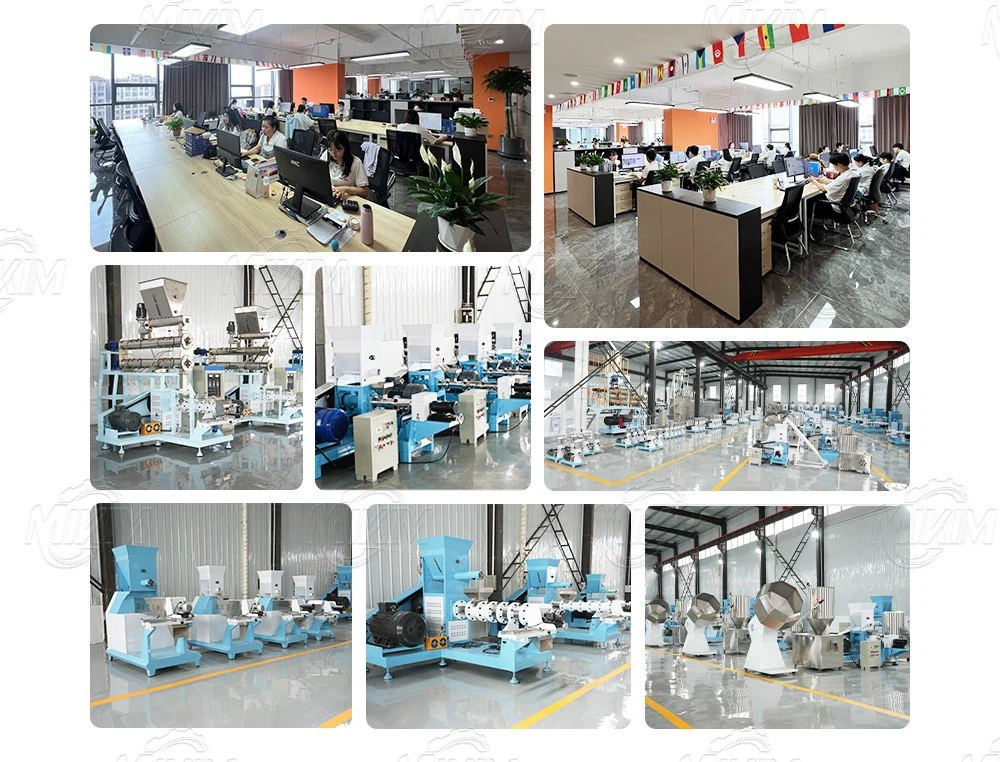
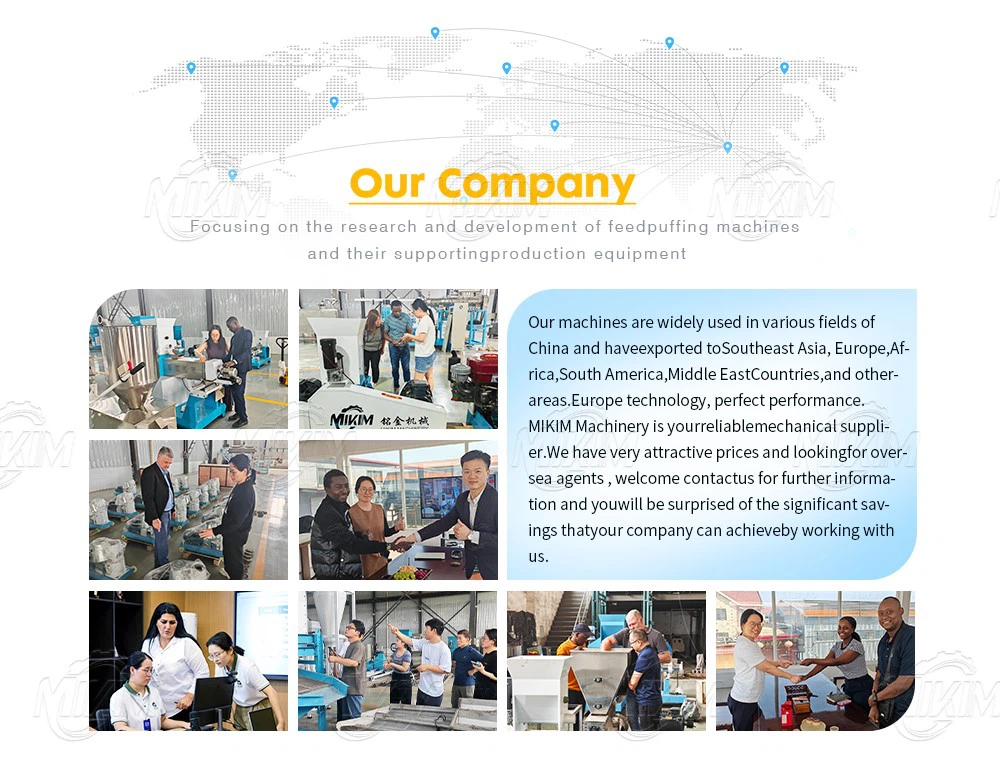
Mikim Machinery is a high-tech enterprise integrating scientific research, design, manufacture, installation and commissioning, and after-sales service. which has passed many certificates such as CE, ISO, etc. Now we are mainly engaged in two fields: feed pellet machine production line (hammer mill-mixer-conveyor-feed pellet machine-cooling & vibration system-packing and sealing) and feed extruder production line (mixer-twin screw extruder machine-dryer-drum seasoning machine-cooling towers-packing machine).


FAQ
Q: What is an extruder machine?
Q: What is the working principle of an extruder machine?
Q: What are the different types of extruder machines?
Q: What are the applications of extruder machines?
Q: What are the advantages of using an extruder machine?
Q: What is the difference between a single-screw and a twin-screw extruder?
Q: What is the importance of temperature control in an extruder machine?
Q: Can an extruder machine be used for recycling plastic?
Q: What safety measures should be taken when operating an extruder machine?
Q: Can an extruder machine be used for 3D printing?
Q: What is the difference between a laboratory-scale and an industrial-scale extruder machine?
Q: What is the typical lifespan of an extruder machine?
Q: Can an extruder machine be customized for specific applications?
Q: What is the role of the motor in an extruder machine?
Q: Can an extruder machine be used for continuous production?
Q: What maintenance is required for an extruder machine?
Q: Can an extruder machine handle different types of materials?
Q: What is the role of the barrel in an extruder machine?
Q: Can an extruder machine be used for foaming applications?
Q: What is the difference between co-rotating and counter-rotating extruder machines?
We're professional extruder machine manufacturers and suppliers in China, specialized in providing high quality customized service. Please feel free to wholesale high-grade extruder machine made in China here from our factory.
end to end extrusion service, extrusion plant, extrusion partnership