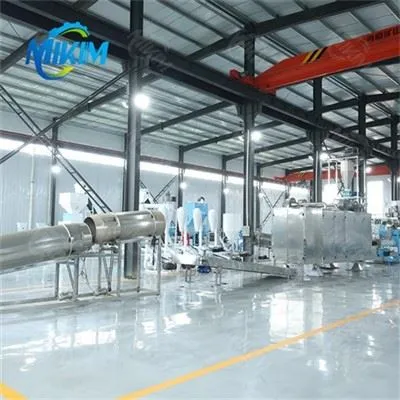
40-300kg/h Floating Fish Feed Production Line For Farm Use

40-300kg/h Floating Fish Feed Production Line For Farm Use suppliers

40-300kg/h Floating Fish Feed Production Line For Farm Use factory

40-300kg/h Floating Fish Feed Production Line For Farm Use best

40-300kg/h Floating Fish Feed Production Line For Farm Use high quality
40-300kg/h Floating Fish Feed Production Line For Farm Use
Capacity: 40-300 kg/h
Power: 16-68kw
Range of application: Fish farm or small feed shop
Product advantages: Cheap and simple operation,Easy to move,small size,Lowtransportation cost,pellet size could be chosen from 1-12mm
Process flow: 1.Crusher -2.Mixer -3.Feed pellet extruder -4.Dryer
Size for whole line: 5×2×3m
Workers requirements: 2 people
Shipment requirements: Wooden case package by LCL (4-7CBM)
MOQ: 1 pcs
Lead time (days): 15-30
ODM/OEM: Available
Description
The Fish Feed Pellet Production Line is a complete automated system designed for producing high-quality floating and sinking fish feed pellets for aquaculture farms and commercial feed factories. The production process includes mixing, conveying, extruding, cooling, and seasoning systems that transform raw materials into nutritionally balanced aquatic feed pellets. This production line improves feed digestibility, reduces feed waste, enhances pellet stability in water, and supports continuous industrial feed production for fish, shrimp, and other aquatic animals.
What Is an Aquaculture Feed Production Line?
A fish feed processing line is an integrated feed manufacturing system used to process raw agricultural materials into high-quality aquatic feed pellets.
The system combines multiple machines into one continuous automated workflow, including:
- Mixing system
- Conveying system
- Fish feed extruding system
- Cooling system
- Seasoning system
Through extrusion technology, powdered raw materials are transformed into floating or sinking feed pellets suitable for different fish species and aquaculture farming environments.
Compared with traditional feed preparation methods, a modern fish feed pellet production line offers:
- Better feed conversion efficiency
- Improved nutrient absorption
- Reduced feed waste in ponds
- More stable pellet quality
- Lower long-term feed production cost
This system is widely used in fish farms, shrimp farms, aquaculture feed factories, and commercial feed production businesses.

Why does modern aquaculture need a Professional fish feed making production line?
In modern aquaculture, feed quality directly affects:
- Fish growth rate
- Water quality
- Disease control
- Feed conversion ratio (FCR)
- Farming profitability
Traditional powder feed often creates serious problems:
- Feed dissolves too quickly in water
- Uneven nutrition distribution
- High feed waste
- Water contamination
Extruded fish feed pellets solve these issues by creating stable, digestible, water-resistant pellets.
A professional fish feed pellet production line helps aquaculture businesses:
- Produce customized feed formulas
- Reduce dependence on expensive commercial feed
- Improve fish growth performance
- Lower operational costs
- Increase farm profitability
Complete Fish Feed Pellet Production Process
The production line operates as a continuous automated process. Each stage plays a critical role in ensuring final feed quality.
1.Raw Material Crushing System
Equipment: Fish Feed Crusher / Hammer Mill
The animal feed crusher machine is the first processing stage in the fish food extruder line.
Before mixing and extrusion, raw materials must be crushed into fine powder to ensure smooth processing and stable pellet quality.


2. Mixing System
Equipment: Horizontal Feed Mixer
The U-shaped horizontal feed mixers( animal feed mixing machine)is the important stage in fish feed production.
Function of the fish feed mixer machine
The mixer evenly blends all feed ingredients before extrusion.
Common Raw Materials
- Corn powder
- Soybean meal
- Fish meal
- Wheat bran
- Rice bran
- Vitamin premixes
- Mineral additives
Why Proper Mixing Matters?
Uniform mixing ensures that every feed pellet contains balanced nutrition.
Poor mixing can lead to:
- Uneven fish growth
- Nutrient separation
- Low feed quality
Mixing Features
- High-speed mixing blades
- Fast batch processing
- Uniform 360-degree blending
Advantages
- Balanced nutrition in every pellet
- Better feed consistency
- Improved extrusion performance


3. Conveying System
Equipment: Screw Conveyor
After mixing, the materials are automatically transported into the fish feed extruder.
Function
The conveying system ensures stable and continuous feeding during production.
Why Automatic Conveying Is Important
Manual feeding can cause:
- Inconsistent material flow
- Production interruptions
- Labor inefficiency
The screw conveyor solves these issues through automated feeding.
Advantages
- Continuous production flow
- Reduced labor cost
- Stable material transportation
- Improved production efficiency


4. Fish Feed Extruding System (Core Machine)
Equipment: floating fish feed pellet extruder machine
The extruding system is the core section of the entire Floating aquatic feed production line.
This floating fish food extruder machine determines:
- Pellet structure
- Pellet density
- Floating ability
- Digestibility


How the floating fish feed pellet making machine Works?
Inside the extrusion chamber:
- Mixed materials enter the barrel
- The screw compresses materials under pressure
- Friction and heat cook the materials
- Starch becomes gelatinized
- Materials pass through the die mold
- Cutting blades shape the pellets
When the pellets exit the die holes, pressure changes cause expansion, creating floating or sinking feed depending on settings.
Adjustable Extrusion Parameters
Operators can adjust:
- Temperature
- Pressure
- Moisture level
- Screw speed
- Cutting speed
This allows production of different pellet types.
Floating Fish Food Extruder Production Process
Pellet Types Produced
Floating Fish Feed
Suitable for:
- Tilapia
- Catfish
- Ornamental fish
Advantages:
- Easy feeding observation
- Reduced feed waste
- Better feeding control

Sinking Fish Feed
Suitable for:
- Carp
- Shrimp
- Bottom-feeding fish
Advantages:
✔ Natural feeding behavior support
✔ Better feed access for bottom feeders
Slow-Sinking Feed
Suitable for mixed aquaculture environments.

Advantages of Extruded Fish Feed
Compared with traditional feed pellets:
✔ Better digestibility
✔ Improved nutrient absorption
✔ Reduced water pollution
✔ Longer floating time
✔ Better water stability
5. Fish Feed Drying System
Equipment: Fish Feed Dryer / Belt Dryer
The drying system is a critical stage in the fish feed pellet production line.
After extrusion, freshly produced fish feed pellets contain high moisture and temperature. Without proper drying, the pellets may become soft, break easily, or develop mold during storage.
The fish feed dryer removes excess moisture from the pellets and improves overall feed stability and shelf life.
Function of the Fish Feed Dryer machine
The Animal Feed Pellet Drying Machine uses controlled hot air circulation to reduce moisture content in the feed pellets after extrusion.
This process helps stabilize pellet structure and prepares the feed for cooling and seasoning.
Working Principle
Hot air is evenly distributed inside the drying chamber while pellets move continuously through the dryer layers or conveyor system.
The heat gradually removes moisture from the pellets without damaging their nutritional value.
Drying temperature can be adjusted according to:
- pellet size
- production capacity
- feed formula
- moisture level
Moisture Reduction Standard
Typical moisture reduction:
from 20–30% after extrusion
to below 10–12% after drying
This moisture range is ideal for safe storage and transportation.
Why Drying Is Important in Fish Feed Production
Proper drying directly affects:
- pellet hardness
- water stability
- storage safety
- feed shelf life
Insufficient drying may cause:
- mold growth
- pellet deformation
- feed spoilage
nutrient loss during storage
Advantages of the Aquaculture Pellet Dryer
- Extends feed shelf life
- Improves pellet hardness
- Reduces mold and moisture damage
- Enhances transportation stability
- Improves water resistance of pellets
- Supports continuous automatic production


6. Seasoning System
Equipment: Feed Seasoning Machine / Oil Sprayer
The seasoning system is an important stage for improving feed quality and fish feeding attraction.
Function of the Seasoning System
The machine sprays:
- Fish oil
- Nutritional additives
- Amino acids
- Flavor attractants
- onto the surface of pellets.
Why Seasoning Matters
Well-seasoned feed improves:
- Feed palatability
- Fish feeding response
- Nutrition enhancement
Advantages
- Increased fish appetite
- Better feed intake
- Enhanced nutritional value


Final Feed Pellet Quality
The finished fish feed pellets produced by this line have excellent quality characteristics.
Pellet Features
- Uniform pellet size
- Smooth pellet surface
- Strong water stability
- Adjustable floating time
- High nutrient retention
Water Stability Benefits
Good water stability helps:
- Reduce feed waste
- Reduce water pollution
- Improve feeding efficiency


Fish Species Supported
This production line can produce feed for many aquatic animals.
Fish Species
- Tilapia
- Catfish
- Carp
- Grass carp
- Koi fish
- Goldfish

Aquatic Animals
- Shrimp
- Crab
- Turtle feed

Applications of fish meal pellet production line
1. Small Fish Farms
Suitable for farmers producing feed for personal aquaculture use.
Benefits:
- Lower feed cost
- Flexible feed formulas
- Fresh feed production
2. Commercial Aquaculture Farms
Used for medium and large-scale fish farming operations.
Benefits:
- Stable feed supply
- Better feed quality control
- Reduced commercial feed dependence
3. Aquaculture Feed Factories
Suitable for industrial feed manufacturing businesses.
Benefits:
- Continuous production
- Large output capacity
- Commercial feed sales
4. Feed Startup Businesses
Good for entrepreneurs entering the aquatic feed industry.
Benefits:
- Flexible production scale
- Multiple feed product capability
Key Advantages of the Complete Feed Expansion Production Line
1. Continuous Automated Production
The integrated system supports stable continuous operation.
2. Reduced Labor Cost
Automatic conveying and processing reduce manual labor requirements.
3. Flexible Feed Production
Supports floating and sinking feed production.
4. Adjustable Pellet Size
Pellet sizes can be adjusted from 1 mm to 10 mm.
5. Improved Feed Conversion Ratio
Extruded feed improves fish digestion efficiency.
6. Lower Feed Waste
Stable pellets reduce feed loss in water.
Real Production Scenarios
Pond Fish Farming
Farmers install the production line near ponds for fresh feed production.
Commercial Feed Manufacturing
Factories produce feed for local aquaculture markets.
Cooperative Aquaculture Projects
Multiple farms share one centralized feed production system.
FAQ
Q1: Can this production line produce floating fish feed?
Yes. The extrusion system can produce floating, sinking, and slow-sinking feed.
Q2: What raw materials can be used?
Corn, soybean meal, fish meal, wheat bran, rice bran, vitamins, and additives.
Q3: What pellet sizes can be produced?
Typically from 1 mm to 10 mm.
Q4: Is the production line fully automatic?
The level of automation can be customized according to customer requirements.
Q5: Do you provide installation support?
Yes. We provide installation guidance, technical support, and layout design assistance.
Q6: Can the production line be customized?
Yes. Capacity and machine configuration can be customized for different production needs.
Why This Fish and shrimp feed production line Improves Profitability?
By producing your own fish feed, you can:
✔ Reduce commercial feed expenses
✔ Control feed quality
✔ Produce specialized feed formulas
✔ Improve fish growth efficiency
✔ Increase aquaculture business profits
Get a Customized Fish Feed Production Solution
We provide complete fish feed pellet production line solutions for different aquaculture projects and production capacities.
👉 Contact us for:
- Factory direct price
- Production layout design
- Working videos
- Technical consultation
- Customized feed production solutions
Build a more efficient and profitable aquaculture feed production business with a professional fish feed pellet production line today.
Company Profile



Hot Tags: 40-300kg/h floating fish feed production line for farm use, China 40-300kg/h floating fish feed production line for farm use manufacturers, suppliers, factory, extruder line for floating fish feed, fish food extruder machines, screw feed extruder machine, extruder line fish feed, fish food extruder plant, floating fish feed machine plant
Send Inquiry
You Might Also Like