


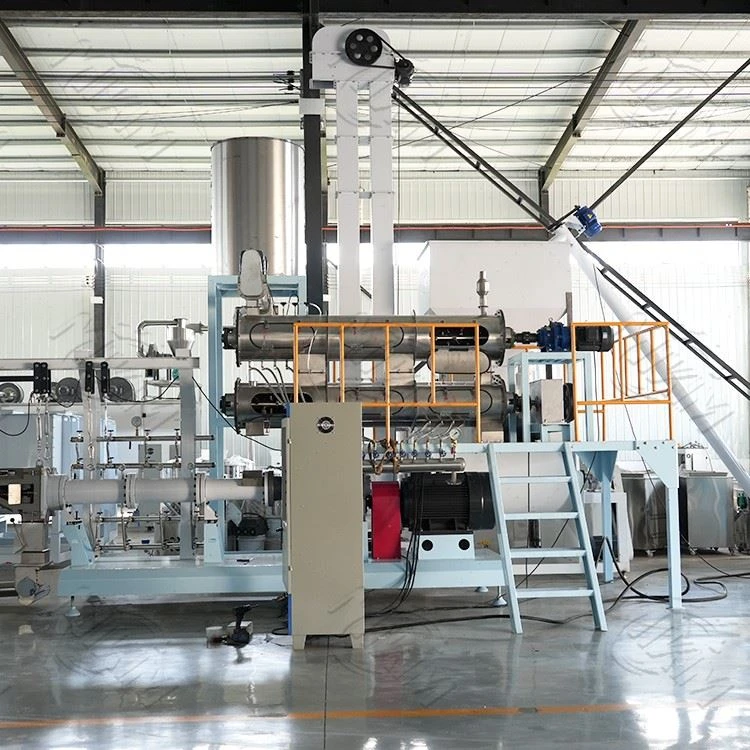
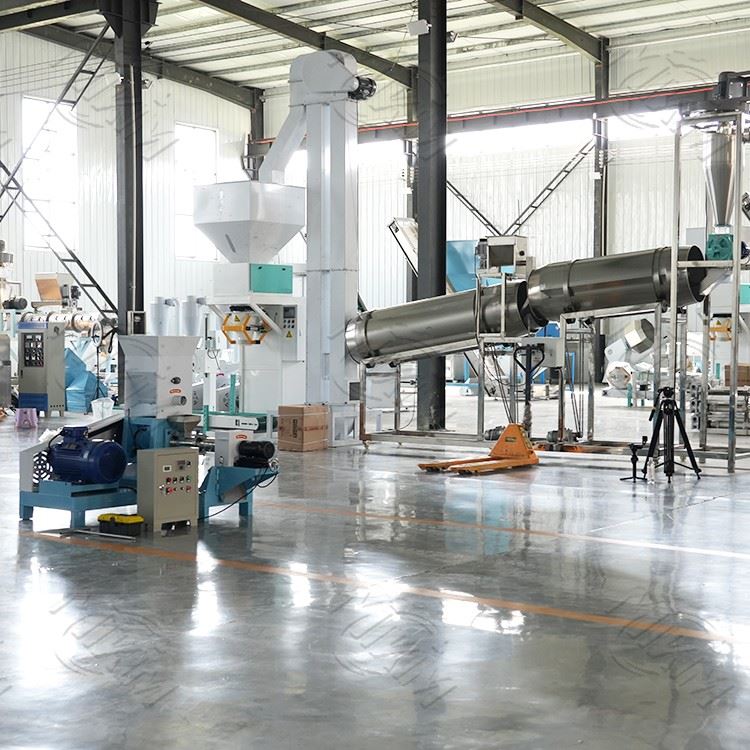


5-10 T/H Aquafeed Production Plant
Production Capacity: 5-10 T/H
Pellet Size: 0.5-9 mm
Voltage: 220 V / 380 V / 450 V (Customizable)
Frequency: 50 Hz / 60 Hz (Customizable)
Feed Pellet Type: Floating, Slow-Sinking, and Sinking Feed
Product Type: Wet-Type (Steam-Assisted) Extruder
Description
The 5-10 T/H aquafeed production line consists of the following equipment: Mixer → Bucket Elevator → Steam Conditioner → Wet-Type Feed Extruder → Pneumatic Conveyor → Dryer → Pneumatic Conveyor → Double-Drum Seasoning Machine with Oil Sprayer → Pneumatic Conveyor → Counterflow Cooler → Belt Conveyor → Bucket Elevator → Packaging Machine

5–10 t/h Aquafeed Production Line Plant Technical Specifications
|
ITEM |
Reference Photo |
MACHINE NAME |
MACHINE PARAMETER
|
Notes |
| 1 |
|
Water drop crusher |
Main power: 75kw |
1. High Grinding Efficiency 2. Uniform Particle Size 3. Wide Material Compatibility 4. Durable Wear Parts 5. Low Noise and Stable Operation 6. Easy Screen Replacement 7. High Capacity 8. Low Maintenance Cost |
| 2 |
|
Screw Conveyor |
Length: 3m Power: 2.2kW Weight: 150kg Dimensions: 3.2 x 0.5 x 0.5 m |
To feed the crushed materials into mixer |
| 3 |
|
U-shaped horizontal feed mixer |
Output: 2000 kg/batch Power: 15 kW Dimensions: 3.3*1.5*2.3 m Weight: 1.5T |
Dry ingredient blending. Achieves a mixing coefficient of variation (CV) of 5%–7%, ensuring consistent ingredient distribution before extrusion. The single-shaft paddle design provides thorough blending of powders, meals, and micro-ingredients, including vitamins and mineral premixes. |
| 4 |
|
Vertical Type Bucket Elevator |
Power: 2.2kW
|
Transfers the blended dry mix from the mixer to the extruder feed hopper. Constructed from 2 mm steel plate with wear-resistant nylon buckets for continuous, stable material supply to the extrusion stage. |
| 5 |
|
Wet-type Twin screw floating fish machine
|
Capacity: 5-10 T/H Power: 160kw
Requires a steam boiler or steam generator. |
The wet-type twin-screw feed extruder features an automatic water and steam injection system, modular screw elements, and a segmented barrel with independent temperature control for precise heating and cooling. Equipped with a stainless steel multi-layer conditioner, it ensures excellent material mixing, high starch gelatinization, and stable extrusion performance. The twin-screw design provides superior self-cleaning capability, handles a wide range of raw materials and formulations, and produces high-quality floating, sinking, and slow-sinking aquatic feed with consistent pellet size and density.
|
| 6 |
|
Pneumatic conveyor |
Fan motor power: 2.2 kW |
Equipped with a high-efficiency rotary airlock, wear-resistant conveying pipeline, and powerful centrifugal blower, the pneumatic conveyor provides fast, continuous, and dust-free material transfer. Its enclosed conveying system minimizes material loss and contamination while ensuring stable feeding between the extruder, dryer, cooler, and coating system. |
| 7 |
|
Aquaculture Pellet Dryer |
Dryer: 5-tier structure / 10 m Heating power: 75 kW Fan motor power: 3 kW × 6 units Conveyor motor power: 5.5 kW
Material: 304 stainless steel |
Features a 5-layer, 10-meter drying chamber with a food-grade stainless steel mesh belt, a double-layer insulation structure, and an automatic temperature control system. It provides uniform heat distribution, efficient moisture removal, low energy consumption, and consistent drying results while preserving pellet quality.
|
| 8 |
|
Pneumatic conveyor |
Fan motor power: 2.2 kW |
Transfers dried pellets from the dryer discharge to the seasoning machine inlet. Constructed from stainless steel to maintain hygiene standards in post-drying handling. |
| 9 |
|
feed pellet Drum Seasoning Machine |
Power: 1.5kw Weight: 200kg Processing time: 5-8 min/barrel Dimensions: 4.5*0.8*1.6m Material: 304 stainless steel |
1. Uniform coating 2. Automatic operation 3. Stainless steel construction |
| 10 |
|
Oil Sprayer |
Spraying: 0.55kw Heating:3kw Mixing:0.55kw In total:4.1kw |
steel, the oil coating machine integrates heating, stirring, and precision spraying functions to ensure uniform oil distribution, improve feed palatability, and enhance nutrient retention while maintaining stable and efficient operation. |
| 11 |
|
Counter flow cooler |
Main Power: 2.2kw |
The counterflow cooler features a food-grade stainless steel discharge system, adjustable cooling time, and an automatic level control system. By using counterflow cooling technology, it provides uniform cooling, effectively reduces pellet temperature and moisture, minimizes breakage, and improves storage stability and product quality. |
| 12 |  |
Conveyor | Main Power: 0.75kw |
To deliver the cooled feed into the conveyor. |
| 13 |
|
Bucket elevator |
Power: 2.2kW
|
|
| 14 |
|
fish feed pellet bagging packing machine |
Packaging System Packaging Capacity: 200-300 bags/hour Weighing Accuracy: Static: ±0.1% Dynamic: ±0.2% Power Supply:380 V, 50 Hz ±2%, 4.5 kW Compressed Air Supply:0.6-0.8 MPa Compressed Air Consumption:0.2 Nm³/min Quantity:1 unit |
Conveyor Function:Conveying filled bags to the next processing stage. Technical Parameters: Conveyor Length:3000 mm Power Supply:380 V, 50 Hz, 0.37 kW Quantity:1 unit
Bag Sewing System Sewing Machine Model:35-6A / 35-2C Technical Parameters: Maximum Sewing Speed:1,600 stitches/min Stitch Length:6.5-11 mm Stitch Type:Double-thread chain stitch Thread Specification:21S/5 and 21S/3 polyester thread Needle Type:80800, 280-250# Power Supply:380 V, 50 Hz, 0.37 kW Quantity:1 unit
|
| 15 |  |
Air compressor |
2.2kw | Used to transfer finished feed pellets to the packaging machine for automatic packaging. |
| 16 |
|
Steam generator |
48kw | The steam boiler supplies steam to the extruder for raw material conditioning before extrusion. |
| 17 |
|
Electric control |
Motor Brand: Chinese Brand or Siemens (Optional) |


Suitable Raw Materials
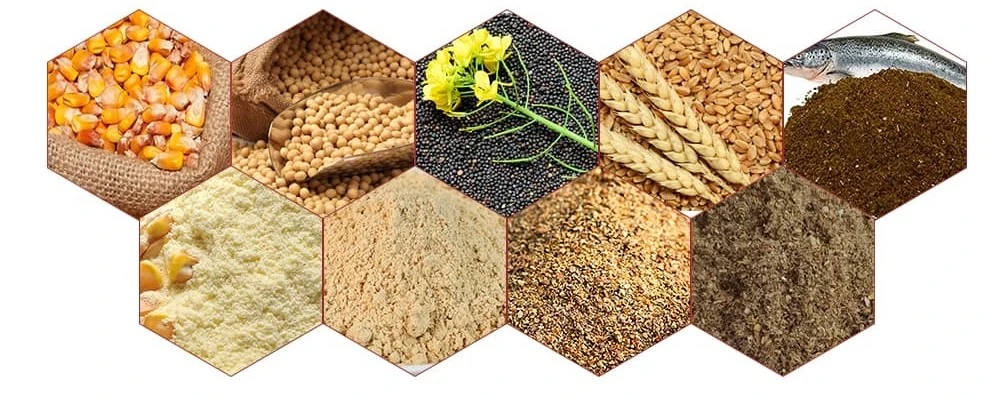
The production line is compatible with a wide range of protein meals, cereal grains, oils, vitamins, minerals, and functional additives for various aquafeed formulations.We provide customized aquafeed and pet food formulations along with technical guidance for different growth stages.
Get More Free Feed Formulation Guide
Applications and Finished Product of an Aquaculture Feed Extrusion Production Line
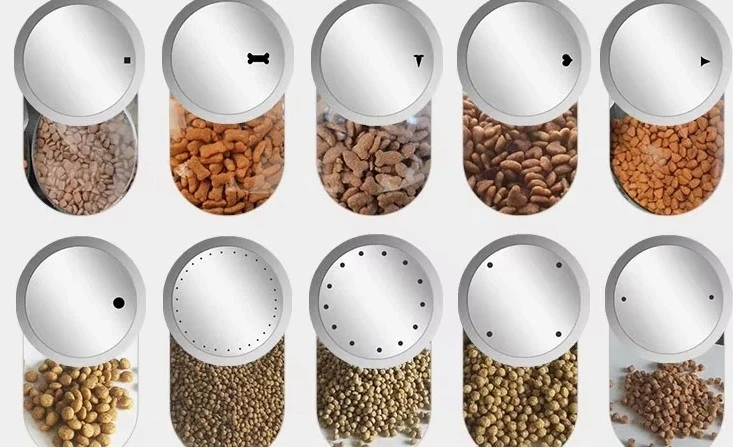
The 5-10 T/H Aquaculture Feed Pellet Production Line is designed to produce high-quality floating, sinking, and slow-sinking feed for a wide range of aquatic species. It is suitable for commercial feed manufacturers producing feed for tilapia, catfish, carp, grass carp, crucian carp, trout, salmon, sea bass, grouper, shrimp, crab, eel, sturgeon, ornamental fish, and other freshwater and marine aquatic animals.


Finished Feed Specifications
| Item | Specification |
|---|---|
| Pellet Diameter | 0.5-9 mm |
| Pellet Type | Floating / Sinking / Slow-sinking |
| Capacity | 5-10 T/H |
| Moisture | 8-10% |
| Starch Gelatinization | ≥90% |
| Floating Time | Adjustable |


Customer Case
Indonesia Customer Project: 50 kg/h Dry-Type Feed Extruder Production Line (MIKIM20260617)


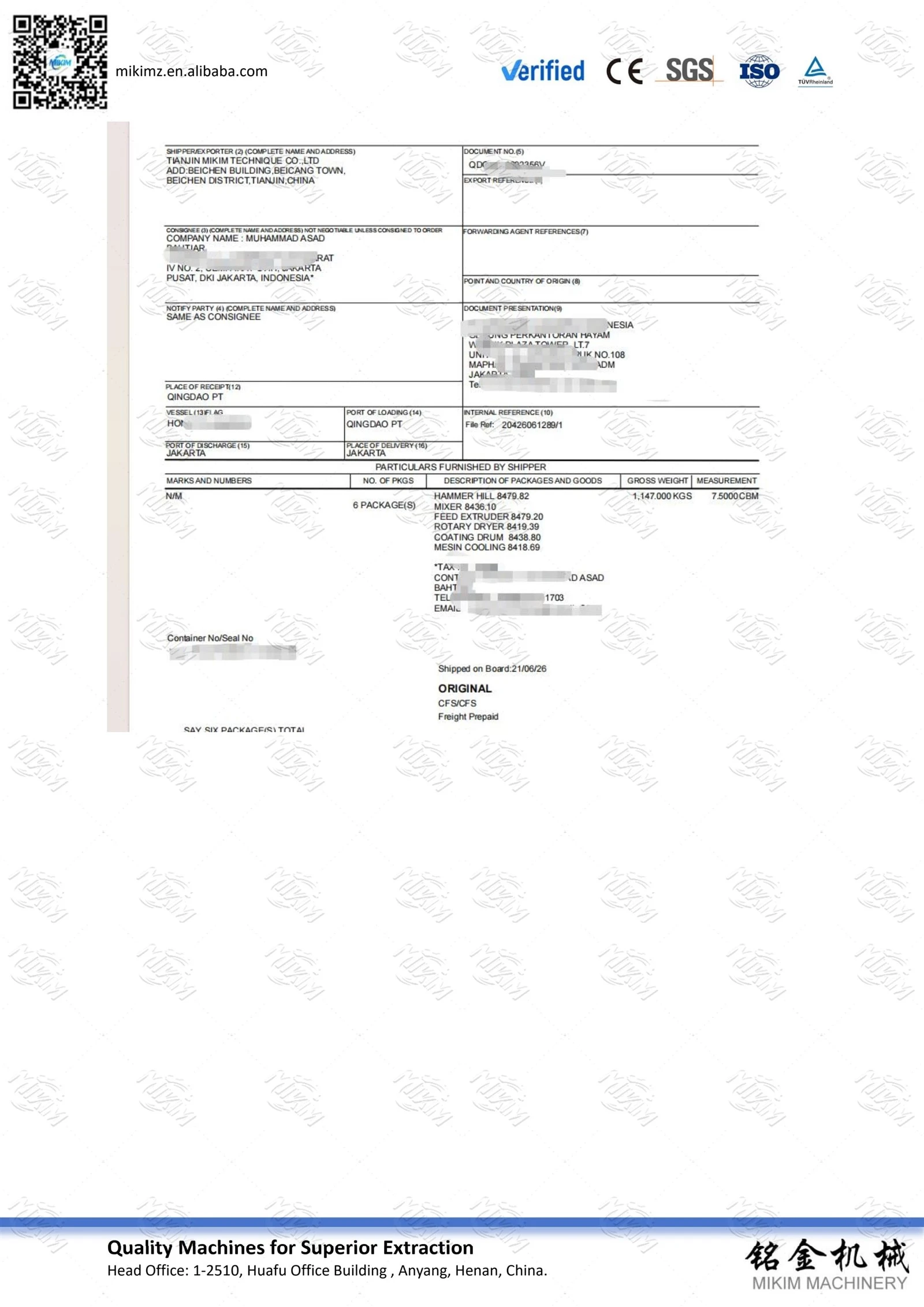


Download Customer Case Studies
FAQ
Q1. Why Are My Feed Pellets Still Wet After Extrusion?
A:
Wet pellets after extrusion are usually caused by factors such as high raw material moisture, excessive water or steam addition, improper feed rate, incorrect screw speed, unsuitable die size, or insufficient drying conditions. The extrusion temperature is only one factor affecting pellet moisture.
For many feed extruders, a temperature of around 137°C can be within the normal operating range. However, the ideal extrusion temperature depends on the feed formula, raw materials, moisture content, and extruder type.
- For wet Type fish feed extruder machine, pellets normally leave the extruder with higher moisture and must be processed through a dryer until the final moisture content reaches approximately 8-10%.
- For Dry-Type Fish Feed Extruders, excessive pellet moisture may indicate that the raw material moisture is too high, too much water has been added, or the feed rate and screw speed need adjustment.
If the problem continues, please provide your extruder model, feed formula, pellet size, raw material moisture content, and whether you use a dry-type or wet-type extruder. Our technical team can help identify the cause and recommend suitable operating parameters.
Q2. Why Do My Floating Fish Feed Pellets Sink Instead Of Floating?
A:
Floating performance mainly depends on extrusion expansion, starch gelatinization, pellet density, and drying conditions. If pellets sink, possible causes include insufficient starch content in the formula, low extrusion temperature, insufficient moisture control, improper screw speed, or inadequate drying.
For floating fish feed production, raw materials with suitable starch content and proper extrusion parameters are important to achieve stable buoyancy. Adjusting the formula, moisture level, and extrusion conditions can help improve pellet floating performance.
Q3. What Raw Materials Can Be Used To Produce Aquafeed Pellets?
A:
Aquafeed extruders can process a wide range of feed ingredients, including fish meal, soybean meal, corn flour, wheat bran, rice bran, cassava flour, and other protein or energy sources.
The exact formula depends on the target species, growth stage, and nutritional requirements. Our team can help provide suitable feed formulation suggestions for fish, shrimp, and other aquatic animals based on your production requirements.
Q4. What Is The Production Capacity Of Your Aquaculture feed extruder?
A:
The production capacity of an aquafeed extruder depends on the machine model, raw material formula, pellet size, and operating conditions. Small Dry Type floating fish feed pellet extruder machines are suitable for small farms with capacities of around 40-200 kg/h, while larger wet Type fish feed production equipment can reach several tons per hour for commercial feed factories.
We can recommend the suitable extruder model according to your required output, available power supply, and production scale.
Q5. What Is The Difference Between A Dry-Type And Wet-Type Fish Feed Extruder?
A:
The main difference is the extrusion process and application range. Dry-type extruders do not require a steam conditioning system and are suitable for small and medium-scale floating fish feed production with simple operation.
Wet-type extruders use steam conditioning and provide better control of temperature, moisture, and pressure, making them suitable for large-scale production and special feeds such as shrimp feed, high-fat feed, sinking feed, and high-value aquatic feed.
Our Factory
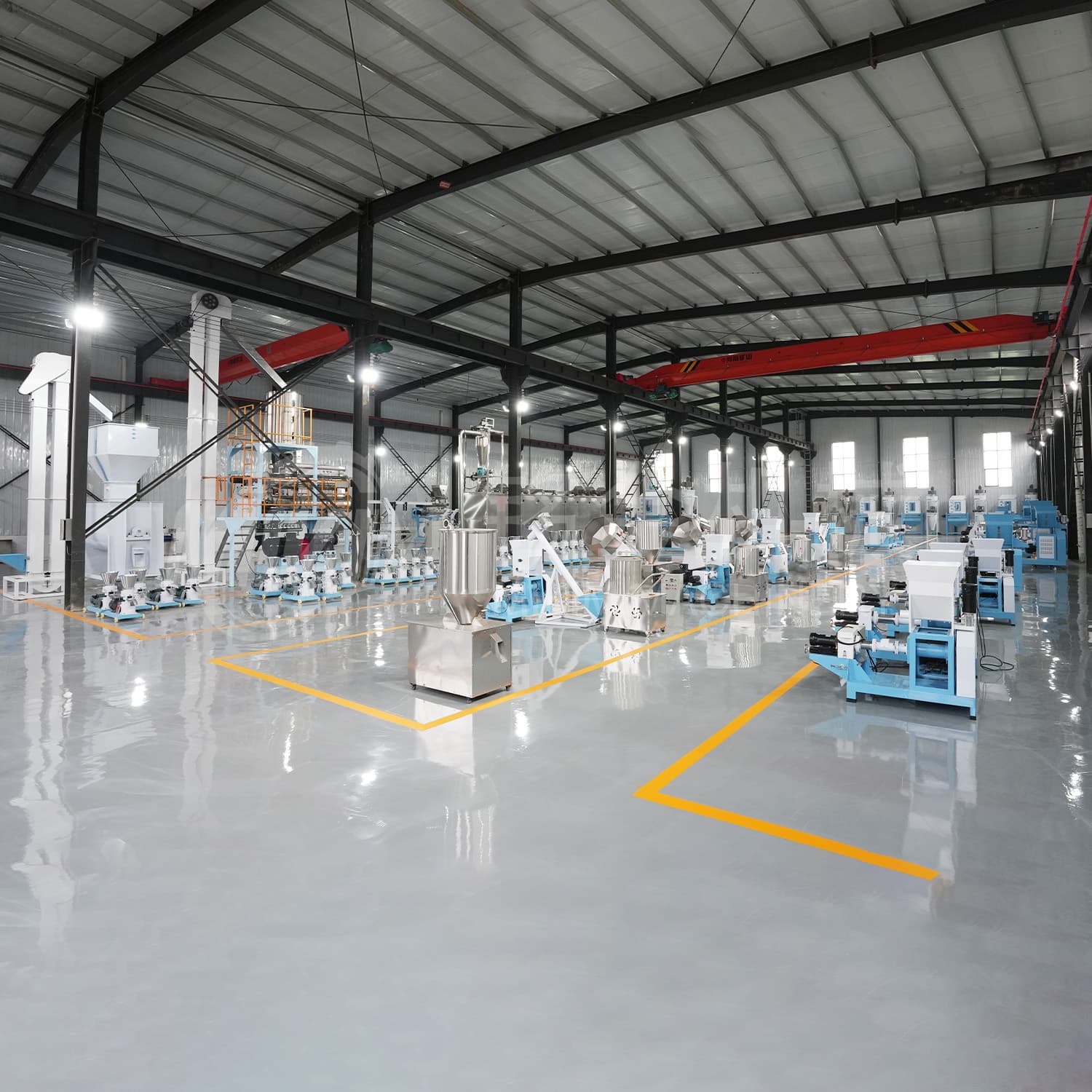
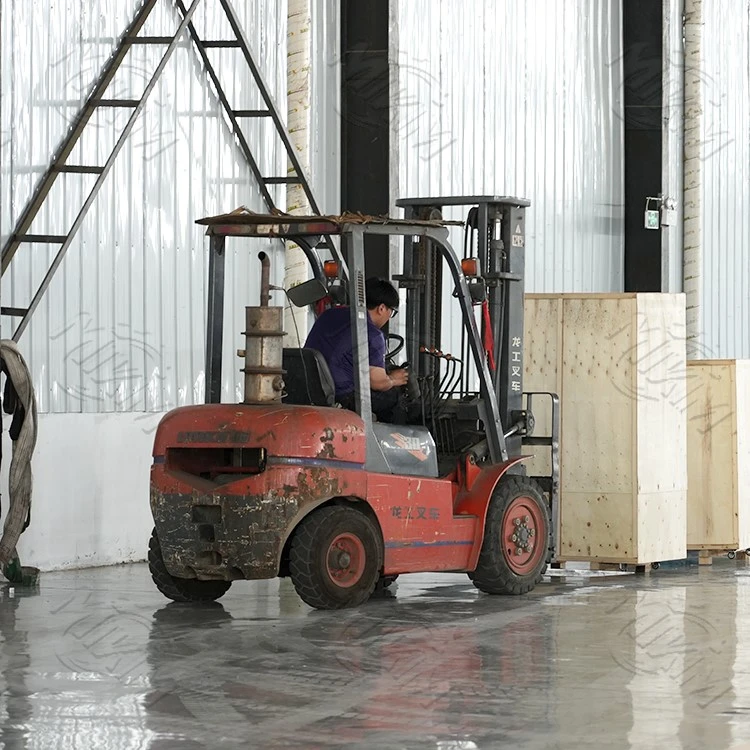
Manufacturing Workshop


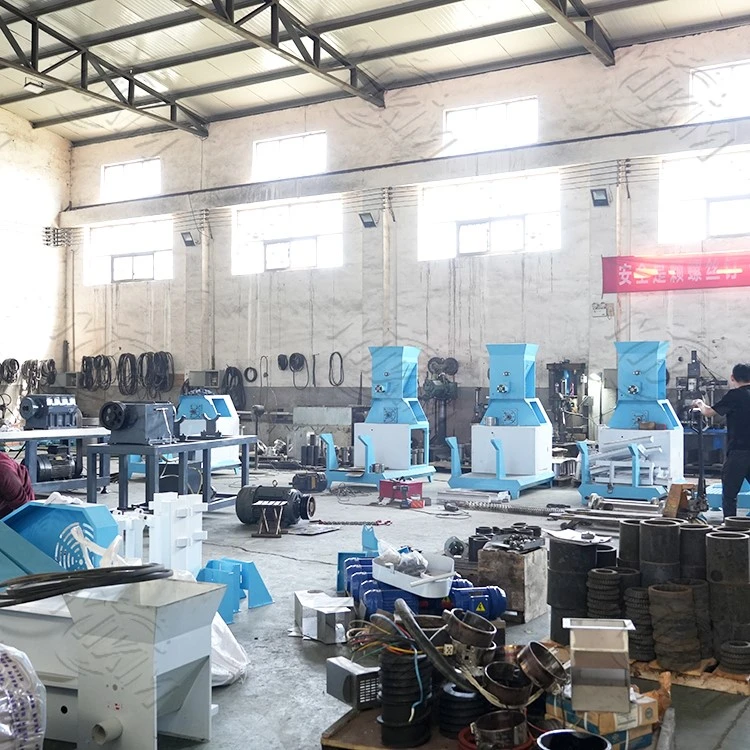
Assembly Workshop

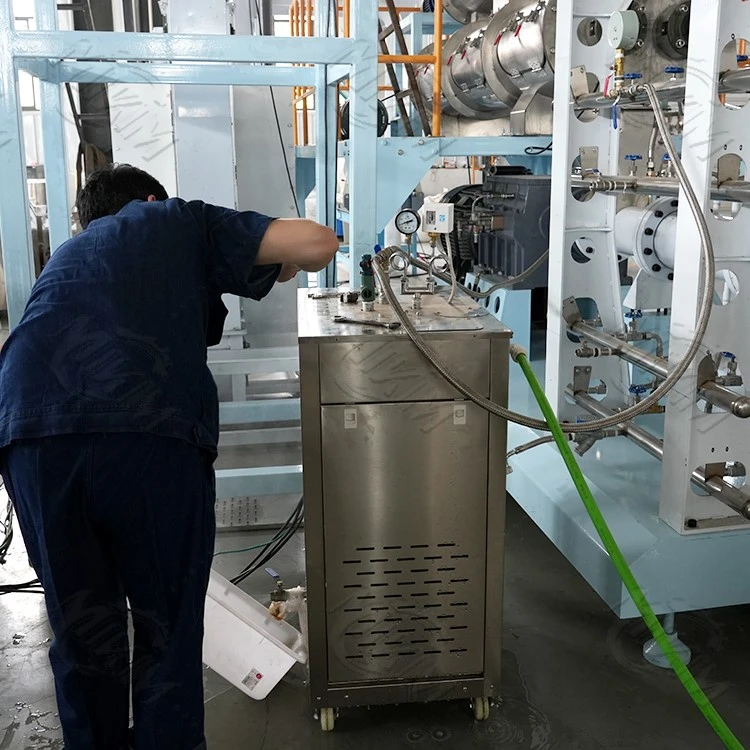
Equipment Testing Workshop
Packaging and Delivery


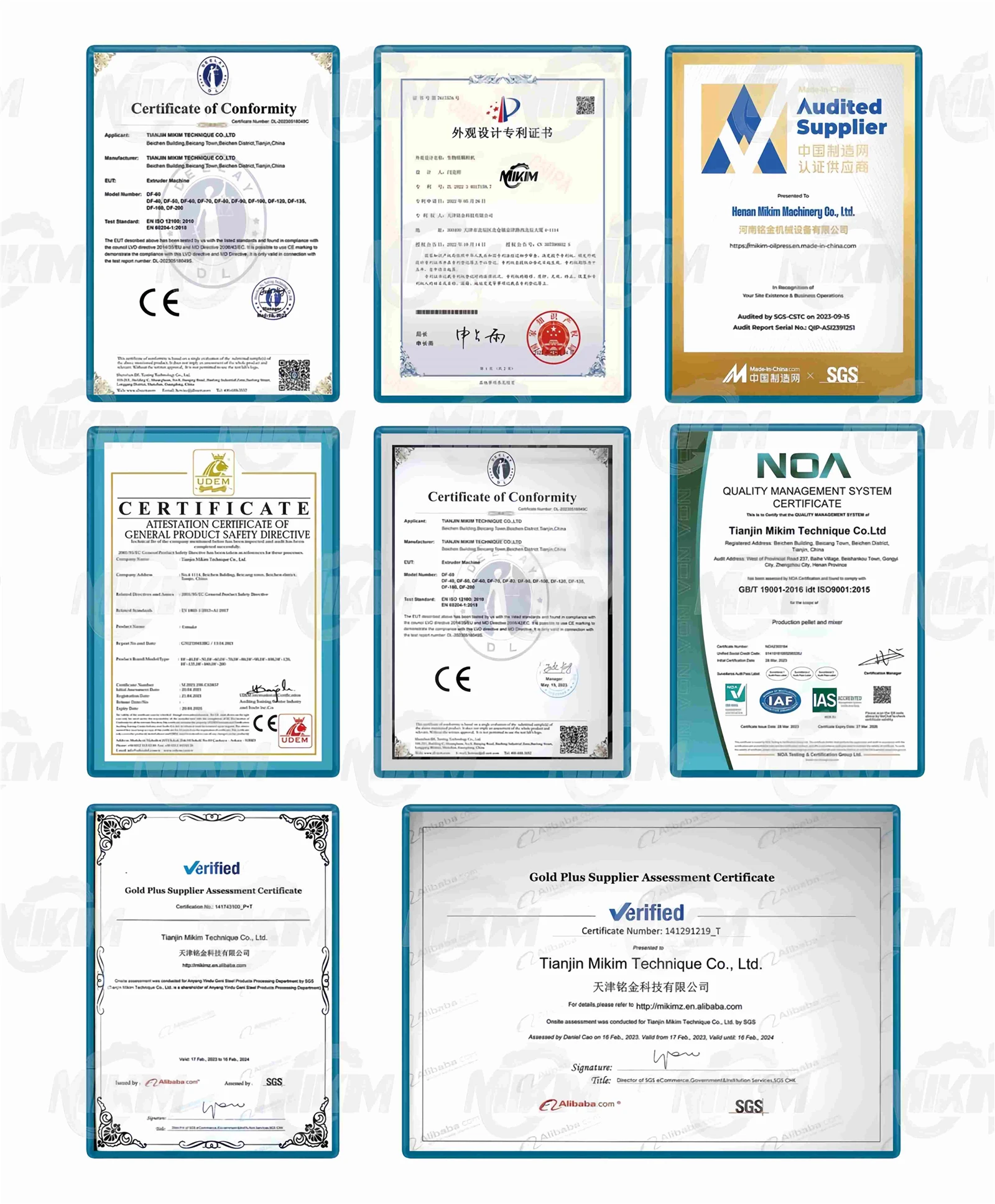
Qualification Certificate
Hot Tags: 5-10 t/h aquafeed production plant, China 5-10 t/h aquafeed production plant manufacturers, suppliers, factory, feed pellet extruder machine, Fish feed extrusion machine machine, Fish Feed Machine, fish food extruder plant, fish meal making production line, floating fish feed machine plant
Send Inquiry
You Might Also Like


