


What Is Fish Feed Production Line
A floating fish feed production line is an integrated system designed to manufacture high-quality aquafeeds suitable for various aquatic species, including freshwater and marine fish, shrimp, and other aquatic animals. It typically consists of several key components: raw material storage and handling systems, a mixing unit for precise formulation, a pelleting machine to shape and densify the mixture, a drying system to reduce moisture content, a crumbling unit for adjusting pellet size (if needed), and packaging equipment.

Our aqua fish feed production line solutions are simple and effective. We strive to be a “one-stop” all-round supplier for all extrusion and pelleting needs.
Whether it is individual process machines, complete processing lines, or spare parts and services that you need – MIKIM will take you smoothly from raw material intake to finished feed bulk loading.
We offer the complete package of equipment and accessories for your fish feed production line. On this page, you will find information on our previous international projects and learn about our equipment.
●Usage: It can produce fish feed such as tilapia, trout, catfish, eel, salmon, herring, ornamental fish, etc. It can also process various pet, livestock and poultry feeds.
●Rawmaterials: rice bran, soybean cake, silkworm pupa powder, bran, fish meal, barley flour, corn flour, vitamins, bone meal, etc
●Business Scope: New construction, reconstruction and expansion of fish feed mills
Advantages and Features:
Customized design
We do that by providing MIKIM fish feed milling equipment that makes up complete, customised solutions from mixing and grinding to sifting, extruding, shaping, drying and coating/cooling feed pellets for various species, match fish feeding habits, and ensure optimum health and feed conversion rates.
Wide applicability
Our aquaculture feed processing plants are designed to produce pellets in wide diversification in physical properties, shape and density to feed various fish species. Special feed options like for marine fish or shrimp are of course available upon request.
Modular design
The fish feed production lines are made up from modules combined with focus on simplicity in operation, energy efficiency, flexibility in processes, high controllability and traceability. A MIKIM fish feed line solution is future-proof and can be scaled by adding extra modules as your needs for a higher production may increase.
Advanced and unique extrusion & pelleting
The key to producing quality aqua feed without losing essential nutrients is a gentle extrusion & pelleting process. Our extrusion and pelletizing fish feed production line solutions give you precise control over the cooking and shaping process so that you can produce fish feed of the highest quality.
High production efficiency
Whether it is small-scale or large-scale, the fish feed production line equipment adopts automation technology, which can reduce manual operations, realize continuous and large-scale production, improve production efficiency and reduce production costs.
Full line and single machine optional
We not only provide complete production line design and equipment manufacturing, but also provide single systems or equipment, such as fish feed extrusion system or extruder, fish feed drying system or fish feed dryer, fish feed crushing system or feed grinder, etc.
Who is suitable to invest in fish feed production line?
Our fish feed production line is suitable for all types of fish feed plants and aquaculture farms. In addition to building a single floating fish feed production line or sinking fish feed production line, if you want to process fish and shrimp feed, fish and poultry feed, fish and pet feed, fish and cattle feed, fish and livestock feed or multiple feed types at the same time, we can also customize the process plan for you, provide factory construction guidance, whole factory design and layout, equipment manufacturing, installation, training and other services.

Aqua Feed Plant

Aquaculture Farms

Dryland Fish farm

Pet Feed Mill
application of fish feed line
— MIKIM Machinery —
In order to support provide a balanced and stable feeding for the farmed fish, many producers have shifted to manufactured pellets. Based on the behaviour in the water, fish feed can be divided into floating feed, slow-sinking feed, and sinking feed. RICHI offers you extrusion and pellet mill to produce high quality fish feed. We also designs and manufactures machinery for specialized aqua feed such as eel feed, crab feed, abalone feed, and frogs. With a high reputation in aqua feed production solutions, guaranteed to help you with your production.


Fish Feed Production Process
Our aqua shrimp fish feed production technologies appeal to both commercial fish feed millers producing for onward sale, as well as to farmers making feed for their aqua animals. Our extrusion and pelleting technologies enable our customers to create their own unique recipes and combinations of ingredients – making sure that the animals are given the right amount of vitamins and protein.
The most important goal is the creation of a complete diet with the highest feed conversion rate, providing a healthy and easily digestible diet for fish. At the same time, the feed must maintain its shape and texture in water and be durable for transport and storage reasons. We can help you with the entire fish feed production line process. From receiving and cleaning, batching, mixing and grinding to control sifting, extruding, shaping, drying and coating/cooling, our experts can tailor an aqua feed solution to meet your specific needs.The processing steps of animal feed production line:

1
Raw material receiving system
Receiving is the beginning of feed production. In the fish feed production line, the receiving area covers the active process of various purchased materials used directly or indirectly. Receiving equipment is used for bulk storage of materials before silos or warehouses.
2
Steel silo system
To ensure continuous production, large quantities of raw materials such as corn, wheat and soybean meal need to be stored during feed processing. It has become the preferred silo type for bulk grain storage in feed factories.
3
Cleaning system
Bulk grain received from farms often includes grain by-products and impurities. The cleaning operation is to remove these impurities with equipment and systems.
4
Crushing system
Crushing is the operation of reducing raw materials particle size and increasing its specific surface area, which and improve the processing quality and work efficiency of subsequent process steps such as batching, mixing, and pelleting.
5
Primary ingredients
The first batching and mixing process in aqua fish feed production line refers to the combination of bulk dry raw materials, liquid raw materials into value-added, homogeneous proportioned mixtures.
6
First mixing system
Mixing is a key link in the production of compound feed. Components with unique properties are blended together to formulate rations under the action of external forces to meet the nutritional needs of animals and add value to the blended product.
7
Superfine Pulverization
In order to meet the fish feed production line process requirements, it is necessary to finely or ultra-finely pulverize raw materials to meet the requirements of processing finer particles.
8
Secondary Ingredients
Secondary ingredient and mixing processes in aquafeed production refer to the scaling, addition and mixing of dry and/or liquid trace elements and premixes to form complete feed mixtures, i.e. formulated rations.
9
Secondary Mixing
Mixing is a key link in the production of compound feed. Components with unique properties are blended together to formulate rations under the action of external forces to meet the nutritional needs of animals and add value to the blended product.
10
Extrusion/Pelleting
In this section, you can choose a twin-screw fish feed extruder, a single-screw fish feed extruder, or a fish feed pelletizer equipped with a multi-layer conditioner. According to the process characteristics, the extrusion process can also be divided into a dry process and a wet process. Choose the appropriate fish feed process based on the production scale, product type and budget.
11
Drying system
Drying is to reduce the moisture content in the product, thereby improving the stability and shelf life of fish feed products.
12
Crumbing system
Crumbing is the process of breaking feed pellets into smaller pellets using crumbler machines. Crumbled feed is used in different stages of early fish or shrimp development. This process is only used in a few fish pellet feed projects or aquatic livestock and poultry feed compound production lines.
13
Liquid addition and spraying
Spraying is an industrial process. Apply liquid or powder such as oil/fat, pigment, spice, functional improver or vitamin to the surface of the feed pellet after drying and screening, before the feed pellet cools, to improve the taste and acceptability.
14
Cooling System
When leaving the fish feed extruder or fish feed pelletizer, the fish pellets are very hot, soft and rich in moisture, the cooling process cools them down to 3℃-5℃ slightly above room temperature and reduces their moisture content to a safe standard (≤12.5%), for easy transportation and storage.
15
screening system
After cooling, qualified fish feed pellets are screened out using a grading screen, and the screened powder and large-sized particles will be re-extrude or pelletize.
16
Packaging System
The packing procedure includes weighing each bag of feed, placing the weighed item in the bag, closing the mouth of the bag, applying a label to the bag, coding the bag, palletizing the bag, and moving the bag to a warehouse for storage. Finished products can also be loaded by trucks or in container bags.
The above is the standard process flow of fish feed processing. Depending on customer needs, investment costs, plant structure, and product types, the final process design is different. For example, in the processing of eel feed, eel feeds float and can be made in extrudate or powder form. If you want to process powdered eel feed, you only need to clean the raw materials – mix the ingredients – crush twice – mix twice, and you can get mash eel feed. If you want to build a fish feed production line that suits you, feel free to contact us to get a process design plan and equipment configuration quotation!
Customize my fish feed production process
Types of Fish Feed production Line
There is no standard size all customized according to the actual fish feed plant space.

40-300kg/h Aquatic/Pets Fish Feed Small Production Line Farm Use
This small floating fish feed production line including: Crusher + Mixer + Feed pellet extruder + Dryer. Powered range: 16-68kw, Capacity range: 40-300kg/h, Which can produce floating fish feed pellets, dry cat/dog foods, shrimp feed and other Aquatic feed pellets.Suitable Fish farm or small feed shop.
|
Capacity |
40-300kg/h |
|
Power |
16-68kw |
|
Range of application |
Fish farm or small feed shop |
|
Product advantages |
Cheap and simple operation,Easy to move,small size,Low |
|
Process flow |
1.Crusher -2.Mixer -3.Feed pellet extruder -4.Dryer |
|
Size for whole line |
5×2×3m |
|
Workers requirements |
2 people |
|
Shipment requirements |
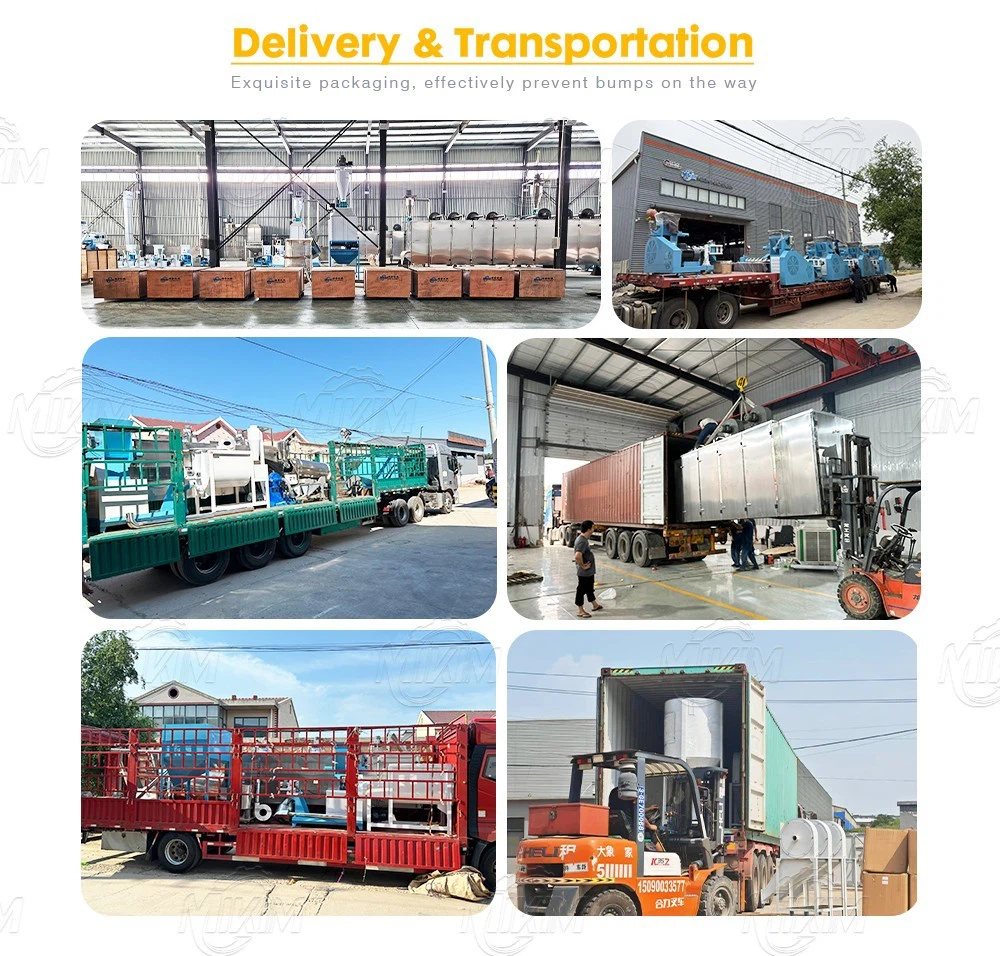
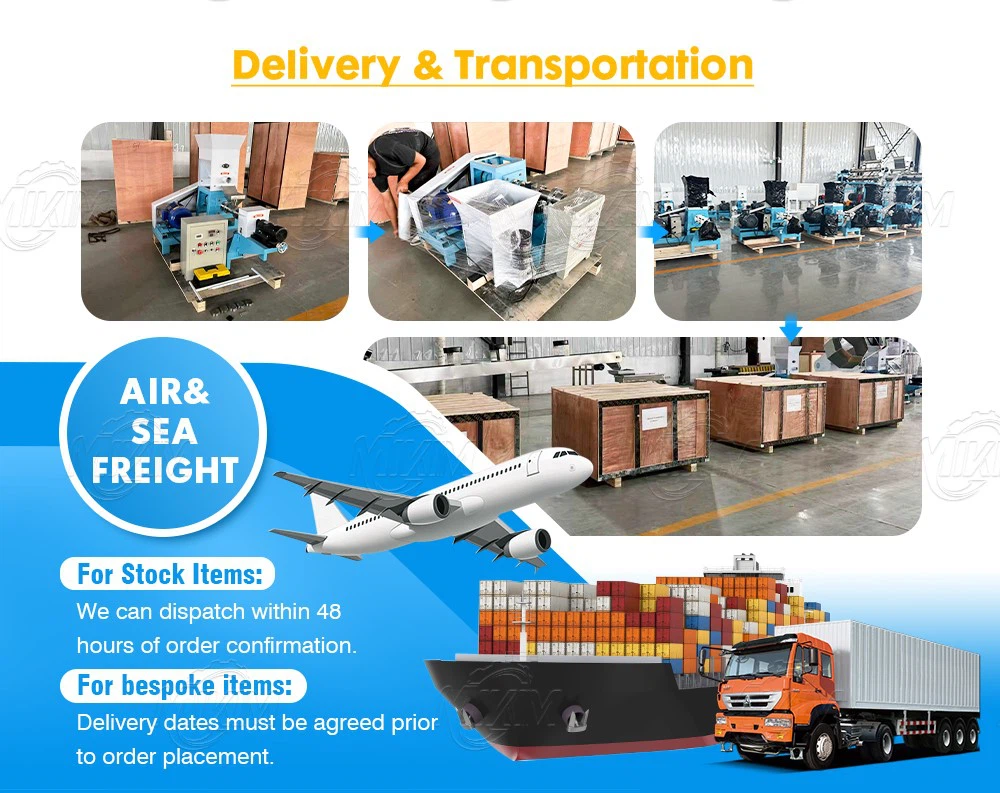
Wooden case package by LCL (4-7CBM) |

200-800kg/h Commercial use Aquatic/pets feed production line
This medium size fish feed production line including: Crusher + Conveyor + Mixer + Conveyor + Feed pellet extruder+ Air conveyor + Dryer + Air conveyor + Seasoning machine + Air conveyor + Cooler + Air conveyor + Finished product silo. Capacity range: 200-800 kg/h, Which can produce floating fish feed pellets, dry cat/dog foods, shrimp feed and other Aquatic feed pellets.Suitable for small/medium Commerical Aquatic /pets feed factory,big farm
There are many variations of passages of available but the majority have suffered alteration in some form, by injected humou or randomised words even slightly believable. All of our products are formaldehyde free environmental protection,provide the most healthy home for you.
|
Capacity |
200-800kg/h |
|
Power |
86-152kw |
|
Range of application |
Good for small/medium commerical Aquatic /pets feed factory,big farm |
|
Product advantages |
Stable output,high efficiency,continuous work,labor saving, |
|
Process flow |
1.Crusher -2.Conveyor -3.Mixer -4. Conveyor -5.Feed pellet extruder |
|
Size for whole line |
25×3×6m |
|
Workers requirments |
2-3 people |
|
Shipment requirments |
40ft container |

500-2000kg/h Commercial use Aquatic/pets feed production line
This medium size fish feed production line including: Bucket elevator + Buffer bin + Hammer mill + Bucket elevator + Buffer bin + Mixer + Bucket elevator + Broken arch bin + Wet way feed pellet extruder + Air conveyor + Dryer + Air conveyor + Seasoning machine + Air conveyor + Cooler + Air conveyor + Finished product silo. Capacity range: 500-2000kg/h, Which can produce floating fish feed pellets, dry cat/dog foods, shrimp feed and other Aquatic feed pellets.Suitable for medium/big commerical Aquatic /pets feed factory
There are many variations of passages of available but the majority have suffered alteration in some form, by injected humou or randomised words even slightly believable. All of our products are formaldehyde free environmental protection,provide the most healthy home for you.
|
Capacity |
500-2000kg/h |
|
Power |
94-217kw |
|
Range of application |
Good for medium/big commerical Aquatic /pets feed factory |
|
Product advantages |
Long working life,make high protein feed,Stable output,high efficiency, |
|
Process flow |
1.Bucket elevator -2.Buffer bin -3.Hammer mill -4.Bucket elevator -5.Buffer bin |
|
Size for whole line |
Length: 35m-50m Width: 6m Height: 8m |
|
Workers requirements |
3-5 Workers |
|
Shipment requirements |
2×40ft container |

3-4ton/h Commercial use Aquatic/pets feed production line
This medium size fish feed production line including: Bucket elevator + Buffer bin + Impeller feeder with iron removal device + Hammer mill with dust collector + Bucket elevator + Buffer bin + Mixer + Bucket elevator + Broken arch bin + Wet way feed pellet extruder + Air conveyor + Dryer + Bucket elevator + Seasoning machine + Bucket elevato + Cooler + Bucket elevator + Finished product silo + Packing and seal machine. Capacity range: 3~4ton/h, Which can produce floating fish feed pellets, dry cat/dog foods, shrimp feed and other Aquatic feed pellets.Suitable for large commerical Aquatic /pets feed factory
|
Capacity |
3-4ton/h |
|
Range of application |
Suitable for large commerical Aquatic /pets feed factory |
|
Product advantages |
Fully automatic intelligent batching, computer control system!导命长,ong working life,make high protein feed ,Stable output, high efficiency, continuous worklabor savingcan pack directly,pellet size could bechosen from 1-12mm |
|
Process flow |
1.Bucket elevator -2.Buffer bin -3.Impeller feeder with iron removal device |
|
Size for whole line |
Length: 45m-50m Width: 8m Height: 10m |
|
Workers requirements |
4-6 Workers |
|
Shipment requirements |
4×40ft container |
|
Shipment requirements |
2×40ft container |

5-10ton/h Commercial use Aquatic/pets feed production line
This large size fish feed production line including: 1.bucket elevator -2.raw materials cleaning system-3.silos for crusher -4.crusher-5.Raw material automatic distribution weighing system-6.mixing system -7.second crushing system-8.Raw material automatic distribution weighing system9.second mixing system -10.extruder-11.drying system-12.screen system-13.seasoning machine-14.cooling system-15.packing system. Capacity range: 5~10ton/h, Which can produce floating fish feed pellets, dry cat/dog foods, shrimp feed and other Aquatic feed pellets.Suitable for large commerical Aquatic /pets feed factory
|
Capacity |
5-10ton/h |
|
Range of application |
Suitable for large commerical |
|
Product advantages |
Long working life,make high protein feed , stable output, high efficiency, |
|
Process flow |
1.bucket elevator -2.raw materials cleaning system-3.silos for crusher -4.crusher-5.Raw material automatic distribution weighing system-6.mixing system -7.second crushing system-8.Raw material automatic distribution weighing system9.second mixing system -10.extruder-11.drying system-12.screen system-13.seasoning machine-14.cooling system-15.packing system |
|
Size for whole line |
Length: 45m-50m Width: 8m Height: 10m |
|
Workers requirements |
4-5 people |
|
Shipment requirements |
5x40ft container |
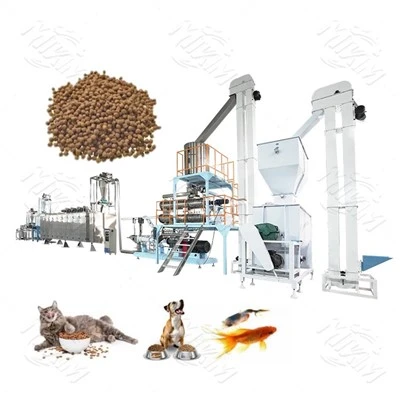
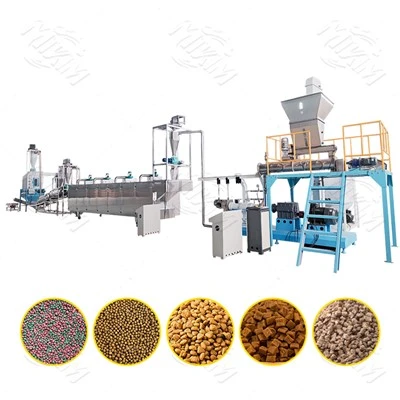
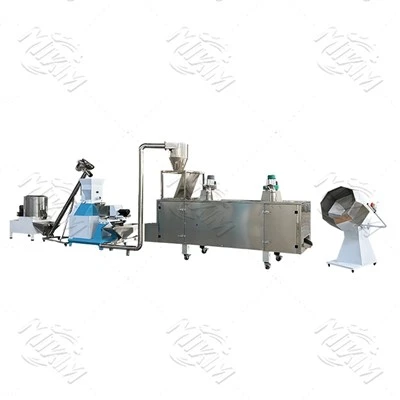
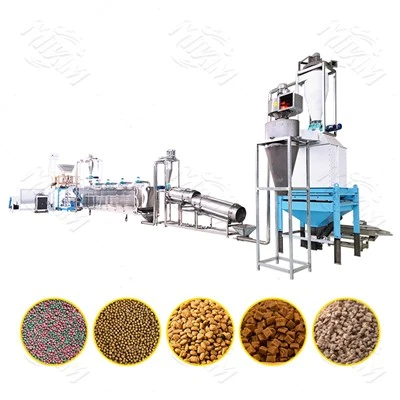
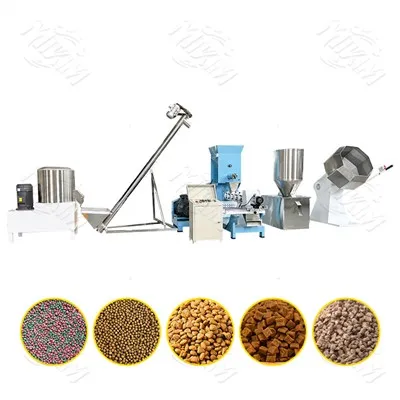
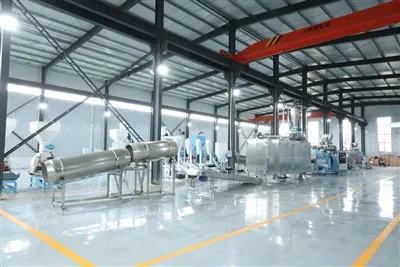


Fish feed production line design with different capacity
We offer a wide range of products and are able to meet your specific needs for any aqua shrimp fish feed production. With decades of experience in designing grinding, milling, mixing, extrusion & pelleting equipment for any aqua feed plant, you can rely on our expertise to get you the solution best suited for you.
MIKIM Machinery process and project engineers have the skills and experience to define the best fish feed production line solution, making us the perfect partner at every stage of your project, from initial design to completion as well as maintenance for the lifetime of your fish feed plant.
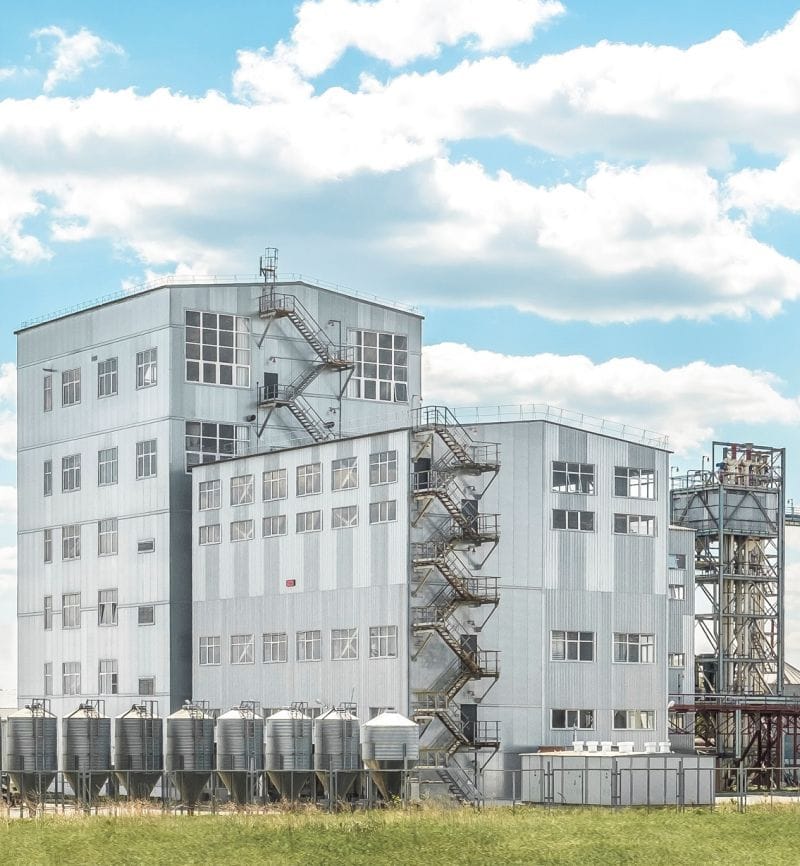
Floating Fish Feed Mill
A Floating Fish Feed Mill Can Meet The Investment Needs OfLarge Floating Fish Farms Or Small And Medium-Sized FloatingFish Feed Factories.

Sinking Fish Feed Production Line
A Sinking Fish Feed Production Line Can Meet The InvestmentNeeds of Large Sinking Fish Farms Or Small And Medium-SizedSinking Fish Feed Factories.


how to build fish feed production line?
1. Site selection
- Market proximity: The primary consideration for site selection is market proximity. It is necessary to ensure that the products produced can be delivered to the target market in a timely and convenient manner to reduce logistics costs and improve customer satisfaction.
- Land cost: Land cost is also one of the important factors in site selection. It is necessary to comprehensively consider the cost of land leasing or purchasing, and calculate it with the expected output and sales revenue. Mini or small fish feed production lines sometimes only require one plant building.
- Plant construction and production line steel structure cost: Plant construction usually requires finding contractors in the area, while steel structure can be purchased from fish feed equipment manufacturers.
2. Layout design
- Process analysis: Before conducting layout design, a detailed process analysis of the fish feed production process is required, including the purchase of raw materials, various links in the production process, and the shipping process of finished products.
- Process optimization: According to the results of process analysis, process optimization is carried out to optimize the equipment and process arrangement of each link on the production line to improve production efficiency and reduce resource waste.
- Space planning: When designing the layout, it is necessary to fully consider the space utilization rate to ensure that each fish feed equipment can be fully utilized, and at the same time provide sufficient operating space and working channels for employees to operate and manage.
3.Equipment procurement
- Equipment selection: When selecting equipment, it is necessary to comprehensively consider factors such as the scale of the production line, production process, quality requirements and cost, and compare and evaluate with multiple suppliers to select the most suitable equipment.
- Equipment layout: The layout of the equipment should match the layout of the fish feed production line to ensure that the transportation and operation efficiency between the equipment is maximized, and it is easy to maintain and maintain.
- Equipment debugging: After the equipment procurement and layout are completed, the equipment needs to be debugged and tested to ensure the normal operation and production efficiency of the equipment.
Communicate With Technical Consultants


Company Introduction
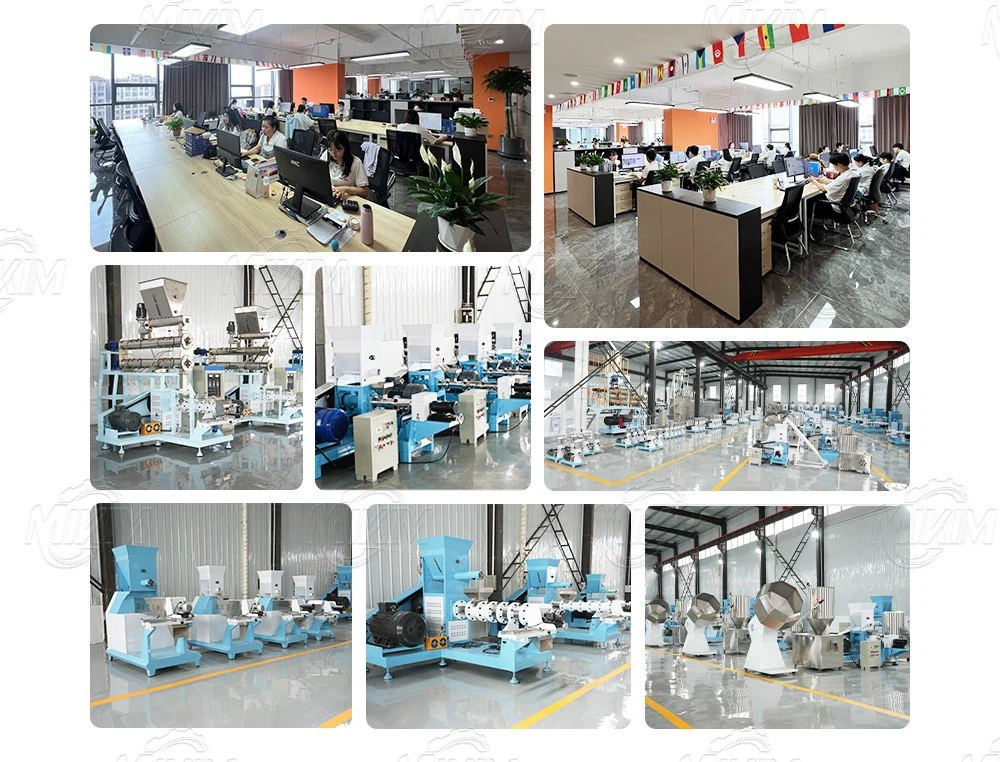
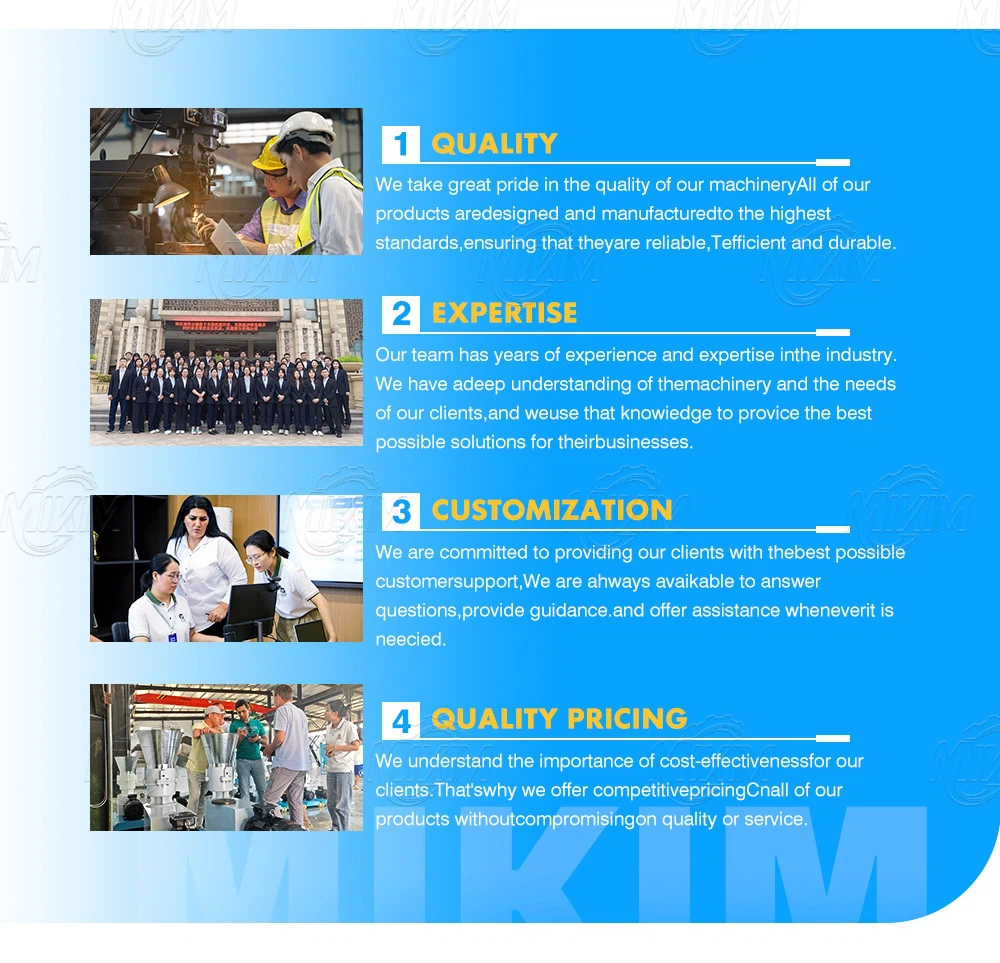
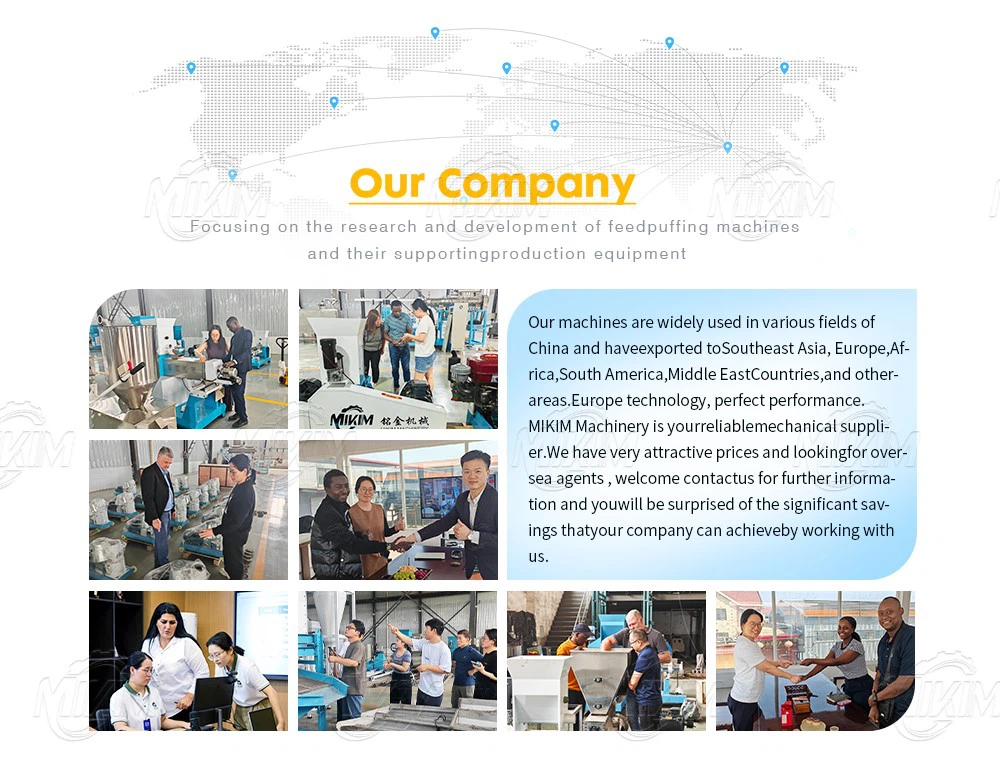
Mikim Machinery is a high-tech enterprise integrating scientific research, design, manufacture, installation and commissioning, and after-sales service. which has passed many certificates such as CE, ISO, etc. Now we are mainly engaged in two fields: feed pellet machine production line (hammer mill-mixer-conveyor-feed pellet machine-cooling & vibration system-packing and sealing) and feed extruder production line (mixer-twin screw extruder machine-dryer-drum seasoning machine-cooling towers-packing machine).


FAQ
Q: What is a floating fish meal production line?
Q: What is the working principle of a fish meal processing line?
Q: What are the different types of fish food production lines?
Q: What are the advantages of using a fish floating food production line?
Q: What materials can be processed using a fish floating meal production line?
Q: What factors should be considered when selecting a production line for making fish meal?
Q: What is the difference between a single-screw and a twin-screw fish feed extruder?
Q: What is the role of the conditioner in a floating fish food making production line?
Q: What is the importance of pellet quality in floating fish meal making production line?
Q: Can a fish feed production line be used for custom feed formulations?
Q: What safety measures should be taken when operating a floating food production line?
Q: Can a fish feed production line be used for high-protein feed production?
Q: What is the typical lifespan of a floating meal production line?
Q: Can a fish feed production line be customized for specific fish species?
Q: Can a fish feed production line handle different types of materials?
Q: What maintenance is required for a fish meal pellet production line?
Q: Can a fish feed production line be used for medicated feed production?
Q: Can a fish feed production line be used for multi-species feed production?
Q: Can a fish feed production line be used for high-fat feed production?
Q: What is the difference between a laboratory-scale and an industrial-scale fish feed pellet making production line?
We're professional fish feed production line manufacturers and suppliers in China, specialized in providing high quality customized service. Please feel free to wholesale high-grade fish feed production line made in China here from our factory.
Fish Extruder Machines, floating fish food production line, fish feed pellet mill plant