


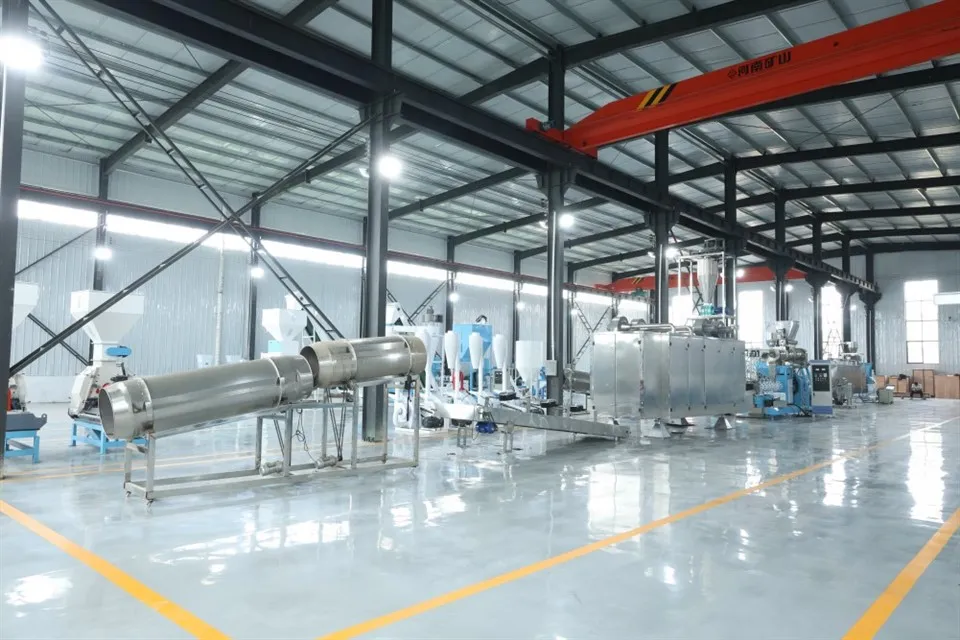
1-2T/H Commercial Use Fish/pets Feed Pellet Production Line
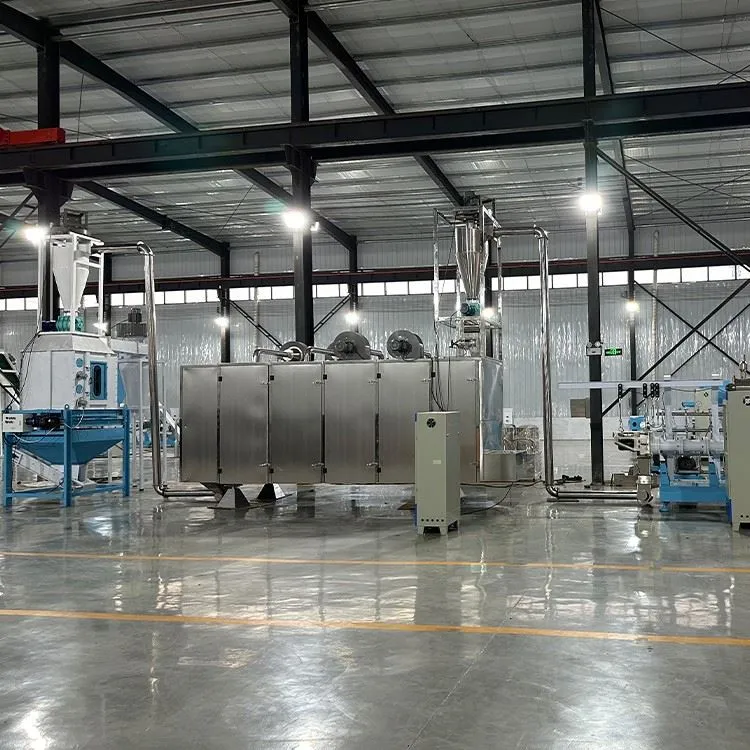
1-2T/H Commercial Use Fish/pets Feed Pellet Production Line suppliers

1-2T/H Commercial Use Fish/pets Feed Pellet Production Line factory
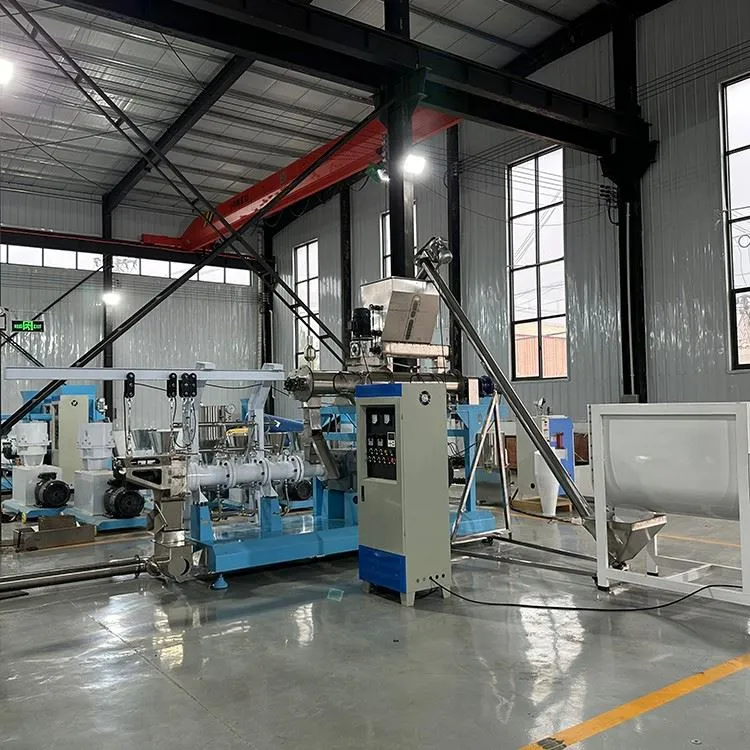
1-2T/H Commercial Use Fish/pets Feed Pellet Production Line best

1-2T/H Commercial Use Fish/pets Feed Pellet Production Line high quality
1-2T/H Commercial Use Fish/pets Feed Pellet Production Line
Name: Farm feed extrusion production line
Voltage: 220v/380v/450V can be customized
Power: 94-217kw can be customized
Capacity: 1-2T
Size for whole line: Length: 35m-50m Width: 6m Height: 8m
Shipment requirements: 2×40ft container
Description
1-2 T/H Twin-Screw Extrusion Line for Aquatic Feed and Pet Food Production: Engineering Guide
Table of Contents
Introduction
A 1-2 T/H fish feed pellet extruder production line is widely used by feed manufacturers seeking a balance between investment cost, production flexibility, and product quality.
This capacity range is suitable for producing:
Floating fish feed,Sinking shrimp feed,Crab feed,Specialty aquatic feed,Dog food,Cat food,High-protein pet food with fresh meat inclusion, etc.
By using a twin-screw extrusion system, manufacturers can process a broad range of raw materials while maintaining stable product quality and operational efficiency.

1. One Production Line for Aquatic Feed and Pet Food
A key advantage of a 1-2 T/H Aquaculture Automatic Pellet Feed Production Line is its ability to serve multiple markets.
Aquatic Feed Production
-
Typical products include:Floating fish feed,Slow-sinking fish feed,Sinking fish feed,Shrimp feed,Crab feed
-
Production focuses on:Water stability,Pellet durability,Density control,Fine grinding requirements
For shrimp feed, maintaining pellet integrity in water is often an important performance indicator.
Pet Food Production
-
Typical products include:Dog food,Cat food,High-meat pet food,Functional pet diets
-
Production priorities include:Consistent expansion,Shape uniformity,Palatability,Fat and flavor application,Fresh meat utilization
The same production line can often switch between aquatic feed and pet food through equipment adjustments and recipe changes.

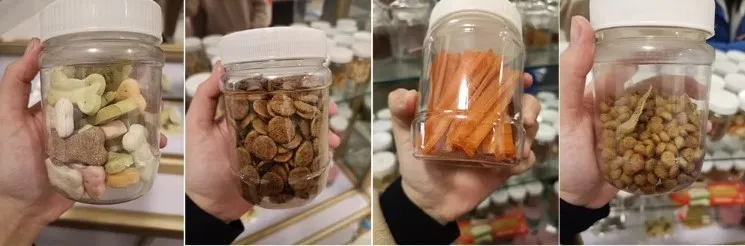

2. How to Make Fish Feed?
1-2T/H Fully automatic puffing feed production line test
1. Cleaning of raw materials and a coarse crushing
Raw materials are first cleaned to remove impurities.
Magnetic separators are commonly installed before grinding equipment to reduce the risk of metal contamination and protect downstream machinery.
Fine Grinding
Particle size directly influences pellet quality.
Typical grinding requirements:
| Product Type | Grinding Fineness |
|---|---|
| Shrimp Feed | 80-120 Mesh |
| Fish Feed | 60-100 Mesh |
| Pet Food | 60-80 Mesh |
Fine particle size generally contributes to improved mixing uniformity and pellet structure.
Dust Collection
Pulse dust collection systems are often integrated into grinding sections to:
- Improve workplace cleanliness
- Reduce material loss
- Support compliance with industrial safety requirements


2: Batching and Mixing
Automatic Ingredient Dosing
Automated batching systems help ensure consistent ingredient proportions.
Typical systems include:6-8 ingredient bins,PLC-based weighing control,Formula management functions
Mixing
U-shaped Livestock Mixers are commonly used to achieve uniform ingredient distribution.
A well-designed mixing stage helps ensure that vitamins, minerals, and micro-ingredients are evenly dispersed throughout the final product.


3: Conditioning and Extrusion
Steam Conditioning
Conditioning introduces heat and moisture before extrusion.
Benefits may include:
- Improved starch cooking
- Better material plasticization
- More stable extrusion performance
Differential-diameter conditioners can increase material retention time and improve steam absorption efficiency.
Twin-Screw Extrusion
Twin-Screw floating Fish Feed Extruder is the core component of the production line.
Common characteristics include:
- Modular screw configuration
- Adjustable process parameters
- Capability to process a wide range of formulations
Screw elements are often manufactured from nitrided alloy steel materials such as 38CrMoAlA to improve wear resistance.
Advantages of Twin-Screw Technology
Compared with single-screw systems, twin-screw extruders generally offer:
- Better formula flexibility
- Improved handling of high-protein recipes
- Stable processing of high-moisture ingredients
- Enhanced process control
Product Parameters
| Model (Electric) | Capacity (kg/h) | Main power | Cutting blade power | Cutting power | Modulator power |
| 65 | 250-300 | 22KW | 1.5KW | 1.5KW | 3KW |
| 70 | 500-600 | 45KW | 1.5KW | 1.5KW | 3KW |
| 75 | 800-1000 | 55KW | 1.5KW | 1.5KW | 3KW |
| 85 | 1200-1500 | 90KW | 3KW | 2.2KW | 5.5KW |
| 95 | 2000-2500 | 110KW | 3KW | 3KW | 11KW |
| 120 | 3000-4000 | 160KW | 5.5KW | 3KW | 15+7.5KW |
| 136 | 5000-6000 | 200KW | 7.5KW | 5.5KW | 22+7.5KW |
1000-1200kg/h Twin screw floating fish feed pellet extruder machine test in factory
4: Drying and Mixed seasonings
Drying
Extruded pellets contain moisture that must be reduced before packaging.
Multi-layer belt dryers are commonly used to:
- Reduce moisture content
- Improve product stability
- Support consistent pellet quality
- Some systems incorporate heat recovery technologies to improve energy efficiency.
Seasoning Process
Seasoning Machine is an important process in premium pet food production.
These processes help oils and liquid flavorings penetrate the internal pore structure of the pellets, enhancing flavor absorption and coating uniformity.
5: Cooling and Stabilization
Counter-Flow Cooling
Pellets leaving the dryer or coating system typically retain residual heat.
Counter-flow coolers reduce pellet temperature to near ambient conditions.
This process helps:
- Minimize moisture migration
- Reduce condensation risks during storage
- Improve packaging performance
- Support long-term product stability
- Proper cooling is an important step before final packaging.


3. The Science of Extrusion: Why It Matters
3.1 Strategic Advantages of Extruded Feed
The HTST extrusion process promotes high starch gelatinization levels, which are often associated with improved feed digestibility and pellet quality. By adjusting screw speed, moisture, steam addition, and die design, manufacturers can produce floating, slow-sinking, or sinking feed with different density characteristics. When properly controlled, extrusion may also help reduce microbial contamination risks and improve feed hygiene.
3.2 Raw Material
Raw materials including grain, fishmeal, bone meal, bean cake, peanut meal, rice bran,wheat bran,clam shell powder,alcohol masterbatch,soybean phosphatide, shrimp flour, salmon powder, feed yeast, etc.

3.3 Formula Flexibility: The Twin screw fish feed extruder machine Advantage
High-Fiber Formulations
The intermeshing screw design helps process fibrous ingredients more effectively and supports stable material flow.
High-Moisture Formulations
Twin-screw extrusion systems are generally better suited for handling high-moisture recipes and fresh meat formulations than conventional single-screw systems.
Multi-Species Production
A single line can often produce multiple product categories with limited mechanical adjustments, improving equipment utilization.
4. Technical Parameters
|
Capacity |
1000-2000kg/h |
|
Power |
94-217kw |
|
Range of application |
Good for medium/big commerical Aquatic /pets feed factory |
|
Product advantages |
Long working life,make high protein feed,Stable output,high efficiency, |
|
Process flow |
1.Bucket elevator -2.Buffer bin -3.Hammer mill -4.Bucket elevator -5.Buffer bin |
|
Size for whole line |
Length: 35m-50m Width: 6m Height: 8m |
|
Workers requirements |
3-5 Workers |
|
Shipment requirements |
2×40ft container |
| Feature | Aquatic Feed Mode | Pet Food Mode |
|---|---|---|
| Rated Output | 1.0-2.2 T/H | 1.0-1.5 T/H |
| Grinding Fineness | 80-120 Mesh | 60-80 Mesh |
| Starch Gelatinization | ≥90% | ≥85% |
| Fresh Meat Inclusion | Up to 25% | Up to 40% |
| Pellet Diameter | 0.5-10 mm | 2-20 mm |
| Water Stability | Up to 12 Hours or More (Formula Dependent) | N/A |
5. Tips for making floating fish feed on the production line
-
Screw L/D Ratio
For aquatic feed applications, L/D ratios between 18:1 and 22:1 are commonly used to support sufficient cooking and product development.
-
Material Selection
Food-contact components are often manufactured from 304 stainless steel to improve corrosion resistance and facilitate cleaning.
-
Bearing Configuration
Industrial-grade bearing systems with proper lubrication and cooling arrangements can contribute to long-term operational reliability.
-
Climate Adaptation
Projects in cold or humid regions may require:
- Heat tracing systems
- Insulated pipelines
- Control cabinet dehumidification
- Environmental protection measures
6. FAQ
What factory space is required?
A typical 1-2 T/H turnkey plant may require approximately 500 m² of production area, depending on layout configuration and auxiliary equipment selection.
Can the line produce 0.5 mm micro-pellets?
Yes. Specialized dies and cutting systems can be used for micro-pellet production. Actual output may vary according to product specifications.
Why choose a Twin-Screw floating fish feed extruder machine for high-protein pet food?
Twin-screw technology generally provides better process stability when handling high-protein and high-moisture formulations.
What factors influence operating costs?
Operating costs are affected by:
- Electricity prices
- Steam generation costs
- Labor expenses
- Production volume
- Raw material characteristics
- Actual costs vary by country and project conditions.
7. Case Scene

Uzbekistan 500KG/H High-Efficiency Floating Fish Feed Pellet Production Line Project
- Country:Tashkent, Uzbekistan
- Capacity: 500KG/H

America 1-2 T/H High Quality Fish Feed Pellet Mill Plant Project
- Country:America
- Capacity: 1-2 T/H

Bolivia Easy to Operate 800KG/H FishFeed Extruder Project
- Country: America
- Capacity: 800KG/H
Get Your Personalized Feed Mill Quote
Company Profile



Hot Tags: 1-2t/h commercial use fish/pets feed pellet production line, China 1-2t/h commercial use fish/pets feed pellet production line manufacturers, suppliers, factory, extruder line for floating fish feed, fish feed extruder line twin screw, fish feed pellet making plant, fish feed pelletizer equipment, Fish Feed Machine, screw feed extruder machine
Send Inquiry
You Might Also Like


