What are the key raw materials for producing pellets using a small pet food making machine?
Leave a message
content
Corn is the core and most commonly used starchy raw material for producing floating fish pellets, suitable for the processing needs of various floating fish feed extruder machines. With a starch content as high as 65%-70% and a moderate gelatinization temperature (62-72℃), corn can quickly and fully gelatinize in the extrusion environment of a floating fish feed making machine, forming a stable porous structure that allows the feed to float for 8-12 hours, fully meeting the feeding needs of most fish species. At the same time, corn is inexpensive and widely available, effectively controlling raw material costs, making it suitable for both large-scale and small-scale production. When using corn, it should be ground to 80-120 mesh, with moisture content controlled at 12%-15% to avoid large particles affecting the extrusion effect. For example, when small-scale fish farmers use a small fish feed pellet extruder to produce tilapia floating feed, corn accounts for 35%-40%, combined with fishmeal, soybean meal, and other raw materials; after extrusion, the feed's buoyancy rate can reach over 95%.
Wheat and wheat by-products (such as wheat flour and bran) are high-quality auxiliary starch raw materials that can improve the binding and buoyancy stability of feed. Wheat starch, after gelatinization, has strong viscosity, which can enhance the structural stability of the pellets, preventing feed from disintegrating in water. It also works synergistically with corn starch to further improve the extrusion effect. Wheat flour has a starch content of 60%-65% and is suitable for use in combination with corn, accounting for 15%-20%. Bran has a lower starch content (about 20%), but it can improve the flowability of the raw material and reduce the risk of extruder die clogging; its proportion should be controlled at 5%-10%. For example, when producing floating feed for sea bass, using 25% corn + 15% wheat flour as the starch source, after extrusion using automatic fish food making equipment, the feed not only has stable buoyancy but also good chewiness, reducing waste during feeding.
Potato starches (sweet potato starch, potato starch) are high-purity starch raw materials, suitable for specialty fish feeds with extremely high buoyancy requirements. With a starch content exceeding 80%, it exhibits high expansion rate after gelatinization, allowing the feed to form a looser structure and extending buoyancy time to 12-15 hours. Furthermore, its relatively low gelatinization temperature (55-65℃) makes it suitable for low-temperature extrusion processes. However, potato starch is expensive and its sources are relatively limited, typically used as an auxiliary ingredient, accounting for 5%-10%. For example, when producing floating feed for grouper, adding 8% sweet potato starch, combined with corn and fishmeal, and extruding it using a small fish feed pellet making machine results in a near 100% buoyancy rate, precisely suited to the slow feeding habits of grouper. It is important to note that potato starch is highly hygroscopic; the raw material must be kept dry during storage to prevent clumping and ensure proper processing.
Related equipment


about Us
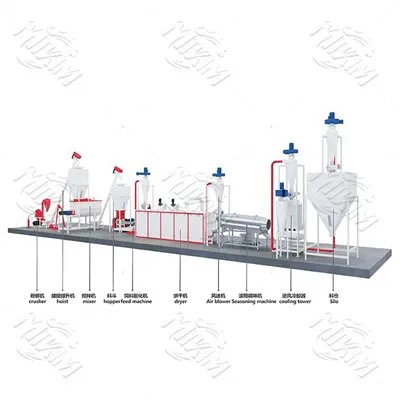
MIKIM's fish feed pellet production lines and supporting machinery offer excellent value for money. Not only are they affordable, eliminating middlemen markups and allowing small and medium-sized enterprises (SMEs) and fish farmers to purchase complete sets of equipment at reasonable costs, but they also boast exceptional efficiency. The fully automated process, from raw material crushing and precise ingredient mixing to extrusion pelleting and maturation, is completed in one continuous flow. This results in high starch gelatinization rates and uniform pellet formation, significantly improving production efficiency and feed quality, truly achieving "low cost, high output." Choosing a MIKIM fish feed pellet production line means enjoying comprehensive pre-sales and after-sales service, including 24-hour online customer support, a one-year warranty on the entire machine, professional on-site installation, commissioning, and maintenance, and a stable supply of spare parts. Customers can buy with confidence and use with peace of mind, with both excellent value and service quality!!!
Customer visit

Certificate of Honor

FAQ
1. What is the price of the fish feed production equipment?
The price ranges from approximately $1,500-$55,000
2. Do you provide maintenance services for your customers?
Yes, we offer comprehensive after-sales maintenance services to our customers.
If you would like to learn more about MIKIM machinery, please contact us. We offer one-stop service and welcome your inquiries!!!