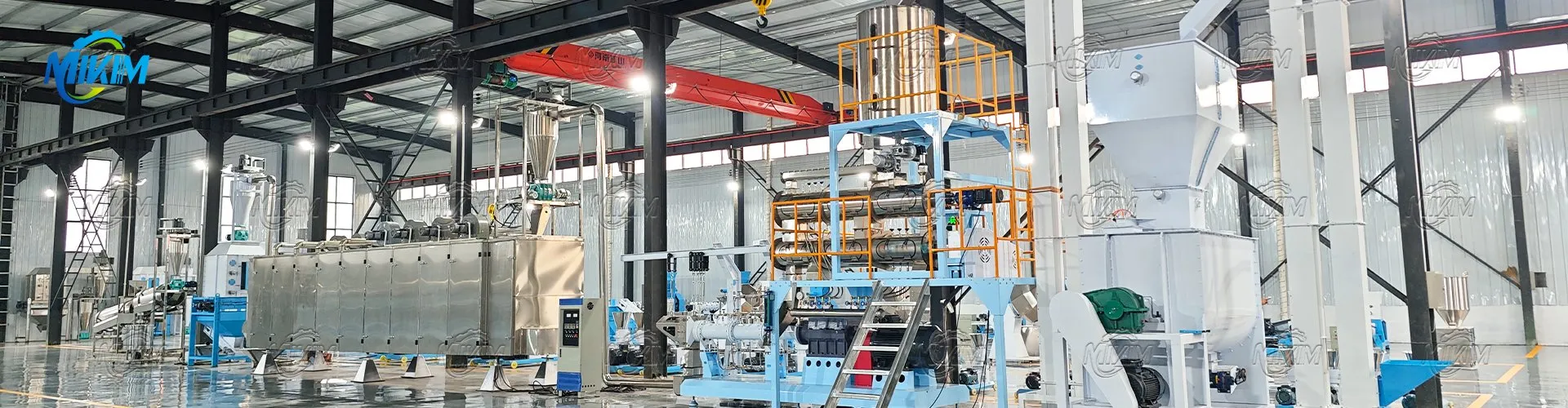
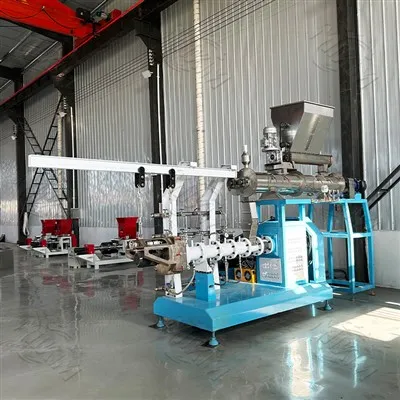
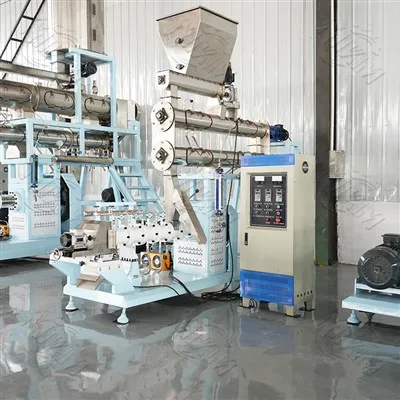
3 mm Wet-type Floating Fish Feed Extruder Machine Test
Leave a message
On-site trial run of wet type fish feed making machine
1. What is a Wet-type Floating Fish Feed Extruder?
A wet floating fish feed making machine is an advanced processing machine that uses steam pre-conditioning and screw extrusion technology to transform raw feed materials (such as soybean meal, fish meal, corn, and wheat) into uniform, floating pellets. Unlike dry-type Fish Feed Extruders, it injects steam during the pre-conditioning stage, significantly improving starch gelatinization, pellet water stability, and buoyancy.
2. Detailed Technical Parameters
|
Model |
Capacity t/h |
Main Power |
feeding power |
screw diameter |
cutting power |
conditioner power |
Weight |
|
DSP85 |
0.35-0.4 |
22kw |
1.1kw |
80 |
0.75kw |
1.5kw |
1000kg |
|
DSP90 |
0.5-0.6 |
30kw |
1.1kw |
90 |
1.1kw |
2.2kw |
2000kg |
|
DSP100 |
0.6-0.7 |
37kw |
1.1kw |
100 |
1.1kw |
3kw |
2100kg |
|
DSP120 |
0.7-0.8 |
55kw |
1.1kw |
120 |
1.5kw |
3kw |
2200kg |
|
DSP135 |
1.0-1.5 |
75kw |
1.5kw |
135 |
2.2kw |
5.5kw |
3200kg |
|
DSP145 |
2.0-3.0 |
90kw |
2.2kw |
145 |
2.2kw |
7.5kw |
4000kg |
|
DSP160 |
3.0-4.0 |
110kw |
2.2kw |
160 |
3kw |
11kw |
4500kg |
|
DSP175 |
4.0-5.0 |
132kw |
3.0kw |
175 |
3kw |
15kw |
5000kg |
3. Test Process & Performance Evaluation of Wet Type Fish Feed Pellet Extruder Machine
3.1 Raw Material Preparation
- Formula: 45% soybean meal, 25% fish meal, 20% corn flour, 8% wheat bran, 2% premix (vitamins, minerals).
- Initial Moisture: 12–14%.
- Particle Size: ≤ 1.5 mm (after crushing).
3.2 Key Test Indicators & Results
3.2.1 Production Capacity Test
- Test Condition: Screw speed 300 rpm, steam pressure 0.5 MPa, conditioning temperature 90°C.
- Result: Stable output of 420 kg/h, meeting the design capacity of 300–500 kg/h. The machine runs continuously for 8 hours without blockage or abnormal noise.
3.2.2 Pellet Quality Test
- Buoyancy Test: 100 pellets placed in water; 98 pellets floated for over 24 hours, far exceeding the industry standard of 95%.
- Water Stability Test: Pellets soaked in water for 3.5 hours remained intact, with no disintegration or powder loss.
- Gelatinization Rate: Tested using a starch iodine colorimetric method; the gelatinization rate reached 94%, ensuring high digestibility for fish.
- Appearance: Pellets are cylindrical, uniform in size (3.0 ± 0.1 mm), smooth surface, and golden color.
3.2.3 Energy Consumption Test
Specific Energy Consumption: 88 kWh per ton of feed, which is 15% lower than similar dry-type extruders, reducing production costs.
4. Advantages of the 3 mm Wet-type fish feed pellet processing machine
4.1 Superior Pellet Quality
- High Buoyancy: Ideal for surface-feeding fish (tilapia, catfish, carp), reducing feed waste and water pollution.
- High Digestibility: High starch gelatinization (≥90%) and protein denaturation improve nutrient absorption, promoting faster fish growth.
- Excellent Water Stability: Pellets maintain shape in water for hours, preventing water eutrophication.
4.2 High Efficiency & Cost-effectiveness
- Large Capacity: 300–500 kg/h output, suitable for small to medium-scale commercial feed mills.
- Low Energy Consumption: wet type fish food making machine reduces energy use by 10–20% compared to Dry floating fish feed making machine.
- Wide Adaptability: Processes various raw materials, including high-fiber and high-fat formulas.
4.3 Stable & Durable Design
Stainless Steel Contact Parts: Corrosion-resistant, easy to clean, and meets food safety standards.
Variable Frequency Drive: Precise control of screw speed for optimal performance under different conditions.
Overload Protection: Ensures safe operation and extends machine life.
5. FAQ
Q1: What is the difference between wet-type and dry-type fish feed pellet maker machines?
A: Wet type fish food maker machines use steam pre-conditioning, resulting in higher gelatinization, better buoyancy, and more stable pellets. Dry-type shrimp feed pellet extruders rely on frictional heat, are simpler and cheaper, but produce lower-quality pellets with shorter floating time.
Q2: Can this machine produce sinking feed pellets?
A: Yes. By adjusting extrusion parameters (temperature, pressure, screw speed) and using a specific die, it can produce slow-sinking or sinking pellets for bottom-feeding fish and shrimp.
Q3: What is the service life of the screw and die?
A: The screw and die are made of alloy steel with heat treatment. Under normal use and proper maintenance, the screw life is 800–1000 hours, and the die life is 500–800 hours.
Q4: What maintenance is required?
A: Daily: Clean the hopper and conditioner. Weekly: Lubricate bearings, check belt tension. Monthly: Inspect screw wear, clean the die holes. Annual: Overhaul the gearbox and replace worn parts.
Q5: Is training provided for wet type fish feed production equipment operation?
A: Yes. We provide detailed operation manuals and on-site/online training for your technicians to ensure proficient and safe operation.
Our equipment


Company Introduction