How Raw Materials Determine The Type Of Fish Feed Pellet Extruder
Leave a message
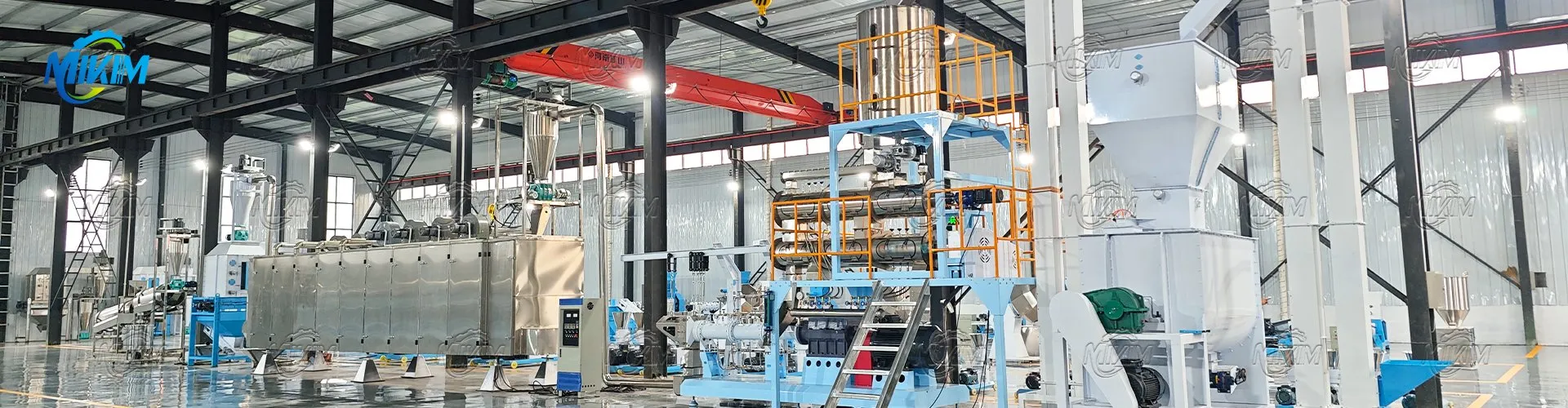
The core processing challenge for high-protein raw materials lies in their high heat sensitivity and large viscosity fluctuations. Animal proteins such as fishmeal and meat and bone meal are prone to excessive denaturation at temperatures exceeding 120℃, leading to the destruction of their amino acid structure and loss of nutritional value. Plant proteins such as soybean meal tend to become sticky during extrusion, clogging the mold. Therefore, a suitable pellet mill must meet the core requirements of "low-temperature extrusion and uniform pressure distribution." Twin-screw fish food making machines, with their co-rotating twin-screw structure, ensure thorough mixing and shearing of raw materials within the barrel. The extrusion temperature can be controlled at 90-110℃, while the pressure distribution is uniform, preventing localized overheating, making it the optimal solution for high-protein raw materials. Its special barrier-type screw design also prevents sticky materials from adhering to the walls, reducing cleaning frequency.
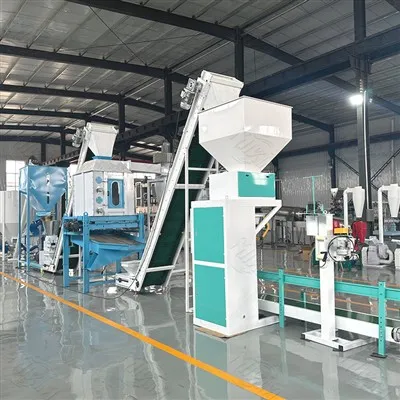
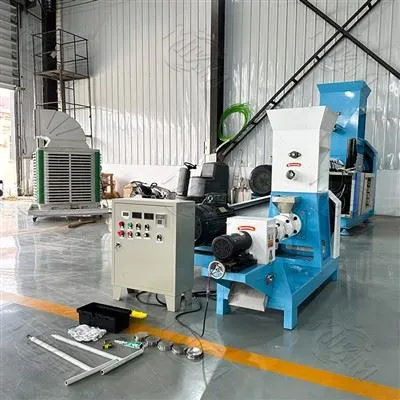
For small- to medium-scale customers processing single plant protein raw materials such as soybean meal and cottonseed meal, single-screw fish feed pellet making machines offer a cost-effective option, but require a forced feeding device and cooling system. Forced feeding devices solve the problem of poor flowability of plant proteins, ensuring uniform feeding; cooling systems can quickly reduce pellet temperature from 100℃ to room temperature, preventing continuous protein denaturation during subsequent storage. A small feed mill in Hebei province, when processing soybean meal feed, used a single-screw pellet mill with an air-cooling system, increasing the pellet protein retention rate to 92%, meeting the needs of local farmers.
When selecting a pellet mill, the fat content of the raw materials must also be considered. High-fat raw materials such as fishmeal (fat content > 15%) can easily cause slippage in the pellet mill die. Therefore, special dies with a surface roughness of Ra1.6 should be selected, along with a quantitative feeding system for a twin-screw floating fish feed extruder machine, to ensure stable pellet formation. At the same time, the material of the equipment is also crucial. Parts in contact with the raw materials must be made of 304 stainless steel to prevent corrosion from acidic substances in high-protein raw materials, extending the equipment's service life.
Why choose us?
The MIKIM's floating fish feed extruder machine is constructed entirely of food-grade 304 stainless steel, fully complying with food processing hygiene standards. It is corrosion-resistant, easy to clean, and eliminates potential contamination at the source. The core screw is made of high-quality alloy steel through special heat treatment, offering outstanding wear resistance and corrosion resistance. Combined with its integrated structural design, this significantly extends its service life. The entire machine has passed CE and ISO international authoritative certifications, aligning with global quality standards and ensuring safer and more reliable processing.
Our equipment


Our Services
We offer:
One-Year Whole Machine Warranty Service
On-site Installation, Commissioning, and Technical Guidance
24/7 Online Technical Support
Qualifications and Honors

Customer visit

FAQ
1. What is the price of the small fish food making machine?
The price ranges from approximately $1,500-$50,000
2. How do you deliver to customers?
MIKIM Machinery's machinery delivery follows a complete process of "customized preparation - safe and fast delivery - precise handover - after-sales extension", with 3-day fast delivery, multi-layer protective packaging, global logistics tracking and 1-year warranty + on-site technical service to ensure that the equipment is delivered efficiently and in good condition and put into use smoothly.