


How is food ground in a fish feed processing machine?
Leave a message
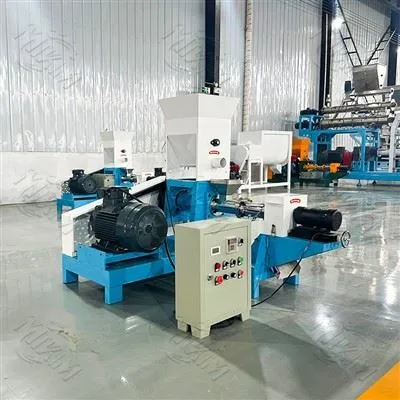
The core grinding objective of a fish meal extruder machine is to process raw materials to a mesh size of 80-120, ensuring uniform and fine particles. This lays the foundation for subsequent extrusion and improves feed stability in water. The grinding process is mainly divided into three stages: pre-grinding preparation, grading and grinding operation, and post-grinding treatment. Each stage has clear operating procedures and precautions.
Pre-grinding preparation is the prerequisite for ensuring grinding quality. First, the raw materials must be screened. Commonly used raw materials for fish and shrimp feed, such as fishmeal, shrimp meal, and soybean meal, need to have impurities removed beforehand. In particular, fishmeal may contain fish bone fragments or hard shrimp shell residue, which can be initially filtered through a 10-mesh sieve to prevent hard impurities from damaging the grinding components. Second, the moisture content of the raw materials must be adjusted, controlling it at 12%-15%. Excessive moisture can cause the raw materials to adhere to the inner wall of the grinding chamber, resulting in "clogging"; insufficient moisture will generate a large amount of dust, polluting the environment and affecting grinding uniformity. Finally, check the fish meal extruder's condition, paying particular attention to the grinding disc gap. Before using a new machine for the first time, adjust the grinding disc gap to 0.5mm and add special lubricating oil to ensure smooth spindle rotation.
Grading and grinding is a crucial step, requiring two grinding stages based on the raw material characteristics to avoid uneven particle size from a single grinding. The first coarse grinding targets large pieces of raw material. Mix the main ingredients such as fish meal and soybean meal with energy ingredients such as corn and wheat according to the formula ratio, then feed the mixture into the pellet mill inlet. Adjust the grinding disc gap to 1.5mm and start the machine for coarse grinding. At this stage, the raw material is ground to 20-40 mesh, resulting in larger particles without significant agglomeration. After coarse grinding, intermediate screening is required. Filter the mixture through a 40-mesh sieve to remove any substandard large particles, which are then re-feeded into the machine for a second coarse grinding to ensure a uniform coarse grinding product. The second fine grinding is crucial for improving the fineness of the powder. The coarsely ground raw material is fed back into the machine, the gap between the grinding discs is adjusted to 0.3-0.5mm, and the feed speed is reduced from 50kg/hour to 30kg/hour. This allows the raw material to be thoroughly ground within the grinding chamber, ultimately yielding a fine powder of 80-120 mesh. During the fine grinding process, the output status must be monitored in real time. If excessive dust occurs, the moisture content of the raw material can be increased by 0.5%-1%. If fine powder clumps, the machine must be stopped and the residual raw material on the inner wall of the grinding chamber cleaned.
Post-grinding processing and precautions are essential. The ground raw material must be immediately sealed and stored in moisture-proof bags to prevent moisture absorption and clumping, which could affect subsequent use. For dog food extruder machine maintenance, the machine must be stopped and cleaned after each grinding cycle. First, use compressed air to blow away any residual fine powder from the grinding chamber and feed inlet. Then, disassemble the grinding discs and use a special brush to clean any remaining raw material residue from the crevices to prevent mold growth and contamination of the next batch of feed. For easily damaged parts such as grinding discs, the wear condition should be checked weekly. If obvious grooves are found on the surface of the grinding disc, it should be replaced in time to avoid affecting the grinding accuracy. In addition, for special raw materials commonly used in fish and shrimp feed, such as seaweed powder and shell powder, it is recommended to grind them separately before mixing them with other raw materials. Shell powder has a high hardness, and grinding it separately can avoid damaging the nutritional components of other raw materials. At the same time, ensure that it is ground to a finer mesh than 100 to avoid scratching the digestive tract of fish and shrimp.
Related equipment


about Us
Customer visit

Certificate of Honor

FAQ
1. What is the price of the floating fish feed extruder machine?
The price ranges from approximately $4,500-$35,000
2. Do you provide maintenance services for your customers?
Yes, we offer comprehensive after-sales maintenance services to our customers.


