How should I handle it when the pellet feed machine fails to start or rotate?
Leave a message
If the motor does not respond and the screw does not rotate at all after the pellet mill is started, the first thing to consider is a fault in the power supply system or the motor itself-for example, a sudden power outage caused by a circuit breaker tripping in the workshop, or a burnt-out motor coil that cannot output power. If these problems are not investigated promptly, they will not only delay production, but forcibly restarting the machine multiple times may also worsen motor damage and increase maintenance costs.
Fault Causes and Solutions
1.Power outage or poor contact in the power supply system
Cause: The workshop's main distribution box has tripped (e.g., due to a short circuit or overload), or the pellet machine's dedicated switch has poor contact (e.g., loose terminals, internal oxidation of the switch). The motor power cord may be aging and damaged (e.g., due to cracked insulation), causing a short circuit and preventing the motor from receiving power.
Solution: First, check the workshop's main distribution box. If it trips, check for any short-circuiting devices (e.g., leakage from other machines). Once this is resolved, reset the tripped switch. Open the pellet machine's motor switch box, tighten any loose terminals with a screwdriver, and sand any oxidized contacts with sandpaper. Use a multimeter to test the motor's power cord. If a short circuit is detected, replace it with a cable of the same specification (e.g., 4mm² copper core wire for a 15kW motor). Ensure the connections are properly insulated (e.g., wrap with insulating tape).
2.Motor overload protection triggered
Cause: The motor has a built-in overload protector (such as a thermal relay). If residual material in the barrel was not cleaned during the previous shutdown, the screw may become stuck upon startup, causing a sudden increase in motor load (current exceeding 1.5 times the rated value). The protector will automatically cut off power to prevent motor burnout. Alternatively, the overload protector parameters may be incorrectly set (for example, the rated current is lower than the actual motor requirements), causing it to falsely trigger under normal load.
Solution: Press the "Reset" button on the motor overload protector and wait 5-10 minutes (to allow the protector to cool). Remove the barrel end cap and clean any hardened material remaining inside (this can be done by soaking in 60°C warm water to soften it). Check the overload protector parameters to ensure the rated current matches the motor (e.g., a 15kW motor has a rated current of approximately 30A, so the protector should be set to 30-35A). If the parameters are incorrect, readjust them according to the manual.
3.Motor Coil Burnt or Bearing Seized
Causes: The motor has been operating with a missing phase for a long time (e.g., one phase missing from a three-phase circuit) or the coil insulation has aged (over 5 years), causing the coil to short-circuit and burn, rendering the motor inoperable. The motor bearings may be worn (with a clearance exceeding 0.5mm) or the grease may have dried out, causing the balls and raceways to become stuck, preventing the motor rotor from rotating.
This can manifest as a humming sound but no rotation after power is applied.
Solution: Use a multimeter to check the motor coil insulation resistance. If the resistance is 0 (short circuit) or infinite (open circuit), disassemble the motor and replace the coil (by a qualified electrician, ensuring the number of turns matches the wire diameter). Remove the motor end cap and inspect the bearings. If worn or stuck, replace the bearings with the same model (e.g., model 6318 for a 15kW motor) and refill with lithium-based grease (filling 1/2-2/3 of the bearing space). After assembly, manually rotate the motor shaft to ensure smooth rotation without any sticking.


Why Choose Us
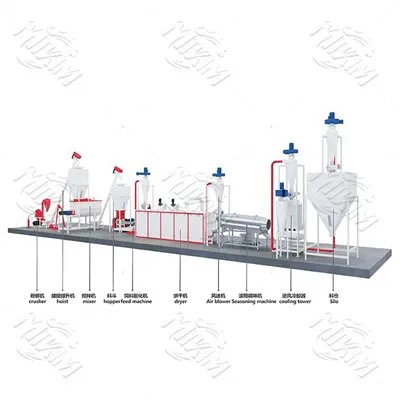
MIKIM boasts extensive experience in poultry feed pellet production lines, significantly reducing the incidence of poultry diseases. Its equipment is not only widely used across various industries domestically but also exported to Southeast Asia, Europe, Africa, and South America, earning a high reputation internationally. This global presence not only demonstrates the adaptability and competitiveness of its products, but also demonstrates the company's experience in adapting to diverse market standards and logistics conditions, enabling it to provide a stable supply chain for its overseas customers. Whether serving large domestic farms or cross-border feed companies, MIKIM can leverage its global service network to ensure a consistent, high-quality experience.
For more information on process flow design, equipment layout, factory construction plans, individual equipment pricing, or turnkey project proposals, please feel free to contact us!!!

FAQ
1. What is the price of the corn pellet machine?
The price ranges from approximately $3,000-$75,000
2. Do you provide maintenance services for your customers?
Yes, we offer comprehensive after-sales maintenance services to our customers.