


How to Produce Feed Pellets Using a Floating Fish Feed Extruder?
Leave a message
content
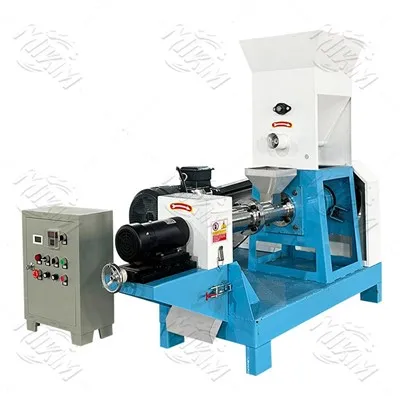
Core Raw Material Selection and Ratio Optimization. First, the raw material formula needs to be determined based on the type of aquaculture. Aquatic feed requires increased starch content (30%-50%) to ensure buoyancy, while livestock and poultry feed can appropriately increase the proportion of protein raw materials (25%-40%). It is recommended to use grain raw materials with good gelatinization properties, such as corn and wheat flour, combined with protein raw materials such as fish meal and soybean meal. Avoid adding too much high-fiber raw material (e.g., brewer's grains ≤15%), otherwise it will hinder starch gelatinization and affect the extrusion effect. At the same time, impurities such as stones, metal, and hair in the raw materials must be removed to prevent wear on the screw, barrel, and die of the small floating fish feed pellet extruder machine, extending the equipment's service life.
Raw Material Grinding and Particle Size Control. All raw materials must be ground to 80-100 mesh. Particle size uniformity directly determines the fullness of extrusion and the quality of pellet formation. Too coarse a particle size will result in insufficient residence time of the raw material in the extrusion chamber of the floating fish feed pellet making machine, incomplete extrusion, and uneven internal pores in the pellets; too fine a particle size will easily cause the raw material to stick to the screw, causing blockage. After crushing, the raw materials need to be screened through a vibrating screen to ensure that all unqualified particles are reworked. This step is crucial for adapting to the extrusion and shearing process of the extruder, allowing the raw materials to fully absorb heat and pressure, thus improving starch gelatinization.
Moisture control and mixing. The moisture content of the pre-treated raw materials needs to be precisely controlled between 12% and 14%, which is the optimal moisture range for efficient operation of fish food production machines. Excessive moisture can cause the raw materials to stick to the barrel, resulting in over-expansion and soft, easily collapsing particles; insufficient moisture leads to insufficient frictional heat generation, requiring additional steam consumption, increasing energy consumption, and resulting in poor extrusion. After adjusting the moisture content, all raw materials are placed in a mixer and stirred for 8-12 minutes to ensure uniform integration of materials and moisture, achieving a state where they "can be formed into a ball when squeezed but crumble easily when lightly touched," preparing for subsequent extrusion and shaping. Insufficient mixing uniformity will result in partially scorched particles and partially unexpanded particles, affecting the consistency of feed quality.
Related equipment



about Us
MIKIM's fish feed pellet production lines and supporting machinery offer excellent value for money. Not only are they affordable, eliminating middlemen markups and allowing small and medium-sized enterprises (SMEs) and fish farmers to purchase complete sets of equipment at reasonable costs, but they also boast exceptional efficiency. The fully automated process, from raw material crushing and precise ingredient mixing to extrusion pelleting and maturation, is completed in one continuous flow. This results in high starch gelatinization rates and uniform pellet formation, significantly improving production efficiency and feed quality, truly achieving "low cost, high output." Choosing a MIKIM fish feed pellet production line means enjoying comprehensive pre-sales and after-sales service, including 24-hour online customer support, a one-year warranty on the entire machine, professional on-site installation, commissioning, and maintenance, and a stable supply of spare parts. Customers can buy with confidence and use with peace of mind, with both excellent value and service quality!!!
Customer visit

Certificate of Honor

FAQ
1. What is the price of the small fish food pellet making machine?
The price ranges from approximately $1,500-$55,000
2. Do you provide maintenance services for your customers?
Yes, we offer comprehensive after-sales maintenance services to our customers.
If you would like to learn more about MIKIM machinery, please contact us. We offer one-stop service and welcome your inquiries!!!


