What are the advantages and disadvantages of the Floating fish feed pelleting process?
Leave a message
一,Advantages
Enhances Feed Nutritional Utilization
Pelleting (especially extrusion) uses high temperature and pressure to promote starch gelatinization (≥85% for extrusion) and protein denaturation, breaking down complex nutrients into forms easily digestible by aquatic animals. This improves feed conversion rate (FCR) by 10-20%, shortens fish growth cycles, and reduces nutrient waste. The thermal process also kills harmful bacteria (e.g., Salmonella) and inactivates anti-nutritional factors (e.g., soybean trypsin inhibitors), enhancing feed safety.
Optimizes Physical Properties & Feeding Efficiency
Pelleted feed has uniform particle size, controlled hardness, and strong water stability-floating pellets stay buoyant for 12-24 hours, while sinking pellets resist crumbling. This avoids nutrient leaching and water pollution, reduces feed waste by 15-30% compared to powdery feed, and simplifies feeding management (easy to quantify and monitor intake). The granular form also prevents selective feeding by fish, ensuring balanced nutrition intake.
Improves Storage & Transportation Performance
Pelleted feed has low moisture content (10-12%) and dense structure, reducing mold growth and nutrient degradation during storage. It generates less dust, minimizing losses during transportation and avoiding respiratory irritation in fish. For large-scale aquaculture, pelleted feed supports standardized production and long-distance supply.
Enables Customization for Diverse Needs
By adjusting formulas, die designs, and processing parameters, pelleting can produce feed tailored to different fish species (carnivorous/omnivorous/herbivorous) and growth stages (larvae/adult). For example, micro-pellets (0.3-1 mm) for fish fry and high-protein pellets for salmon, meeting specialized nutritional and feeding requirements.
二,Disadvantages
High Initial Investment & Operational Costs
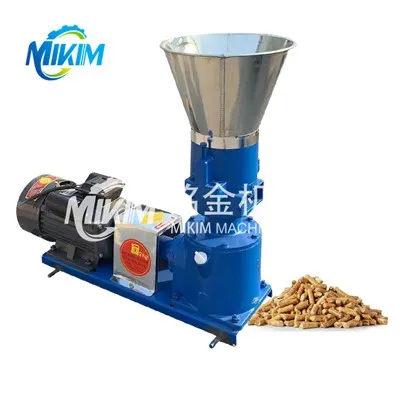
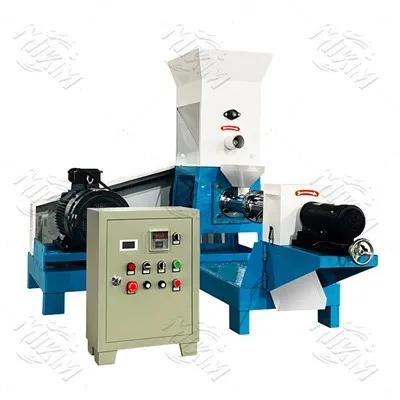
Pelleting requires professional equipment (extruders, pellet mills, dryers) with high upfront costs-twin-screw extruders for high-quality feed can be particularly expensive. The process also consumes significant energy (for heating, extrusion, and drying), increasing operational costs, which may be a burden for small-scale farmers.
Risk of Nutrient Loss
High-temperature processing during extrusion can destroy heat-sensitive nutrients such as vitamins (B, C) and probiotics, requiring additional post-processing supplementation (e.g., coating with liquid vitamins) to compensate. Over-processing may also reduce the activity of functional additives, affecting feed quality.
Complex Operation & Maintenance
Pelleting equipment (especially extruders) has complex structures, requiring operators to master parameter adjustment (temperature, pressure, screw speed) and regular maintenance. Wear of core components (screws, dies, barrels) needs timely replacement, increasing maintenance workload and costs. Improper operation can lead to machine blockage, uneven pelleting, or other issues.
Limited Adaptability to Raw Materials
The process is less suitable for raw materials with high moisture (over 18%) or high fiber content (e.g., unprocessed straw), which may cause blockage or poor pelleting quality. Raw materials need pre-treatment (crushing, drying, mixing), adding extra processing steps and costs.
Related equipment


about Us
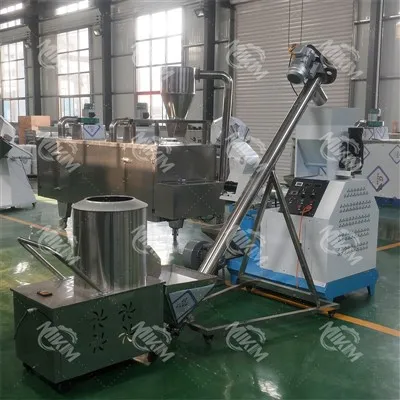
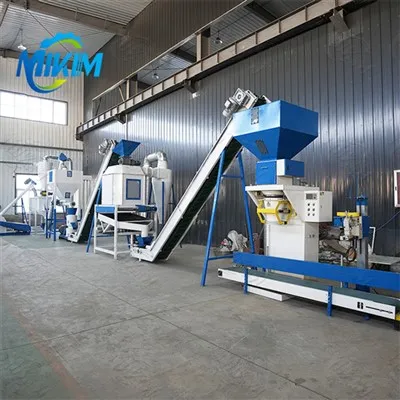
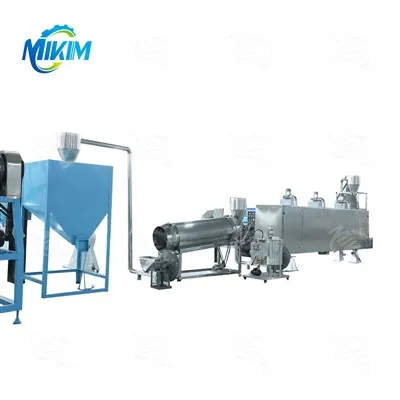
MIKIM's fish feed pellet production lines and supporting machinery offer excellent value for money. Not only are they affordable, eliminating middlemen markups and allowing small and medium-sized enterprises (SMEs) and fish farmers to purchase complete sets of equipment at reasonable costs, but they also boast exceptional efficiency. The fully automated process, from raw material crushing and precise ingredient mixing to extrusion pelleting and maturation, is completed in one continuous flow. This results in high starch gelatinization rates and uniform pellet formation, significantly improving production efficiency and feed quality, truly achieving "low cost, high output." Choosing a MIKIM fish feed pellet production line means enjoying comprehensive pre-sales and after-sales service, including 24-hour online customer support, a one-year warranty on the entire machine, professional on-site installation, commissioning, and maintenance, and a stable supply of spare parts. Customers can buy with confidence and use with peace of mind, with both excellent value and service quality!
Customer visit

Certificate of Honor

FAQ
1. What is the price of the fish feed machine?
The price ranges from approximately $3,500-$55,000
2. Do you provide maintenance services for your customers?
Yes, we offer comprehensive after-sales maintenance services to our customers.
If you would like to learn more about MIKIM machinery, please contact us. We offer one-stop service and welcome your inquiries!!!