What are the benefits of sinking fish pellet feed produced by a small fish feed pellet extruder?
Leave a message
Sinking fish pellet feed is a specialized option designed for bottom-dwelling aquatic species, offering unique advantages that align with their natural foraging habits and specific farming scenarios. Below are its core benefits:
1. Aligns with Bottom-Feeder Natural Habits
Many commercially farmed species (catfish, crucian carp, eels, shrimp, crabs) are innate bottom-feeders, relying on food sources at the pond/lake bottom. Sinking pellets directly reach their foraging zone, eliminating the need for behavioral adaptation. This enhances feed acceptance and intake efficiency-bottom-feeders consume more consistently, avoiding starvation or malnutrition compared to forced surface feeding with floating feed.
2. Cost-Effective Production & Lower Investment
Sinking feed is produced via direct compression (no high-temperature extrusion), requiring simpler equipment (e.g., ring die pellet mills) with lower manufacturing costs. The process skips energy-intensive extrusion and expansion steps, reducing production energy consumption by 30-40% compared to floating feed. This makes it an affordable choice for small-scale farmers, individual aquaculturists, or regions with limited production budgets.
3. Reduces Surface Competition & Stress
In polyculture ponds (mixed with surface/mid-water feeders), sinking feed targets bottom-dwellers exclusively, avoiding competition with species like tilapia or koi. This minimizes fish stress from chasing food and ensures each species gets specialized nutrition. For shy or stressed fish (e.g., newly stocked juveniles, recovering individuals), sinking feed provides a low-pressure feeding option without surface disturbance.
4. Stable Nutrition & Reduced Surface Waste
Sinking pellets have a dense texture with minimal porosity, reducing nutrient leaching during descent to the bottom. Unlike floating feed that may be carried away by water currents, sinking feed stays in the target foraging area, ensuring nutrients are fully utilized. It also avoids surface waste accumulation, which is beneficial for ponds with poor water circulation or shallow depths.
5. Versatile for Specialized Aquaculture Scenarios
Shrimp/crab farming: Sinking pellets remain intact on the seabed/pond bottom, matching their crawling foraging behavior and preventing water clouding (critical for crustacean gill health).
Deep-water aquaculture: In deep ponds or net cages, sinking feed reaches bottom-dwelling species that cannot access surface feed, expanding farming scope.
Low-temperature environments: In cold water (below 15°C), bottom-dwellers' metabolism is more stable than surface fish-sinking feed ensures consistent nutrition without relying on reduced surface activity.
In summary, sinking fish pellet feed excels in targeting bottom-feeding species, reducing production costs, and adapting to specialized aquaculture scenarios. It complements floating feed to meet diverse farming needs, ensuring balanced nutrition and efficient resource utilization for bottom-dwelling aquatic animals.
Related equipment


about Us
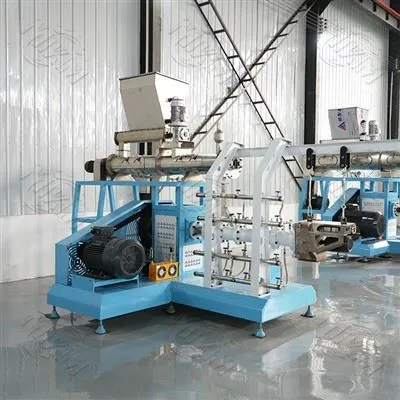
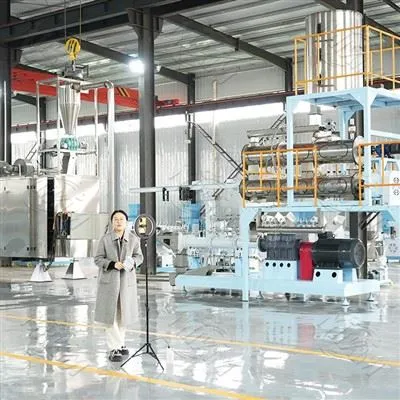
MIKIM's fish feed pellet production lines and supporting machinery offer excellent value for money. Not only are they affordable, eliminating middlemen markups and allowing small and medium-sized enterprises (SMEs) and fish farmers to purchase complete sets of equipment at reasonable costs, but they also boast exceptional efficiency. The fully automated process, from raw material crushing and precise ingredient mixing to extrusion pelleting and maturation, is completed in one continuous flow. This results in high starch gelatinization rates and uniform pellet formation, significantly improving production efficiency and feed quality, truly achieving "low cost, high output." Choosing a MIKIM fish feed pellet production line means enjoying comprehensive pre-sales and after-sales service, including 24-hour online customer support, a one-year warranty on the entire machine, professional on-site installation, commissioning, and maintenance, and a stable supply of spare parts. Customers can buy with confidence and use with peace of mind, with both excellent value and service quality!
Customer visit

Certificate of Honor

FAQ
1. What is the price of the fish food processing machine?
The price ranges from approximately $3,500-$55,000
2. Do you provide maintenance services for your customers?
Yes, we offer comprehensive after-sales maintenance services to our customers.
If you would like to learn more about MIKIM machinery, please contact us. We offer one-stop service and welcome your inquiries!!!