What are the steps in floating fish feed processing?
Leave a message
Fish feed pellet processing is a systematic workflow ensuring nutritional balance, physical stability, and suitability for aquatic animals. Below are the core steps, applicable to both floating and sinking feed production:
1. Raw Material Preparation & Formulation
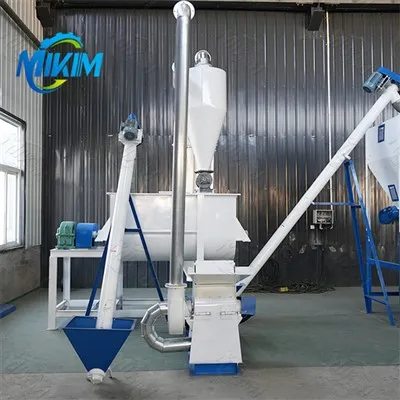
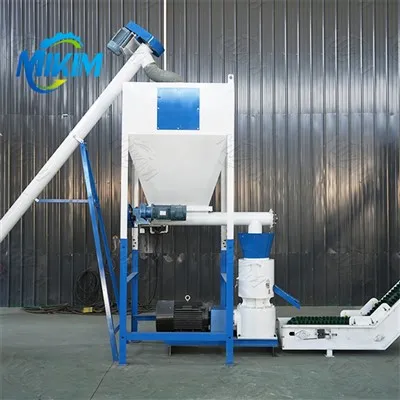
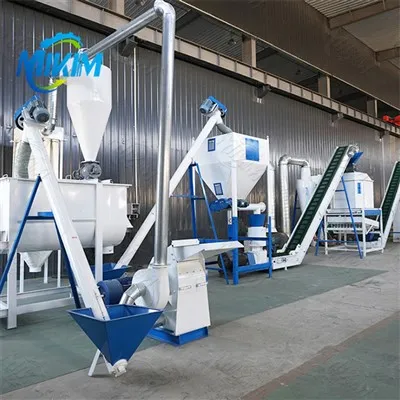
First, design a formula tailored to fish species (carnivorous/omnivorous/herbivorous) and growth stages. Key ingredients include protein sources (fish meal, soybean meal), energy sources (corn flour, wheat bran), fats (fish oil), vitamins, and minerals. Raw materials are crushed into 80-100 mesh fine powder via a hammer mill to improve mixing uniformity and processing efficiency. Accurate weighing (using electronic scales) and pre-mixing (5-10 minutes in a horizontal mixer) follow, ensuring all components are evenly blended.
2. Conditioning
The mixed powder is fed into a conditioner, where steam or water is injected to adjust moisture (16-18%) and temperature (85-95°C). This step initiates starch gelatinization, softens the material, and enhances nutrient digestibility. Conditioning time lasts 2-5 minutes to ensure uniform heat and moisture distribution, laying the foundation for subsequent molding.
3. Molding (Extrusion/Compression)
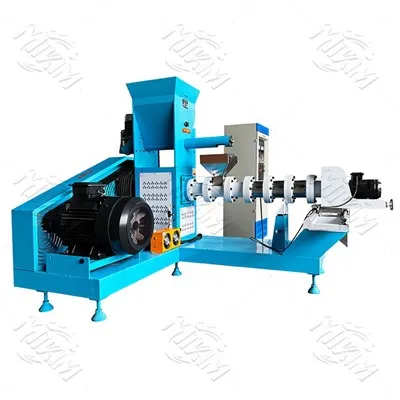
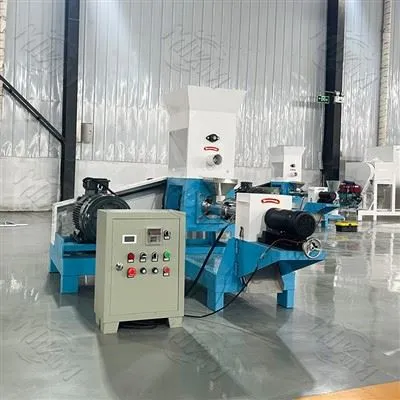
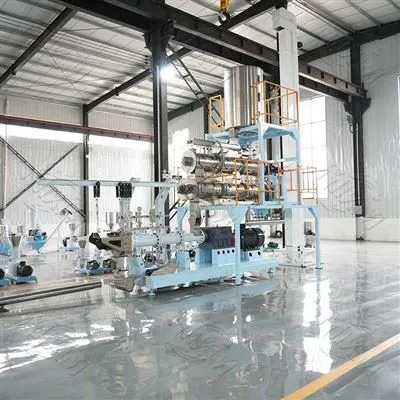
Floating feed: Use a fishing fish feed pellet making machine (single/twin-screw) to apply high temperature (110-130°C), pressure (3-10 MPa), and shear force. The material expands through die holes due to sudden pressure drop, forming a porous structure (density ≤1 g/cm³) for buoyancy.
Sinking feed: Use a pellet mill to compress the material directly through a ring die, producing dense pellets (density >1 g/cm³) without expansion.
A rotating cutter trims pellets to the desired length (0.3-10 mm) based on fish size.
4. Drying & Cooling
Molded pellets have 25-30% moisture, requiring drying in a belt/fluidized bed dryer (60-80°C) to reduce moisture to 10-12% (prevents mold growth). After drying, pellets are cooled to room temperature via a counterflow cooler to avoid condensation and caking during storage.
5. Post-Processing & Quality Control
Optional coating (fish oil, amino acids) enhances palatability and nutrient retention. Quality checks include floating stability (12-24 hours for floating feed), hardness, nutrient content, and microbial safety. Qualified feed is packaged in moisture-proof bags and stored in a cool, dry warehouse.
Each step is strictly controlled to ensure feed digestibility, safety, and adaptability, supporting efficient and sustainable aquaculture.
Related equipment

about Us
MIKIM's fish feed pellet production lines and supporting machinery offer excellent value for money. Not only are they affordable, eliminating middlemen markups and allowing small and medium-sized enterprises (SMEs) and fish farmers to purchase complete sets of equipment at reasonable costs, but they also boast exceptional efficiency. The fully automated process, from raw material crushing and precise ingredient mixing to extrusion pelleting and maturation, is completed in one continuous flow. This results in high starch gelatinization rates and uniform pellet formation, significantly improving production efficiency and feed quality, truly achieving "low cost, high output." Choosing a MIKIM fish feed pellet production line means enjoying comprehensive pre-sales and after-sales service, including 24-hour online customer support, a one-year warranty on the entire machine, professional on-site installation, commissioning, and maintenance, and a stable supply of spare parts. Customers can buy with confidence and use with peace of mind, with both excellent value and service quality!
Customer visit

Certificate of Honor

FAQ
1. What is the price of the small fish feed machine?
The price ranges from approximately $3,500-$55,000
2. Do you provide maintenance services for your customers?
Yes, we offer comprehensive after-sales maintenance services to our customers.
If you would like to learn more about MIKIM machinery, please contact us. We offer one-stop service and welcome your inquiries!!!