


What's the way the fish feed pellet extruder operates
Leave a message
With the development of intelligent manufacturing technology, modern pet feed production lines have become highly automated efficiency hubs, achieving precise control and intelligent management of the entire production process through automated control systems (such as PLC control systems). Operators can monitor key parameters such as raw material input volume, mixing time, granulation temperature, and drying humidity in real time through the human-computer interaction interface in the central control room, and make remote adjustments according to production needs; automated conveying equipment (such as scraper conveyors and bucket elevators) replace manual handling to achieve efficient flow of raw materials and semi-finished products.
Working principle
Pet feed machines operate through a systematic, multi-step process that converts raw materials into nutritionally balanced, formed pet food. First, start with ingredient preparation: ingredients such as meat meal, grains (corn, wheat), soybean meal, vitamins and minerals are weighed and mixed according to the specific pet food recipe. This ensures each batch has consistent nutrition tailored to your dog, cat or other pet.
Next, the mixed raw materials are fed into the machine's conditioning system. Here, high-temperature steam (usually 80-95°C) is injected to moisten and heat the mixture, softening the grains to promote starch gelatinization and protein denaturation. This step not only improves the digestibility of the final feed, but also initially kills most harmful bacteria.
After conditioning, the material moves to the extrusion or pelletizing unit – the heart of the machine. In the case of an extruder, the twin screws rotate at high speed in a closed barrel, generating strong pressure (3-8 MPa) and further increasing the temperature (110-140°C). This pressure and heat cause the material to expand and force it through a mold with specific holes, forming a shape such as a kibble or stick. For pellet machines, the ring die and pressure rollers work together to squeeze the material into dense pellets.
Finally, the newly formed hot feed is sent to a cooling system where cold air rapidly reduces its temperature to room temperature (reducing moisture from 18-22% to 12-14%). This prevents mold growth and stiffens the feed for increased durability. Some machines also include coating units for adding flavors (such as chicken or fish oil) or nutrients to improve palatability before packaging the finished feed.


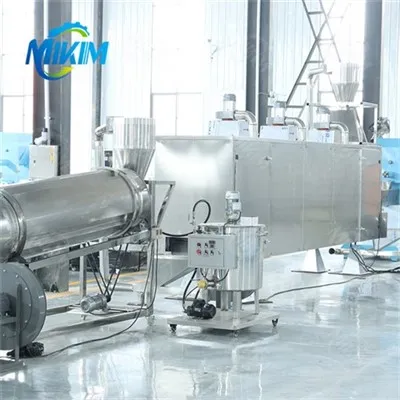
Product parameters
|
|
|
|
|
|
|
|---|---|---|---|---|---|
|
|
|
|
|
|
|
|
|
|
|
|
|
|
|
|
|
|
|
|
|
|
|
|
|
|
|
|
|
|
|
|
|
|
|
|
|
|
|
|
|
|
|
|
|
|
|
|
|
Finished product display


FAQ
1. What is the price of the fish feed pellet machine?
The price ranges from approximately $12,000
2. Do you provide maintenance services for your customers?
Yes, we offer comprehensive after-sales maintenance services to our customers.
For more information on process flow design, equipment layout, factory construction plans, individual equipment pricing, or turnkey project proposals, please feel free to contact us!!!


