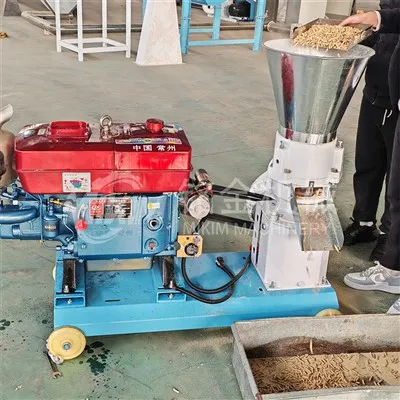
Which type of fish feed extruder, a single-screw or a twin-screw, produces better quality feed?
Leave a message
Choosing an extruder isn't just about capacity; it's also about the quality of the fish feed it produces-for example, the uniformity of the pellets, their water resistance, and the evenness of the nutritional distribution. These factors directly affect whether fish and shrimp will eat it and how quickly they grow. Some say that feed produced by twin-screw extruders is of "good quality," while feed produced by single-screw extruders is "only passable." To truly understand the differences in pellet uniformity, water resistance, and nutritional uniformity between the two types of feed, a direct comparison is necessary.
Particle Uniformity: Twin-screw extruders produce "uniform particle size," while single-screw extruders are "prone to breakage."
Single-screw extruders produce particles with significantly different sizes and more breakage. Single-screw extruders rely on friction to push the material, resulting in varying pressures at different points on the screw (lower pressure at the feed inlet, higher pressure at the die). This leads to extruded particles of varying sizes; for example, particles labeled as 4mm might be 3mm or 5mm, a size error exceeding 20%. Furthermore, the uneven extrusion pressure in single-screw extruders makes the particles prone to breakage, with 10%-15% of the particles being breakage after cooling and sieving, resulting in material waste.
Twin-screw extruders produce uniform particle size and less breakage.
Twin-screw extruders maintain stable pressure across both screws, with minimal pressure variation from the feed inlet to the die. The size error of the extruded particles can be controlled within 5% (4mm particles are generally between 3.8-4.2mm). Moreover, twin-screw extrusion is thorough, resulting in higher particle density and sufficient hardness. After cooling, only 3%-5% of the particles are breakage, significantly less than in single-screw extruders, minimizing material waste.
Water Resistance: Twin-screw feed "doesn't disintegrate when soaked," while single-screw feed "disintegrates easily."
Single-screw feed: Poor water resistance; may disintegrate after 1 hour of soaking. Single-screw feed has weak mixing power, and the starch and binder in the raw materials are not fully integrated, resulting in loose granules. When soaked in water, water easily seeps in and disintegrates the granules. For example, sinking bass feed might disintegrate by half after 1 hour of soaking, leaving fish and shrimp with only crumbs, wasting feed and polluting the water.
Twin-screw extruder: Excellent water resistance; soaking for 2-4 hours is no problem. The shear force of the twin-screw extruder allows the starch to fully gelatinize (becoming a strong "glue"), and the binder is evenly distributed in the granules, resulting in a compact granule structure. For example, floating grass carp feed can remain intact after soaking for 4 hours, and sinking bass feed won't fall apart after soaking for 2 hours, giving fish and shrimp enough time to consume it without waste.

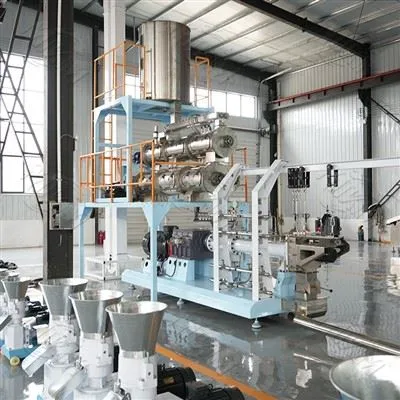
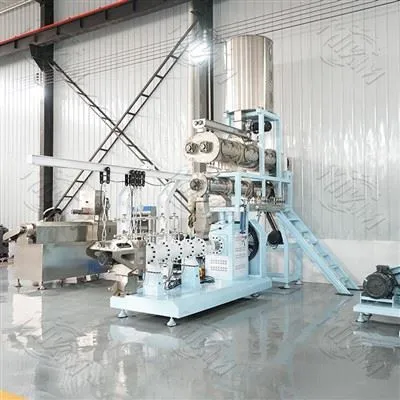

Impact of Structure and Principle on Fish Feed Production: Twin-Screw Extruders Are More Suitable for "Refined Needs"
For example, when making sinking feed for sea bass, high particle density and uniform nutrition are required. The shearing and mixing action of a twin-screw extruder allows fishmeal and starch to be fully integrated, resulting in better water resistance of the particles. However, when making floating feed for ordinary grass carp, the requirements are not as high, and the simple structure of a single-screw extruder can meet the needs, as long as the particles can be extruded.
Why Choose Us
MIKIM boasts extensive experience in poultry feed pellet production lines, significantly reducing the incidence of poultry diseases. Its equipment is not only widely used across various industries domestically but also exported to Southeast Asia, Europe, Africa, and South America, earning a high reputation internationally. This global presence not only demonstrates the adaptability and competitiveness of its products, but also demonstrates the company's experience in adapting to diverse market standards and logistics conditions, enabling it to provide a stable supply chain for its overseas customers. Whether serving large domestic farms or cross-border feed companies, MIKIM can leverage its global service network to ensure a consistent, high-quality experience.
For more information on process flow design, equipment layout, factory construction plans, individual equipment pricing, or turnkey project proposals, please feel free to contact us!!!

FAQ
1. What is the price of the dry type fish feed extruder?
The price ranges from approximately $5,000-$26,000
2. Do you provide maintenance services for your customers?
Yes, we offer comprehensive after-sales maintenance services to our customers.