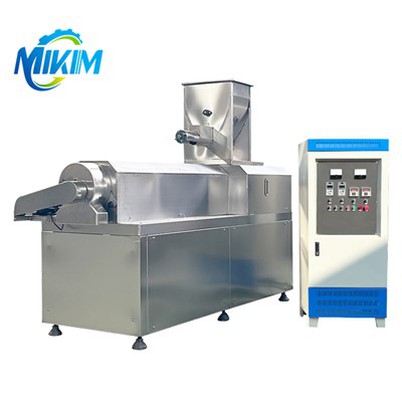
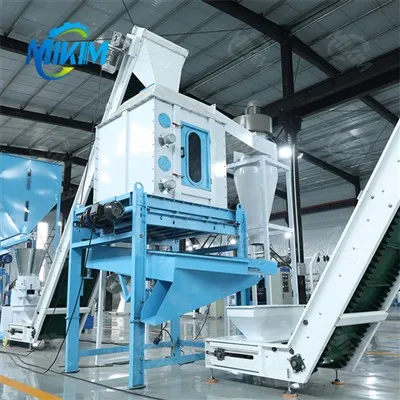
Which has higher production efficiency and larger capacity: a single-screw or a twin-screw fish feed extruder?
Leave a message
When selecting an extruder, many aquatic feed mills are most concerned about "how much feed can be produced per day"-for example, a small mill wants to produce 3-5 tons of fish feed per day, while a large mill wants to produce more than 10 tons per day. What is the actual difference in production capacity between single-screw and twin-screw extruders? Some people say that twin-screw extruders "run faster," but single-screw extruders "do not interfere with small-batch production." The actual situation needs to be calculated by combining production capacity and efficiency.
Capacity Comparison: Twin-screw extruders are suitable for large batches, while single-screw extruders are better suited for small production capacities.
Single-screw extruders: Low capacity, suitable for small factories. The capacity of a single-screw extruder mainly depends on the screw diameter (the larger the diameter, the higher the capacity). A common 65mm single-screw extruder has an hourly capacity of approximately 0.3-0.5 tons, producing a maximum of 4 tons of fish feed per 8 hours of operation. Even a large-diameter 120mm single-screw extruder only has an hourly capacity of 1-1.5 tons, producing a maximum of 12 tons per day. Furthermore, single-screw extruders rely on friction to push the material, making it prone to slipping in the barrel. If the moisture content of the raw material is slightly high, the capacity will decrease; for example, an hourly capacity of 0.5 tons might drop to only 0.3 tons with higher moisture content.
Twin-screw extruders: High capacity, suitable for medium to large-sized factories.
Twin-screw extruders use two screws to clamp and push the material, reducing slippage and resulting in significantly higher capacity than single-screw extruders. For example, a 65mm twin-screw extruder can achieve an hourly capacity of 0.8-1.2 tons, producing 8-10 tons per day; a 120mm twin-screw extruder can achieve an hourly capacity of 2-3 tons, producing 16-24 tons per day, more than double that of a single-screw extruder of the same diameter. Furthermore, twin-screw extruders can operate continuously, from 8 am to 8 pm without interruption, providing stable capacity unlike the fluctuating capacity of single-screw extruders.
Production Efficiency: Twin-Screw Screws: Less Downtime, Single-Screw Screws: Time-Consuming Cleaning
Single-Screw Screw: Prone to Clogging, Time-Consuming Cleaning
A single-screw screw has only one feed inlet. If the raw material contains impurities (such as small stones) or is too wet, it easily clogs the screw threads. Clogging requires stopping the machine, disassembling the barrel, and cleaning the material from the screw. Each cleaning takes 1-2 hours. If clogging occurs twice a day, 1-2 tons of material will be lost, resulting in very low efficiency. Furthermore, when changing formulas with a single-screw screw, all residual raw material in the barrel must be completely cleaned to prevent mixing. For example, if grass carp feed is being switched to bass feed, failure to clean properly will affect the protein content.
Twin-Screw Screw Screw: Less Prone to Clogging, Faster Cleaning
The two screws of a twin-screw screw interlock, squeezing small impurities to the edge of the barrel, reducing clogging. Even if clogging occurs, the barrel has multiple openings (such as vents and auxiliary feed inlets), eliminating the need to disassemble the entire machine. Cleaning can be done simply by opening these openings, taking only 20-30 minutes each time. When changing formulas, twin-screw extruders have a strong "self-cleaning ability"-as the two screws rotate, the threads scrape off residual raw materials. A small amount of cleaning material (such as cornstarch) is then applied, and the formula change can be completed in just 10 minutes, saving significantly more time than a single-screw extruder.

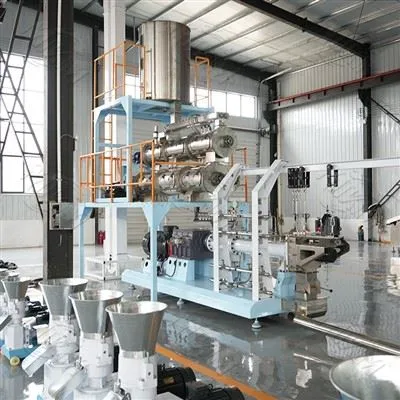
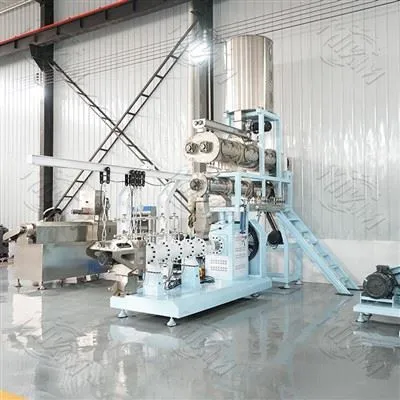

Summary: Single-screw extruders are sufficient for small factories, while twin-screw extruders are preferred for medium to large factories.
Small factories producing less than 5 tons per day can use a single-screw extruder (65-80mm) without needing to spend a high price on a twin-screw extruder. For medium to large factories producing more than 5 tons per day, choosing a twin-screw extruder is more cost-effective. Although the equipment is more expensive, the higher capacity and less downtime result in higher profits.
Why Choose Us
MIKIM boasts extensive experience in poultry feed pellet production lines, significantly reducing the incidence of poultry diseases. Its equipment is not only widely used across various industries domestically but also exported to Southeast Asia, Europe, Africa, and South America, earning a high reputation internationally. This global presence not only demonstrates the adaptability and competitiveness of its products, but also demonstrates the company's experience in adapting to diverse market standards and logistics conditions, enabling it to provide a stable supply chain for its overseas customers. Whether serving large domestic farms or cross-border feed companies, MIKIM can leverage its global service network to ensure a consistent, high-quality experience.
For more information on process flow design, equipment layout, factory construction plans, individual equipment pricing, or turnkey project proposals, please feel free to contact us!!!

FAQ
1. What is the price of the fish feed maker?
The price ranges from approximately $5,000-$26,000
2. Do you provide maintenance services for your customers?
Yes, we offer comprehensive after-sales maintenance services to our customers.