

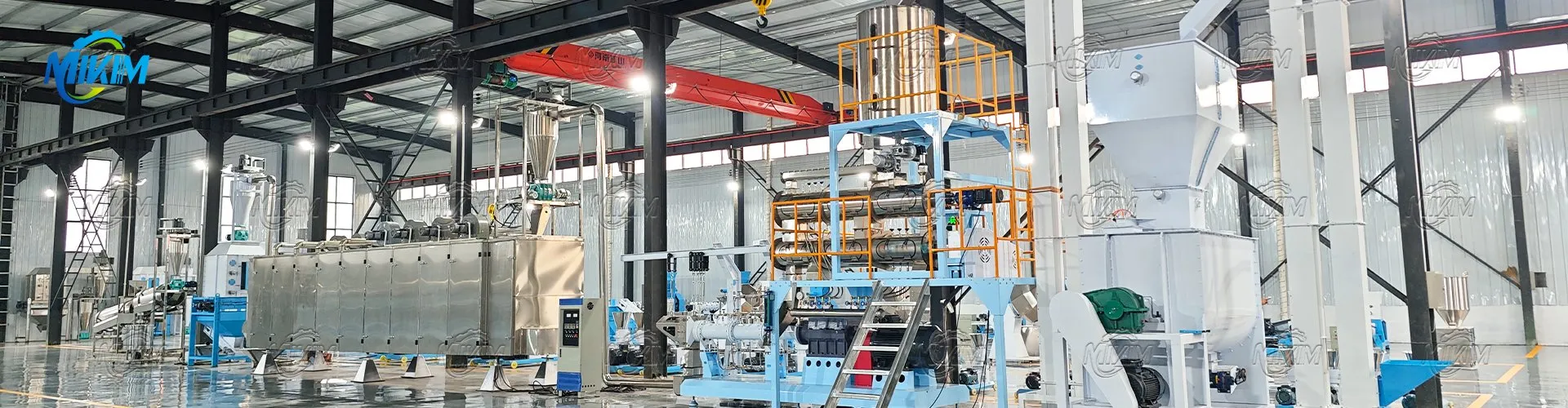
Optimize Equipment Operation To Reduce Downtime Losses in Fish Food Making Machines.
Leave a message
Common Causes of Raw Material Loss
1. Insufficient routine maintenance: Failure to regularly lubricate equipment bearings or clean residual material from molds leads to accelerated wear of equipment components, frequent jamming, motor overload, and other malfunctions, necessitating shutdowns for repairs.
2. Aging equipment not replaced in a timely manner: Key components (such as pellet mill molds and mixer blades) exceed their service life, resulting in performance degradation (e.g., clogged mold holes, uneven mixing by blades), requiring frequent shutdowns for adjustments or even complete replacement during production.
3. Improper operation: Operators failing to operate the equipment according to procedures (e.g., suddenly feeding the pellet mill too quickly, starting the mixer without properly closing the lid) triggers the equipment's protection mechanism, causing automatic shutdowns or directly leading to equipment malfunctions.
Management skills
1. Establish a regular equipment maintenance system: Develop an "Equipment Maintenance Plan," clearly defining the maintenance cycle for each piece of equipment (e.g., adding grease to crusher bearings every 100 hours, cleaning pellet mill molds every 300 hours). Keep records during maintenance to avoid omissions. Before starting the machine each day, operators must check critical parts of the equipment (e.g., whether the mold is clogged, whether the belts are loose), and address any problems promptly to avoid starting the machine with malfunctions.
2. Replace aging parts promptly: Establish a parts usage log, recording the replacement time and usage duration of core components (e.g., the normal usage time for pellet mill molds is approximately 500 hours). Purchase spare parts in advance when they are nearing their service life to avoid prolonged downtime due to sudden component failure. When replacing parts, prioritize original equipment manufacturer (OEM) parts to ensure compatibility with the equipment and reduce the risk of subsequent malfunctions.
3. Standardize operator behavior: Conduct pre-job training for operators and only allow them to work after passing the assessment. The training content includes equipment operating procedures (such as the feeding speed needs to be adjusted gradually and the mixer cover must be tightly closed before starting) and emergency handling methods for common faults. During production, assign dedicated personnel to inspect the equipment operating status and promptly stop any violations of operating procedures to avoid machine shutdowns due to improper operation.


about Us
MIKIM is a high-tech enterprise integrating R&D, production, and sales. Its feed extrusion equipment utilizes a high-temperature, high-pressure process, which sterilizes, improves puffing density and digestibility, and saves 8%-15% on feed costs. Pellet diameters are adjustable from 1-16 mm, and it features controllable cutting and floating adjustment to suit the needs of fish, shrimp, crab, and pet food. Core components are sourced from international brands and undergo special treatment, ensuring stability and durability while balancing safety, efficiency, and peace of mind.
Qualifications and Honors

Customer visit

FAQ
1. What is the price of the fish feed pellet machine?
The price ranges from approximately $15,000-$40,000
2. Do you provide maintenance services for your customers?
Yes, we offer comprehensive after-sales maintenance services to our customers.


