

Why Is My Small Cat Food Extruder Machine Making A Clicking Noise?
Leave a message
content
Core causes of abnormal noise: 3 types of easily loosened parts, causing clicking sounds upon impact
80% of the clicking noises in a small cat feed extruder machine originate from 3 types of loose core components, and are directly related to the machine's operating status. First, loose screw fixing bolts. Small extruders typically operate at 350-450 rpm, and the screw, subjected to the reaction force of material extrusion over time, is prone to loosening of the fixing bolts. This causes slight screw displacement, resulting in intermittent collisions with the inner wall of the barrel or the edge of the die during operation, producing a regular "clicking" noise. The higher the speed, the higher the frequency of this noise. Second, loose die fixing components. As the core of pellet forming, if the fixing flange and bolts are loose, the die will wobble slightly. When the extruder discharges material, the connection between the die and the screw collide, producing irregular clicking sounds, accompanied by misaligned pellets. Third, loose linkage shaft connections. Small extruders often use a single linkage shaft design. If the connection between the linkage shaft and the motor/screw is loose, the shaft will wobble during operation, causing friction and collisions between the connecting parts, producing intermittent clicking sounds, and in severe cases, increased equipment vibration.
Quick Troubleshooting Steps: Safe Shutdown and Precise Locating of Loose Components
Step 1: Emergency Shutdown and Power Disconnection. Turn off the power to the small cat food maker machine, unplug the power cord, and hang a "Under Maintenance, Do Not Start" warning sign. Wait for the equipment to cool down completely (small equipment cools down quickly, usually in 15-20 minutes) to avoid burns from hot parts or injury from accidental restarting.
Step 2: Visual Inspection. Observe the machine body, discharge end, and motor connections for any obviously loose bolts or displaced parts. Pay special attention to the bolts at the die head fixing flange and screw connection. Gently shake the die head and linkage shaft; if there is noticeable movement, the loose component can be preliminarily located.
Step 3: Disassembly Inspection. If no abnormalities are found during the visual inspection, disassemble the extruder barrel shell and check the internal screw and linkage shaft fixings. Check if the bolts are loose or missing, and if any parts have shifted. Simultaneously, clean out any residual material inside to prevent material buildup from masking the loosening issue.
Troubleshooting Techniques and Follow-up Protection: Proper Tightening Prevents Re-loosening
The key to resolving clicking noises caused by loose parts is "precise tightening and proper protection," while also extending the lifespan of the small cat food pellet machine. First, targeted tightening: Based on the troubleshooting results, use an appropriate wrench to tighten loose bolts. Bolts on the screw and die head should be tightened to the standard tightness (25-30 N·m for small extruder bolts) to avoid both excessive looseness causing noise and excessive tightness damaging the threads. If the linkage shaft connection is loose, realign the connection position and tighten the coupling bolts to ensure smooth shaft operation. Second, proper protection: After tightening, apply a small amount of high-temperature grease to the bolt surface to prevent loosening due to long-term vibration. Additionally, install anti-slip pads at the die head and screw connection points to enhance stability. Third, regular inspections are recommended. It is suggested to check the fixation of core components once a week before starting the machine and to conduct a comprehensive inspection once a month. In particular, after long-term high-intensity operation, loose parts should be tightened in time to prevent the recurrence of clicking noises. At the same time, core components such as the extruder screw and barrel should be protected to extend the service life of the equipment.
Our equipment


Why choose us?
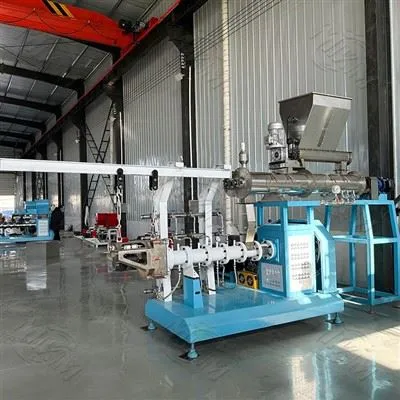
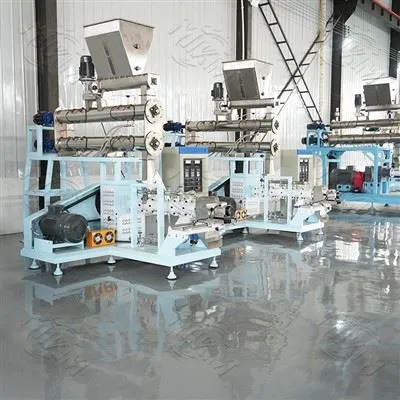
The MIKIM's floating fish feed extruder machine is constructed entirely of food-grade 304 stainless steel, fully complying with food processing hygiene standards. It is corrosion-resistant, easy to clean, and eliminates potential contamination at the source. The core screw is made of high-quality alloy steel through special heat treatment, offering outstanding wear resistance and corrosion resistance. Combined with its integrated structural design, this significantly extends its service life. The entire machine has passed CE and ISO international authoritative certifications, aligning with global quality standards and ensuring safer and more reliable processing.
Our Services
We offer:
One-Year Whole Machine Warranty Service
On-site Installation, Commissioning, and Technical Guidance
24/7 Online Technical Support
Qualifications and Honors

Customer visit

FAQ
1. What is the price of the cat feed extruder machine?
The price ranges from approximately $1,500-$50,000
2. How do you deliver to customers?
MIKIM Machinery's machinery delivery follows a complete process of "customized preparation - safe and fast delivery - precise handover - after-sales extension", with 3-day fast delivery, multi-layer protective packaging, global logistics tracking and 1-year warranty + on-site technical service to ensure that the equipment is delivered efficiently and in good condition and put into use smoothly.


