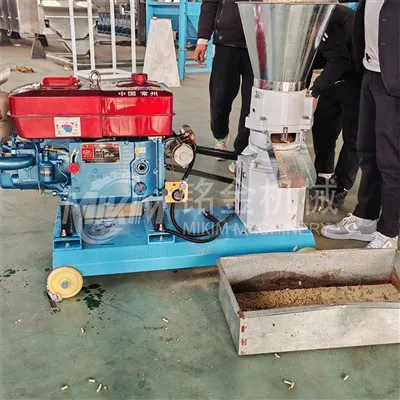
What Causes A Clicking Noise in A Small Cat Feed Extruder Machine?
Leave a message
content
The core cause of the abnormal noise: wear between the screw and barrel, leading to collisions due to eccentric operation
The screw and barrel of the small cat food maker machine are designed with a "precision fit," with a normal clearance of 0.1-0.3mm. When wear occurs, this clearance increases, causing eccentric wobbling during screw operation, which in turn leads to collisions and a clicking noise. Specifically, there are two scenarios: First, screw wear: worn screw threads, chips, or deformation prevent the screw from smoothly pushing materials during operation. The eccentric wobbling causes intermittent collisions with the inner wall of the barrel, producing a regular clicking sound. In severe cases of wear, the abnormal noise is accompanied by poor material conveying and a decrease in output. Second, wear on the inner wall of the barrel: scratches and unevenness on the inner wall cause the screw threads to collide and rub against the worn parts of the barrel during operation, producing a mixed "click + rustling" noise. This is accompanied by fluctuations in the puffing temperature and uneven particle cooking. Actual test data shows that when the wear on the screw and barrel exceeds 0.5mm, a noticeable clicking noise occurs, and the energy consumption of the small cat food making machine increases by more than 15%.
Wear Assessment Methods: 3 Intuitive Signals for Quickly Differentiating Wear Levels
Based on the structural characteristics of the small cat food extruder machine, no professional testing tools are needed. The wear level of the screw and barrel can be determined through three intuitive signals:
1. Abnormal Noise Assessment: If a regular clicking sound is accompanied by equipment vibration, and the noise becomes more pronounced with faster rotation speed, along with a decrease in output and uneven particle size, it is highly likely that the screw is worn. If the abnormal noise is accompanied by a "rustling" friction sound, significant fluctuations in the extrusion temperature (deviating from the normal 120-150℃ range), and rough particle surfaces, it is highly likely that the inner wall of the barrel is worn.
2. Visual Assessment: After disassembling the screw and barrel, observe whether the screw threads are worn, have gaps, or are deformed. Check the inner wall of the cat feed pellet machine for scratches or unevenness. Obvious wear marks confirm the wear.
3. Clearance Assessment: Gently shake the screw by hand. If the clearance between the screw and barrel increases significantly (more than 0.5mm), and a knocking sound is heard during shaking, it indicates severe wear and requires immediate attention.
Troubleshooting Techniques and Maintenance Tips: Address Wear Degrees to Extend Component Life
For clicking noises caused by wear on the screw and barrel, different solutions are needed depending on the degree of wear. Regular maintenance is also crucial to prevent further wear. First, for minor wear (wear ≤ 0.3mm), grinding repair can be used. Use specialized grinding tools to grind the worn areas on the screw threads and barrel inner wall. After repair, calibrate the fit clearance, clean any residual material from the component surface, and reinstall. The clicking noise should then be completely eliminated. Second, for moderate wear (0.3mm < wear ≤ 0.5mm), after grinding repair, apply a wear-resistant coating to the screw thread surface to enhance wear resistance and extend service life. Simultaneously, adjust the extruder's operating parameters (appropriately reduce speed and increase temperature) to reduce component friction. Third, for severe wear (wear > 0.5mm), a dedicated screw and barrel must be replaced. When replacing, select components that match the small cat food pellet machine model to ensure precise fit clearance and prevent recurrence of wear noise. Routine maintenance tips: Regularly clean residual material from the screw and barrel to prevent material from drying and causing wear on parts; use high-quality cat food ingredients to remove hard impurities and reduce friction; apply high-temperature resistant grease to the screw and barrel monthly to reduce wear rate.
Our equipment


Why choose us?
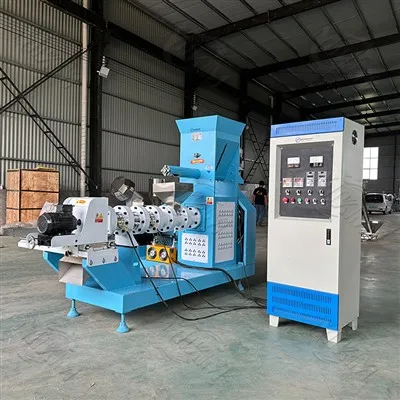
The MIKIM's floating fish feed extruder machine is constructed entirely of food-grade 304 stainless steel, fully complying with food processing hygiene standards. It is corrosion-resistant, easy to clean, and eliminates potential contamination at the source. The core screw is made of high-quality alloy steel through special heat treatment, offering outstanding wear resistance and corrosion resistance. Combined with its integrated structural design, this significantly extends its service life. The entire machine has passed CE and ISO international authoritative certifications, aligning with global quality standards and ensuring safer and more reliable processing.
Our Services
We offer:
One-Year Whole Machine Warranty Service
On-site Installation, Commissioning, and Technical Guidance
24/7 Online Technical Support
Qualifications and Honors

Customer visit

FAQ
1. What is the price of the small pet food making machine?
The price ranges from approximately $1,500-$50,000
2. How do you deliver to customers?
MIKIM Machinery's machinery delivery follows a complete process of "customized preparation - safe and fast delivery - precise handover - after-sales extension", with 3-day fast delivery, multi-layer protective packaging, global logistics tracking and 1-year warranty + on-site technical service to ensure that the equipment is delivered efficiently and in good condition and put into use smoothly.