

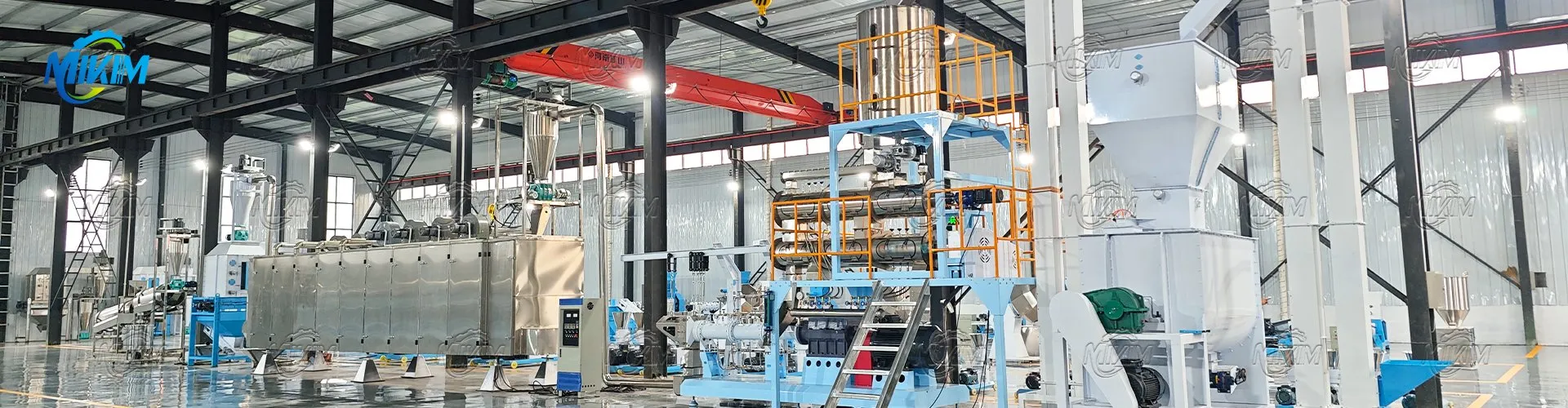
Why Does My Small Cat Food Maker Machine Click?
Leave a message
content
The core cause of the abnormal noise: foreign object jamming, causing the screw to collide with the foreign object during operation
When a foreign object enters the small cat feed extruder machine, due to the compact structure of the equipment and the limited operating space of the screw, the foreign object will become stuck between the screw and the barrel, or inside the die orifice, and cannot be discharged with the material. When the screw rotates at high speed, it will intermittently or continuously collide with the foreign object, thus producing a clicking noise. The frequency and intensity of the noise are directly related to the size and location of the foreign object. There are two main scenarios: First, small foreign objects (such as metal shavings or small stones) become stuck between the screw threads and the barrel. When the screw rotates, the threads collide with the foreign object, producing an intermittent "clicking" sound. If the foreign object is hard, the sound is sharper, accompanied by increased screw resistance. Second, larger foreign objects (such as raw material clumps or small tool fragments) become stuck in the die orifice or at the screw tip. When the screw rotates, it cannot push the foreign object forward, resulting in continuous collisions and a dense clicking sound. This is accompanied by interrupted discharge and a sudden increase in barrel pressure (exceeding 5 MPa; the normal pressure range for small extruders is 3-5 MPa). In severe cases, the equipment may vibrate and shut down for protection.
Foreign Object Types and Troubleshooting Steps: Safe Shutdown and Accurate Removal of Foreign Objects
Foreign object troubleshooting must follow the principles of "immediate shutdown, prohibiting forced restart, and proceeding from shallow to deep" to avoid further damage to the equipment and ensure operator safety. The first step is to immediately shut down the machine and disconnect the power, turning off the small cat food extruder. First, unplug the machine, hang a warning sign, and wait for the equipment to cool down to below 50℃. Do not troubleshoot while the equipment is running and cooled down to avoid burns or injury from flying foreign objects. Second, determine the location of the foreign object based on the location of the abnormal noise and the equipment's operating status: if the noise is coming from the feed end or the front of the barrel, and is accompanied by poor material discharge, the foreign object is likely stuck in the die head or the front of the screw; if the noise is coming from the middle of the barrel, and is accompanied by increased running resistance, the foreign object is likely stuck between the screw and the barrel. Third, remove the foreign object. For foreign objects, first disassemble the die head and check the die head aperture and the front end of the screw. If foreign objects are found, gently remove them with special tweezers and a thin steel wire; never touch them directly with your hands. If no foreign objects are found at the die head, disassemble the barrel shell and check between the screw and the barrel. Gently move the screw with a special tool to locate the foreign object and slowly remove it. Avoid excessive force during removal to prevent bending the screw or scratching the barrel. Fourth, clean the equipment. After removing the foreign object, clean any residual material from the barrel, screw, and die head. Check for any damage to the components. Only start the equipment after confirming there are no abnormalities.
Prevention and Control Measures: Source Avoidance to Reduce the Probability of Foreign Object Entry
First, strictly control raw material quality. Establish a raw material screening mechanism and use double-layer screening equipment to remove hard foreign objects such as metal fragments and stones from the raw materials. Simultaneously, break up raw material clumps to ensure uniform particle size (≤1.5mm), adapting to the feeding and operation requirements of the small cat food pellet machine. Second, standardize operating procedures. Operators must wear appropriate protective clothing before starting work and are strictly prohibited from bringing small tools and debris into the operating area. They must concentrate during feeding to avoid dropping debris into the feed inlet. Third, regularly inspect the equipment. Before starting the machine each week, check the feed inlet and die head aperture, clean residual materials and any potential foreign objects, and conduct a comprehensive inspection of the equipment's interior monthly to prevent foreign object accumulation. Fourth, install protective devices. Install a protective net at the feed inlet of the small extruder to prevent larger foreign objects and debris from falling into the equipment. Additionally, install a foreign object detection sensor inside the barrel. If a foreign object enters, the equipment will automatically alarm and stop, preventing the malfunction from escalating.
Our equipment



Why choose us?
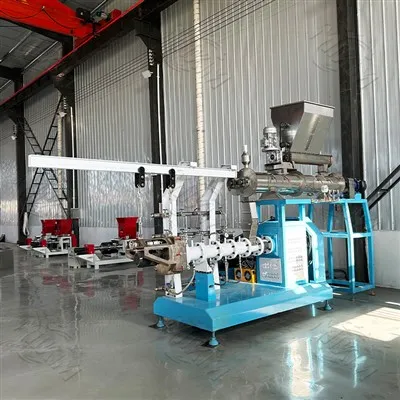
The MIKIM's floating fish feed extruder machine is constructed entirely of food-grade 304 stainless steel, fully complying with food processing hygiene standards. It is corrosion-resistant, easy to clean, and eliminates potential contamination at the source. The core screw is made of high-quality alloy steel through special heat treatment, offering outstanding wear resistance and corrosion resistance. Combined with its integrated structural design, this significantly extends its service life. The entire machine has passed CE and ISO international authoritative certifications, aligning with global quality standards and ensuring safer and more reliable processing.
Our Services
We offer:
One-Year Whole Machine Warranty Service
On-site Installation, Commissioning, and Technical Guidance
24/7 Online Technical Support
Qualifications and Honors

Customer visit

FAQ
1. What is the price of the cat feed extruder machine?
The price ranges from approximately $1,500-$50,000
2. How do you deliver to customers?
MIKIM Machinery's machinery delivery follows a complete process of "customized preparation - safe and fast delivery - precise handover - after-sales extension", with 3-day fast delivery, multi-layer protective packaging, global logistics tracking and 1-year warranty + on-site technical service to ensure that the equipment is delivered efficiently and in good condition and put into use smoothly.


