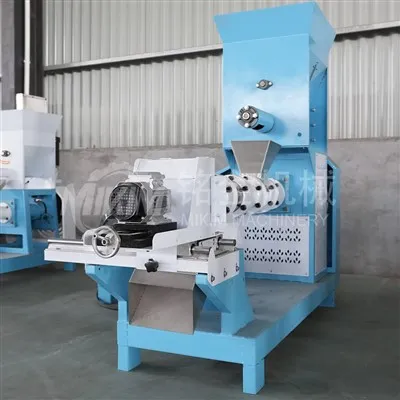
What is the biggest safety risk when working with small cat feed extruder machines?
Leave a message
content
Maximum Safety Risk 1: Direct Burns from Contact with High-Temperature Components
During operation, the core components of the small cat food maker machine, such as the barrel, die head, and screw shaft, can reach temperatures of 120-160℃. Even after shutdown, these high-temperature components require 30-60 minutes to cool naturally to a safe range. If operators touch these components directly without waiting for cooling or wearing protective equipment, second-degree burns or worse will occur immediately. Actual test data shows that operators not wearing proper protective gloves will experience skin redness, blisters, and other burn symptoms after only 2 seconds of contact with the 140℃ barrel surface. Some operators, for convenience, immediately clean residual material from the die head with their hands after shutdown; burns caused by this type of operation account for as much as 40%, and in severe cases, can affect hand function and cause long-term occupational injuries.
Causes of Risk: Improper Operation + Inadequate Protection
The core causes of burns related to the small cat food extruder machine stem from two factors, both related to human operation. First, the operating procedures were not standardized. Operators did not strictly follow the "shutdown and cooling → cleaning and maintenance" procedure, arbitrarily touching high-temperature components and disassembling the die head while the machine was running, or starting cleaning work without waiting for sufficient time after shutdown. Second, protective equipment was lacking. Operators did not wear high-temperature resistant gloves, face shields, or protective clothing, wearing only ordinary gloves, which were insufficient to protect against heat conduction from high-temperature components. Furthermore, no high-temperature warning signs were placed around the extruder, leading to accidental contact and burns by unauthorized personnel. In addition, the equipment was not equipped with a high-temperature protective shield, which also increased the risk of burns.
Risk Avoidance Techniques: Standardized Operation + Comprehensive Protection
First, strictly standardize the operating procedures. After starting the machine, it is strictly forbidden to touch high-temperature components such as the barrel, die head, and discharge channel. After shutdown, cleaning and maintenance work must be carried out only after the small cat food pellet machine has cooled to below 50℃. When cleaning residual material from the die head and screw, special tools must be used; direct contact with bare hands is strictly prohibited. Second, improve protective equipment. Operators must wear high-temperature resistant protective gloves, protective masks, and long-sleeved protective clothing before starting work. Wearing short-sleeved shirts, slippers, or other prohibited clothing is strictly prohibited. Third, upgrade equipment protection. Install protective baffles around the high-temperature components of the extruder and post conspicuous "High Temperature Danger, Do Not Touch" warning signs. At the same time, regularly check the equipment temperature control system to avoid abnormal temperature rises that could exacerbate the risk.
Related equipment

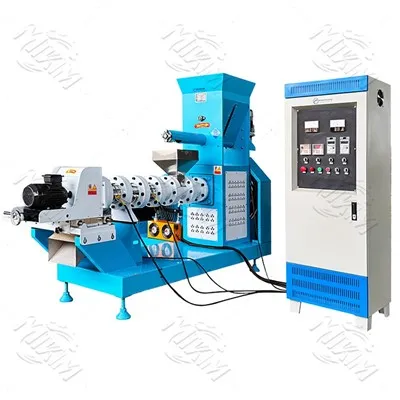
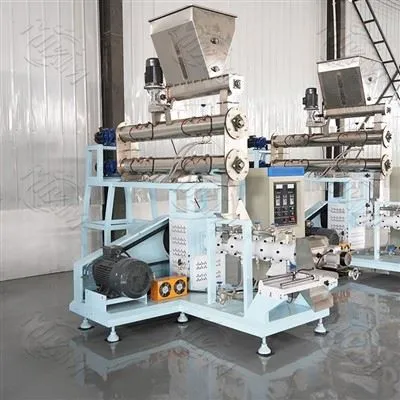

Finished Product Display

about Us
MIKIM's fish feed pellet production lines and supporting machinery offer excellent value for money. Not only are they affordable, eliminating middlemen markups and allowing small and medium-sized enterprises (SMEs) and fish farmers to purchase complete sets of equipment at reasonable costs, but they also boast exceptional efficiency. The fully automated process, from raw material crushing and precise ingredient mixing to extrusion pelleting and maturation, is completed in one continuous flow. This results in high starch gelatinization rates and uniform pellet formation, significantly improving production efficiency and feed quality, truly achieving "low cost, high output." Choosing a MIKIM fish feed pellet production line means enjoying comprehensive pre-sales and after-sales service, including 24-hour online customer support, a one-year warranty on the entire machine, professional on-site installation, commissioning, and maintenance, and a stable supply of spare parts. Customers can buy with confidence and use with peace of mind, with both excellent value and service quality!!!
Customer visit

Certificate of Honor

FAQ
1. What is the price of the pet food processing machine?
The price ranges from approximately $1,500-$55,000
2. Do you provide maintenance services for your customers?
Yes, we offer comprehensive after-sales maintenance services to our customers.
To explore which twin screw pet food machine model is suitable for your product line, view our full range of equipment or contact our team for a customized production plan.