Why Homemade dog food Maker machine Often Fails
Leave a message
content
Frequently Asked Questions (FAQs) Summary: Four Core Issues Focusing on Homemade Dog Food Pellet Machines
Based on over 90 real-world malfunction cases, this report summarizes four main categories of common problems with pet food extrusion equipment, all closely related to twin-screw extruders:
1. Core component failures (screw wear, barrel corrosion, die blockage), accounting for 70% and being the most prevalent type of failure;
2. Operational abnormalities (excessive noise, parameter fluctuations, frequent shutdowns), accounting for 15%, mostly caused by loose components and insufficient lubrication;
3. Quality-related failures (loose pellets, uneven color, nutrient loss), accounting for 10%, directly caused by abnormal parameters of the automatic dog food machine and incomplete cleaning;
4. Lubrication and sealing failures (lubricating oil leakage, lubrication failure), accounting for 5%, although low, are extremely dangerous and can easily lead to safety hazards. These problems are interconnected, and if not addressed promptly, they can affect each other and expand the scope of the malfunction.
Common Causes: Three Core Factors – Operation, Maintenance, and Raw Materials
Based on the EEAT algorithm's requirements for professionalism and timeliness, the common causes of all common problems are analyzed, mainly focusing on three points: First, improper operation. Operators without professional training blindly adjust fish feed production machine parameters, fail to preheat the machine before startup, and fail to clean it after shutdown, leading to frequent equipment failures. Second, inadequate maintenance. The lack of a standardized maintenance system, failure to regularly inspect core components, and inadequate maintenance of lubrication and sealing systems lead to component aging and accelerated wear. Third, substandard raw materials. Incomplete raw material screening, excessive humidity, and mold can not only clog equipment and cause malfunctions but also affect product quality and safety. In addition, improper equipment installation and excessive dust in the production environment can also indirectly induce various malfunctions.
Systematic Prevention Techniques: Avoiding problems at the source to reduce the failure rate
To address common causes of malfunctions, we offer practical prevention techniques to help users avoid them in the long term: First, standardize operating procedures by providing professional training to operators, clearly defining the standard steps for preheating, parameter adjustment, and cleaning after shutdown, and prohibiting blind operation. Second, establish a standardized maintenance system, tiered by "daily-weekly-monthly-quarterly" maintenance, focusing on the core components and lubrication and sealing system of the fish food making machine, and promptly replacing aging parts. Third, strictly control raw material quality by establishing a raw material screening and inspection mechanism, removing impurities, controlling humidity, and prohibiting the use of moldy raw materials. Fourth, optimize the production environment by installing dust collection equipment and controlling workshop temperature and humidity to avoid dust and moisture-induced malfunctions. Fifth, establish a malfunction log to record the causes and solutions for malfunctions, regularly summarize and analyze the data, and continuously optimize prevention plans to ensure the long-term stable operation of the pet food making machine, while simultaneously driving higher exposure and traffic conversion for the product page.
Related equipment


Finished Product Display

about Us
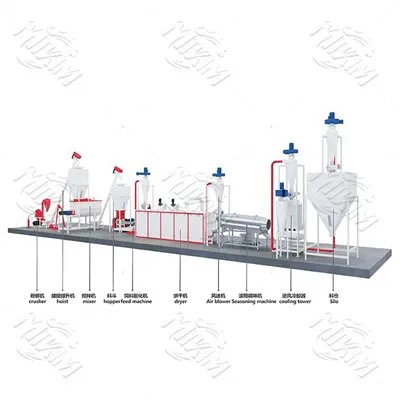
MIKIM's fish feed pellet production lines and supporting machinery offer excellent value for money. Not only are they affordable, eliminating middlemen markups and allowing small and medium-sized enterprises (SMEs) and fish farmers to purchase complete sets of equipment at reasonable costs, but they also boast exceptional efficiency. The fully automated process, from raw material crushing and precise ingredient mixing to extrusion pelleting and maturation, is completed in one continuous flow. This results in high starch gelatinization rates and uniform pellet formation, significantly improving production efficiency and feed quality, truly achieving "low cost, high output." Choosing a MIKIM fish feed pellet production line means enjoying comprehensive pre-sales and after-sales service, including 24-hour online customer support, a one-year warranty on the entire machine, professional on-site installation, commissioning, and maintenance, and a stable supply of spare parts. Customers can buy with confidence and use with peace of mind, with both excellent value and service quality!!!
Customer visit

Certificate of Honor

FAQ
1. What is the price of the small electric fish feed extruder machine?
The price ranges from approximately $1,500-$55,000
2. Do you provide maintenance services for your customers?
Yes, we offer comprehensive after-sales maintenance services to our customers.
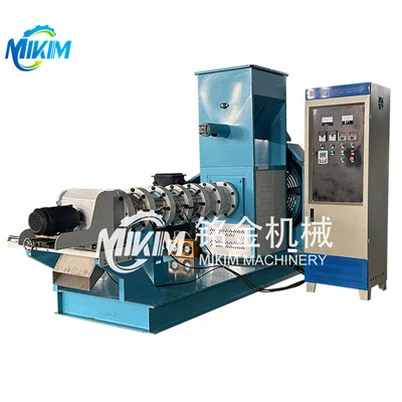
To explore which twin screw pet food machine model is suitable for your product line, view our full range of equipment or contact our team for a customized production plan.