


Can a dog food pellet production line simultaneously produce puppy food, adult dog food, and senior dog food?
Leave a message
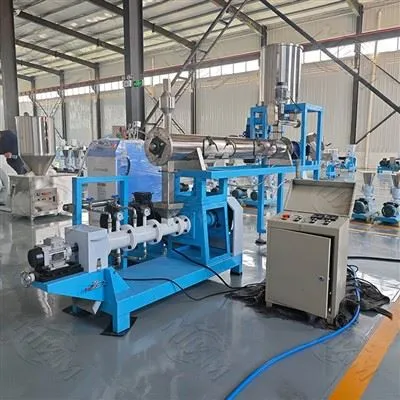
Anyone who has owned a dog knows that puppy food and senior dog food are different-puppy food is soft and high in protein, while senior dog food is high in fiber and low in protein; large breed dog food has larger kibble sizes, while small breed dog food has smaller kibble sizes. This is because dog pellet production lines are designed according to the different needs of dogs; only in this way can food that is beneficial to a dog's health be produced. Below, we'll discuss the design direction and reasons behind dog pellet production lines.
Three aspects
Firstly, one design focus of dog feed production lines is a "multi-stage formula adjustment system" because dogs have significantly different nutritional needs at different growth stages. Puppies need high protein (28%-32%) and high calcium to aid bone development; adult dogs need balanced nutrition (25%-28% protein) to maintain weight; and senior dogs need low protein (22%-25%) and high fiber to protect their kidneys and intestines. Therefore, the production line is designed with "switchable formula programs." When producing puppy food, the proportion of meat meal and calcium meal is increased; when producing senior dog food, the proportion of meat meal is decreased, and the proportion of vegetable meal and dietary fiber is increased. No equipment changes are needed; simply select the corresponding program in the control system. Without this design, only one stage of dog food can be produced. Puppies fed senior dog food will suffer from malnutrition, and senior dogs fed puppy food will experience increased kidney strain.
Secondly, another design focus of dog food extruder lines is "adjustable kibble hardness and size" because dogs of different breeds and ages have different chewing abilities. Small dogs (like Poodles) and puppies have soft teeth and require small kibble (2-3mm) with a softness level of 1.5-2 kg/cm². Large dogs (like Golden Retrievers) and adult dogs have hard teeth and require larger kibble (4-5mm) with a slightly harder consistency (2.5-3 kg/cm²), which also helps clean their teeth. Therefore, the production line is equipped with "adjustable hardness ring dies" and "multi-specification dies." To make soft kibble, the ring die pressure is reduced; to make hard kibble, the pressure is increased. Changing the die allows for adjusting the kibble size, a process that can be completed in 15 minutes. If the kibble size and hardness are unsuitable, small dogs may have difficulty swallowing large kibble, while large dogs may find soft kibble unsatisfying, potentially leading to oral problems.
Another design focus of the dog food production line is the addition of "intestinal protection ingredients," because dogs are prone to gastrointestinal diseases (such as diarrhea and constipation). Dogs' intestines are sensitive, especially when changing food, so probiotics and prebiotics are added to the dog food to help regulate the gut microbiota. The production line is designed with a "low-temperature addition device" because probiotics are sensitive to high temperatures. Adding them after puffing (when the temperature drops below 40°C) ensures the activity of the probiotics. It also ensures even mixing, guaranteeing that every kibble contains intestinal protective components. Without this design, the probiotics would be killed by the high temperature, and dogs would still be prone to gastrointestinal diseases after eating the kibble. Farmers would then have to administer medication to their dogs, incurring both financial expense and causing suffering for the dogs.


about Us
Customer visit

Certificate of Honor

FAQ
1. What is the price of the dog feed pellet making production line?
The price ranges from approximately $10,000-$60,000
2. Do you provide maintenance services for your customers?
Yes, we offer comprehensive after-sales maintenance services to our customers.


