Can Single Screw Floating Fish Feed Pellet Extruder Machine Handle High Fat Fish Feed Recipes?
Leave a message

The Answer: Yes, but with Limits
A single screw floating fish feed extruder machine can typically handle up to 12% total fat within the raw material mix. Beyond this level, the oil acts as a lubricant, causing "screw slip," which leads to a collapse in barrel pressure, poor expansion, and sinking pellets. To achieve high-fat levels (15%-30%) required for species like Salmon or Trout, a Post-Extrusion Oil Coating system is essential.
1. The "Friction Gap": Why High Fat Challenges Single Screw Systems
To understand the limitation, you must understand how heat is generated:
- single screw floating fish extruder machines rely on mechanical friction between the material, the screw, and the barrel to generate heat and pressure.
- The High-Fat Problem: When you add oil to the mix, it coats the particles and reduces friction. Without friction, the starch cannot reach the gelatinization temperature (usually 100°C - 120°C), resulting in raw, fragile pellets.
Fat Inclusion Thresholds
| Fat Content in Mix | Single Screw Stability | Twin Screw Stability |
| 0% - 8% | Excellent | Overkill |
| 8% - 12% | Moderate (Requires tuning) | Excellent |
| Above 12% | High Risk (Unstable) | Excellent (High torque) |
★View more product information for single-screw floating fish feed machines.

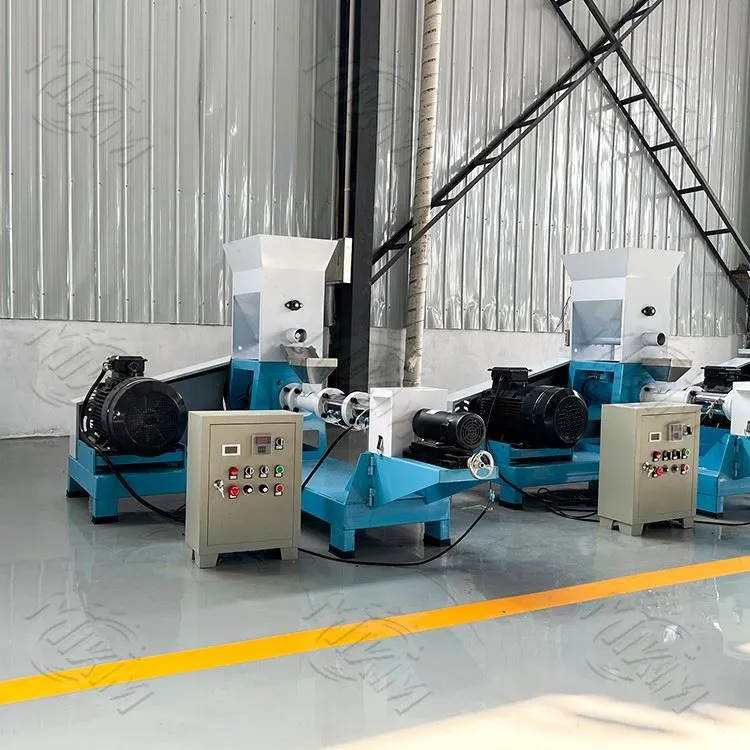
2. 4 Major Risks of High-Fat Extrusion in single screw floating fish feed making machines
I. The "Sinking" Effect
High fat levels interfere with the formation of the starch matrix. This prevents the "puffing" or expansion needed for buoyancy. If you are producing floating fish feed, exceeding 10% internal fat often results in pellets that sink or have inconsistent buoyancy.
II. Screw Slippage and Surging
As oil levels rise, the material loses its "grip" on the barrel wall. This leads to surging-where the output fluctuates wildly, causing some pellets to be over-cooked and others to be virtually raw.
III. Low Water Stability
High-fat pellets produced on a single screw floating fish food maker machine often have poor structural integrity. They tend to dissolve quickly in water, leading to nutrient leaching and pond pollution.
IV. Poor Oil Absorption
If the internal structure isn't porous enough (due to low expansion), the pellets cannot absorb additional oil during the coating stage.
3. The Solution: How to Reach 20%+ Fat with a Single-Screw fish food maker machine
If your recipe requires high fat for carnivorous fish, follow this industrial "Best Practice" workflow:
- Limit Internal Fat: Keep the fat content in the mixer (before extrusion) at 5% - 8%. This ensures enough friction for perfect starch gelatinization.
- Maximize Starch: Ensure at least 20% starch content to create a strong, porous "sponge" structure.
- Use a Pre-conditioner: Use steam to pre-heat the material. This reduces the mechanical heat requirement and helps stabilize the process.
- Post-Extrusion Vacuum Coating: This is the "Secret Weapon." After the pellets are extruded and dried, use a vacuum coater or a spray drum to add the remaining 10% - 20% oil. The porous pellets will "soak up" the oil like a sponge.
4. FAQ:
Q1: Why is my floating feed sinking when I add more fish oil?
Answer: The oil is likely reducing the friction in your single screw barrel, preventing the starch from expanding. Try reducing the internal oil to 6% and applying the rest as a coating after the pellets are dried.
Q2: When should I stop using a single screw floating fish feed pellet making machine and upgrade to a Twin Screw?
Answer: If your business model depends on Fresh Meat (over 10%) or High-Energy (fat over 15% in-mix) recipes, a single screw will be too unstable. Twin screw extruders use positive displacement to force material forward, making them immune to the lubricating effects of fat.
Q3: Can I use lecithin to help with high-fat extrusion?
Answer: Yes. Adding small amounts of emulsifiers like lecithin can help distribute fat more evenly, slightly improving the stability of single screw extruders, but it won't bypass the physical limits of friction-based heating.
Q4: Is the pellet quality different between high-fat internal and high-fat coated?
Answer: Yes. Post-extrusion coated pellets are generally superior. They have a harder core (better water stability) and a high-energy exterior that is very palatable to fish.
Final Verdict
- For Tilapia, Carp, and Catfish (Low to Med Fat): A single screw floating fish feed machineis highly efficient and the best economic choice.
- For Salmon, Trout, and Marine Fish (High Fat/Energy): You can use a Single Screw + Oil Coating System, or invest in a Twin Screw Extruder for maximum recipe flexibility.
Company Profile