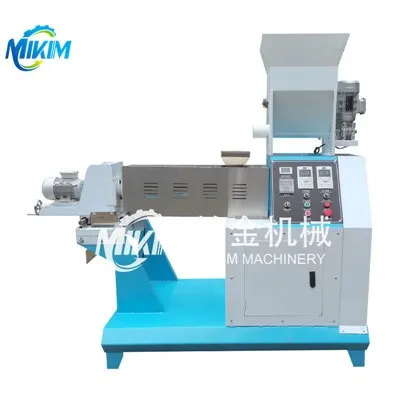
Differences in Customized Chicken Feed Complete Production Lines for Different Animals
Leave a message
The idea of "one type of feed for all animals" is a common misconception among novice farmers. In reality, the digestive systems and nutritional needs of different animals, such as pigs, chickens, cattle, fish, and shrimp, vary significantly. This necessitates that the production process of their feed pellets be "tailor-made." From raw material selection to pelleting parameters and post-processing, everything must be adjusted according to the animal's physiological characteristics to produce high-quality feed pellets that meet its specific needs.
The pelleting process for piglets differs significantly from that for finishing pigs. Piglets' digestive systems are not yet fully developed, so feed pellet production must focus on "easy digestibility and high nutrition." Raw materials should include high-quality corn and soybean meal, combined with easily digestible components such as whey powder and fishmeal, with the crude fiber content controlled below 5%. The grinding process requires pulverizing the raw materials to at least 80 mesh to ensure fine particle size; the pelleting temperature should be controlled at 70-80℃ to avoid damaging the active ingredients in the whey powder; and the die aperture should be 2-3mm to ensure small, easily digestible pellets. Fattening pig feed emphasizes "high energy, low cost," allowing for a slight increase in the proportion of bran and middlings, with crude fiber content controlled at 8%-10%. The particle size should be 40-60 mesh, the pelleting temperature 80-90℃, and the die diameter 3-5mm, improving production efficiency while meeting fattening needs.
The pelleting process for broiler and layer hen feed differs. Broilers grow quickly, requiring "high energy, high protein" feed, primarily composed of corn and soybean meal, with protein content controlled at 20%-22%. During pelleting, the extrusion pressure needs to be increased to 10-12 MPa to ensure high pellet density and nutrient concentration. The die diameter should be 2.5-3mm for easy and rapid consumption by broilers. Layer hen feed, on the other hand, emphasizes "calcium and phosphorus balance to promote egg production." Calcium sources such as shell powder and limestone powder should be added to the feed, with calcium content controlled at 3.5%-4% and phosphorus content at 0.4%-0.5%. The pelleting temperature should be controlled at 75-85℃ to avoid affecting calcium absorption; the die aperture should be 3-4mm, and the pellet hardness should be moderate to prevent injury to the mouth of laying hens when pecking. Simultaneously, the crude fiber content of laying hen feed should be controlled at 6%-8% to promote intestinal peristalsis.
The core of feed pelleting technology for ruminants such as beef cattle is "high fiber and easy digestibility." Raw materials mainly consist of roughage such as corn stalks, alfalfa hay, and silage, accounting for 60%-70%, with concentrate accounting for 30%-40%. During the grinding process, some coarse particles should be retained; the roughage should be ground to 2-3mm to avoid over-grinding affecting rumen fermentation; the pelleting temperature should be controlled at 60-70℃, the pressure at 5-8MPa, and the die aperture at 5-8mm, with slightly higher pellet hardness to prolong the residence time in the rumen. Post-processing of beef cattle feed does not require excessive drying; the moisture content should be controlled at 14%-15% to promote rumen microbial activity.
The key points of feed pelleting technology for aquatic animals are "soaking resistance and high palatability." The raw materials are mainly fishmeal, shrimp meal, and soybean meal, with a protein content as high as 35%-45%. During pelleting, the temperature needs to be increased to 90-110℃ and the pressure to 12-15MPa to fully gelatinize the starch and improve the pellet's foam resistance; the foam resistance time needs to reach 30-60 minutes. The die orifice diameter is adjusted according to the size of the fish: 1-2mm for fry and 3-5mm for adult fish. In the post-processing stage, the moisture content must be strictly controlled below 12%, and airtight packaging is used to prevent moisture absorption and spoilage. Simultaneously, palatability enhancers, such as betaine and amino acids, need to be added to the aquatic feed to improve palatability and promote feeding by fish and shrimp.
Related equipment


about Us
Customer visit

Certificate of Honor

FAQ
1. What is the price of the Livestock and poultry feed production line?
The price ranges from approximately $7,500-$55,000
2. Do you provide maintenance services for your customers?
Yes, we offer comprehensive after-sales maintenance services to our customers.