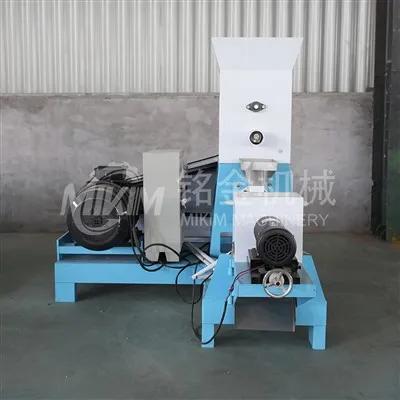
Do raw materials and manufacturing processes affect the price of fish feed pellet machine?
Leave a message
The material of the screw and extrusion chamber, the core components of a small fish feed pellet extruder, is key to its cost. Low-end extruders typically use 45# steel screws, which undergo simple heat treatment, resulting in low hardness (HRC20-25), easy wear, and short service life. They can only process soft raw materials such as corn and wheat bran, and the matching pellet mill typically costs between 5,000 and 10,000 yuan. Mid-range floating fish feed making machines use 40Cr alloy structural steel screws, which undergo quenching treatment, increasing the hardness to HRC35-40 and enhancing wear resistance. They can process mixed feeds containing a small amount of meat and bone meal, and the equipment costs between 10,000 and 30,000 yuan. High-end extruders use imported 38CrMoAlA alloy screws, which undergo nitriding treatment, achieving a surface hardness of over HRC60. T
hey can process feeds containing a high proportion of minerals and hard raw materials for extended periods, with a service life 5-8 times longer than low-end screws. The matching pellet mill costs accordingly more, ranging from 30,000 to 100,000 yuan. The choice of material for the extruder body also affects the equipment's cost and price. Small extruders often use ordinary Q235 steel plates welded together, resulting in low manufacturing costs but poor rigidity, making them prone to deformation during long-term operation and affecting equipment precision. Mid-to-high-end extruders use HT200 gray cast iron integral casting for the body, offering high rigidity, good stability, and the ability to withstand vibrations under high speed and pressure. The casting process is 30%-50% more expensive than welding. Some large extruders even use ductile iron for the body, offering superior strength and toughness, further increasing costs, but ensuring stability during 24-hour continuous operation, making them suitable for large-scale production.
The precision of the manufacturing process directly determines the extruder's performance and price. Low-end extruders use screws machined on ordinary lathes, resulting in high surface roughness (Ra 1.6μm or higher) and large clearances (0.5-1mm) between the screw and the extrusion chamber, easily leading to problems such as raw material leakage and uneven extrusion, but with low processing costs. Mid-range extruders are machined using CNC lathes, reducing surface roughness to below Ra0.8μm and controlling clearance within 0.2-0.5mm. This improved machining precision comes at the cost of increased efficiency. High-end extruders utilize five-axis machining centers, controlling screw machining accuracy within 0.01mm, achieving surface roughness below Ra0.4μm, and clearance less than 0.2mm. This enables efficient extrusion and thorough gelatinization of raw materials, but the processing cost is several times higher than with ordinary lathes, a key reason for the exorbitant price of high-end pellet mills.
Heat treatment is a crucial step in improving the performance of components in the Floating Fish Feed Extruder process, also increasing equipment costs. Low-end extruders only perform simple heat treatment on the screw, resulting in lower costs. Mid-range extruders use quenching and tempering processes to improve screw hardness. High-end extruders undergo complex heat treatment processes such as nitriding and carbonitriding to form a wear-resistant layer on the screw surface while maintaining core toughness. This process is 2-3 times more expensive than simple heat treatment. While heat treatment increases costs, it significantly extends the screw's lifespan and reduces replacement costs. For example, a nitrided screw can last over 3 years when processing feed containing hard ingredients, while a screw without complex heat treatment only lasts 6-12 months, making it more economical in the long run.
When focusing on the price of fish feed making machines, buyers should thoroughly understand the extruder's raw materials and manufacturing process, not just its surface specifications. Some low-priced equipment may appear to have the same configuration, but it uses inferior materials and rough workmanship. While the initial price may be low, the subsequent maintenance and replacement costs are extremely high, making it counterproductive. Buyers should select an extruder whose materials and manufacturing process match their production raw materials and usage frequency to ensure maximum cost-effectiveness.
Related equipment


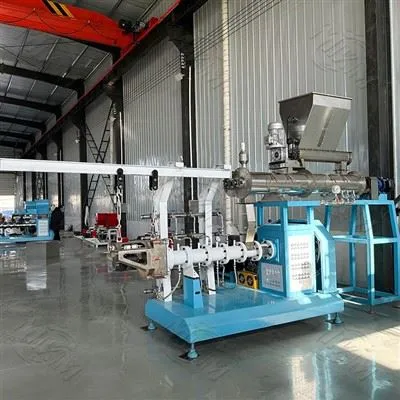
about Us
MIKIM's fish feed pellet production lines and supporting machinery offer excellent value for money. Not only are they affordable, eliminating middlemen markups and allowing small and medium-sized enterprises (SMEs) and fish farmers to purchase complete sets of equipment at reasonable costs, but they also boast exceptional efficiency. The fully automated process, from raw material crushing and precise ingredient mixing to extrusion pelleting and maturation, is completed in one continuous flow. This results in high starch gelatinization rates and uniform pellet formation, significantly improving production efficiency and feed quality, truly achieving "low cost, high output." Choosing a MIKIM fish feed pellet production line means enjoying comprehensive pre-sales and after-sales service, including 24-hour online customer support, a one-year warranty on the entire machine, professional on-site installation, commissioning, and maintenance, and a stable supply of spare parts. Customers can buy with confidence and use with peace of mind, with both excellent value and service quality!
Customer visit

Certificate of Honor

FAQ
1. What is the price of the small fish feed pellet making machine?
The price ranges from approximately $1,500-$55,000
2. Do you provide maintenance services for your customers?
Yes, we offer comprehensive after-sales maintenance services to our customers.
If you would like to learn more about MIKIM machinery, please contact us. We offer one-stop service and welcome your inquiries!!!