


Does fish feed produced by extrusion processing enhance the digestibility and absorption of fish?
Leave a message
Some fish farmers have encountered this situation: after the fish eat the feed, there is a lot of undigested feces in the water, the fish grow slowly, and they frequently suffer from gastrointestinal diseases. This is actually caused by the feed being difficult to digest. However, extruding fish feed eliminates this problem – the process in a fish feed pelleting production line can "modify" the feed structure, making it easier for the fish's digestive system to "accept" the feed.
How to optimize feed digestibility in fish feed making production lines
The fish food pellet production line optimizes feed digestibility and absorption primarily through two processes. The first is "ultra-fine grinding of raw materials": the production line's grinders are equipped with 1.0 mm mesh screens, which can grind raw materials such as fishmeal and soybean meal into extremely fine particles. This finer powder makes it easier for the fish's digestive juices to come into contact with the nutrients, allowing digestive enzymes to quickly break down the nutrients. For example, if the raw materials for ordinary feed are ground to 2 mm, it takes fish 4 hours to digest protein; extruded feed ground to 1 mm reduces digestion time to 2.5 hours, significantly improving digestibility.
The second is "removal of anti-nutritional factors": many raw materials (such as soybean meal) contain "trypsin inhibitors," which hinder the work of digestive enzymes in the fish's intestines, preventing the fish from digesting protein. The extrusion process in the production line, with its high temperature and pressure, destroys these inhibitors within seconds, allowing digestive enzymes to function normally. For example, after extrusion, the trypsin inhibitor content in soybean meal can be reduced from 5 mg/g to below 0.5 mg/g. After the fish consumes this feed, the protein can be fully broken down into amino acids, which are then absorbed into the body for growth.


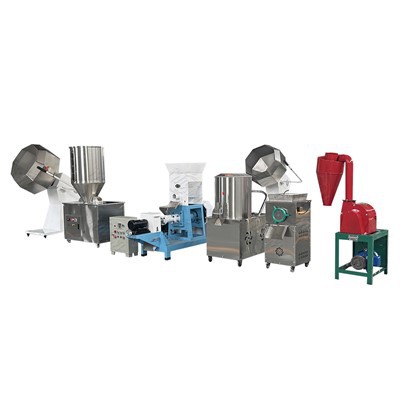

Specific Impacts on Fish Digestion and Absorption
Fish fed extruded fish feed experience significantly less strain on their digestive system, rarely experiencing bloating or diarrhea. For example, in crucian carp farming, using regular feed results in loose, undigested soybean meal particles in the feces; using extruded feed produces formed feces with almost no undigested material, indicating that nutrients are absorbed. Furthermore, improved digestibility leads to higher feed conversion rates-where 2.5kg of feed previously resulted in 1kg of fish growth, 2kg of extruded feed now yields the same result, reducing feed waste by 0.5kg and lowering farming costs. Additionally, fish food pellet making production lines coat the feed after extrusion. This coating prevents rapid dissolution in water, allowing fish sufficient time to ingest it and preventing undigested feed from polluting the water, indirectly protecting the fish's digestive health.
about Us
Customer visit

FAQ
1. What is the price of the fish floating feed production line?
The price ranges from approximately $20,000-$66,000
2. Do you provide maintenance services for your customers?
Yes, we offer comprehensive after-sales maintenance services to our customers.


