Five Common Extrusion Problems and Solutions in small fish feed maker machine
Leave a message
content
Common problems in the first step of fish feed production equipment's raw material pretreatment stage: Uneven particle size of the raw materials leads to significant differences in subsequent puffing effects. Solutions: Replace with a precision screen to ensure all raw materials pass through an 80-mesh sieve after grinding; if the grinder speed is insufficient, adjust the speed or replace the motor to improve grinding efficiency. Another common problem is excessive moisture content in the raw materials. Solutions: Spread the raw materials out in a well-ventilated and dry place to air dry, or use a small dryer at low temperature to ensure the moisture content drops to 12%-14%; if the moisture content is too low, spray with a suitable amount of warm water, stir evenly, and let stand for 30 minutes before use.
Common problems in the second step of formula mixing: Uneven mixing of raw materials results in oil clumping. Solutions: Adjust the mixing order; mix the dry powder raw materials first for 5 minutes, then slowly add the oil, continuing to stir for 3-5 minutes; if too much oil is added, reduce the amount or increase the proportion of absorbent materials (such as bran). If clumps appear after mixing, manually break them up to prevent them from entering the small fish feed making machine and clogging the feed inlet, causing a sudden increase in the load on the puffing machine.
Common faults in the third step of the extruder preheating and debugging process: The temperature fails to reach the set value, or the temperature fluctuates excessively. Solutions: Check if the extruder's heating element is damaged; replace it immediately if necessary. Check the insulation layer for damage to prevent heat loss. If the voltage is unstable, a voltage regulator is required. If the speed fluctuates during speed adjustment, check if the drive belt is loose; tighten the belt or replace the worn belt. Simultaneously check the motor's operating status to ensure stable power supply.
Common faults in the fourth step of the extrusion and forming process: The Small Fish Feed Extruder Machine becomes clogged, preventing normal material output. The core cause is excessive moisture content in the raw material or an excessively small die orifice diameter. Solutions: Immediately disconnect the power and allow it to cool. Use a special cleaning rod to clear the blockage from the die end in reverse; adjust the raw material moisture content to the standard range, or replace the die with one with a slightly larger orifice diameter. Another common fault is insufficient particle expansion, resulting in a hard texture. Solutions: Increase the extruder temperature by 5-10°C, or appropriately reduce the feed rate and increase the screw speed to increase the residence time of the raw material in the extrusion chamber, ensuring thorough cooking and expansion. If the pellets are over-expanded and easily disperse in water, the temperature or rotation speed needs to be reduced, and the raw material density increased.
Common problems in the fifth step, cooling and screening: Pellets become damp and moldy after cooling. Solutions: Check the airflow and cooling time of the cooler to ensure the pellets are cooled to room temperature before storage; if the ambient humidity is high, add dehumidification equipment to the cooling stage. If a large number of broken particles appear during screening, check if the die head of the small fish feed pellet making machine is worn, or if there are hard objects colliding with the particles inside the cooler. Replace worn die heads promptly and clean foreign objects from inside the cooler.
Related equipment


about Us
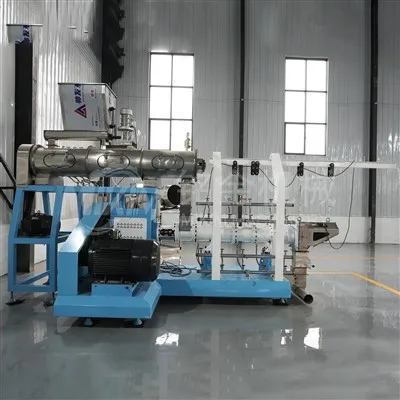
MIKIM's fish feed pellet production lines and supporting machinery offer excellent value for money. Not only are they affordable, eliminating middlemen markups and allowing small and medium-sized enterprises (SMEs) and fish farmers to purchase complete sets of equipment at reasonable costs, but they also boast exceptional efficiency. The fully automated process, from raw material crushing and precise ingredient mixing to extrusion pelleting and maturation, is completed in one continuous flow. This results in high starch gelatinization rates and uniform pellet formation, significantly improving production efficiency and feed quality, truly achieving "low cost, high output." Choosing a MIKIM fish feed pellet production line means enjoying comprehensive pre-sales and after-sales service, including 24-hour online customer support, a one-year warranty on the entire machine, professional on-site installation, commissioning, and maintenance, and a stable supply of spare parts. Customers can buy with confidence and use with peace of mind, with both excellent value and service quality!!!
Customer visit

Certificate of Honor

FAQ
1. What is the price of the fish feed pellet extruder?
The price ranges from approximately $1,500-$55,000
2. Do you provide maintenance services for your customers?
Yes, we offer comprehensive after-sales maintenance services to our customers.
If you would like to learn more about MIKIM machinery, please contact us. We offer one-stop service and welcome your inquiries!!!