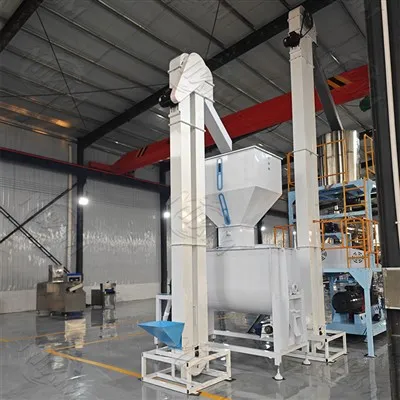
How can I select the right Small pet rabbit feed production line?
Leave a message
Key Selection Points
TFocusing on high-fiber raw material processing equipment: The core raw materials for rabbit feed are alfalfa and timothy hay, which have coarse and hard fibers. The production line needs to be equipped with a heavy-duty grinder (with high-speed steel blades, capable of grinding to a particle size of 40-60 mesh) to prevent hay powder from clumping. Simultaneously, the pellet mill needs to use a wide-hole die (3-4mm diameter) to prevent fiber blockage and ensure smooth pelleting. Furthermore, the pellet production line needs a conditioning and water replenishment device. Because coarse fibers are highly absorbent, appropriate water replenishment (raw material moisture content controlled at 16%-18%) can improve pellet formation rate and reduce breakage.
Choosing production line scale and configuration with low cost as the goal: For small to medium-sized production scenarios (50-100kg per hour), a compact pellet production line can be selected, integrating four modules: grinding, mixing, pelleting, and cooling. It occupies only 10-15㎡, reducing equipment investment costs by 30%. If the budget is limited, the automated packaging module can be omitted, and manual weighing and packaging can be used, with upgrades made later. It is important to note that even with a low-cost configuration, the production line must be equipped with a magnetic separator to remove metal impurities from the raw materials, preventing damage to the rabbits' digestive system.
Balancing nutritional balance and hygiene: Rabbits are sensitive to mycotoxins, the production line must be equipped with a raw material impurity removal and mold screening module. This module uses air separation to remove weeds and stones, and optical detection to remove moldy raw materials. Simultaneously, after pellet cooling, the feed must pass through a metal detector and a microbial sampling port to ensure that the feed meets hygiene standards (total bacterial count ≤10000 cfu/g). Furthermore, the feed silos and pipes of the production line must be made of food-grade stainless steel for easy cleaning and to prevent residual mold from contaminating new feed.
Main equipment of the pet floating meal production line
animal feed extruder


parameter
|
|
|
|
|
|
|
|---|---|---|---|---|---|
|
|
|
|
|
|
|
|
|
|
|
|
|
|
|
|
|
|
|
|
|
|
|
|
|
|
|
|
|
|
|
|
|
|
|
|
|
|
|
|
|
|
|
|
|
|
|
|
|
about Us
MIKIM boasts extensive experience in poultry feed pellet production lines, significantly reducing the incidence of poultry diseases. Its equipment is not only widely used across various industries domestically but also exported to Southeast Asia, Europe, Africa, and South America, earning a high reputation internationally. This global presence not only demonstrates the adaptability and competitiveness of its products, but also demonstrates the company's experience in adapting to diverse market standards and logistics conditions, enabling it to provide a stable supply chain for its overseas customers. Whether serving large domestic farms or cross-border feed companies, MIKIM can leverage its global service network to ensure a consistent, high-quality experience.
Customer visit

FAQ
1. What is the price of the pet food extrusion machine?
The price ranges from approximately $8,000-$39,000
2. Do you provide maintenance services for your customers?
Yes, we offer comprehensive after-sales maintenance services to our customers.