


How do you determine whether pellets from a fish feed pellet making machine meet quality standards?
Leave a message
Microbiological indicator assessment is the core of hygiene and safety testing, focusing on three key indicators: Escherichia coli, Salmonella, and total mold count. E. coli testing uses the "plate count method": 25g of granule sample is added to 225mL of sterile physiological saline to prepare a suspension, serially diluted, and inoculated onto eosin methylene blue agar. The suspension is incubated at 37°C for 24 hours, and the number of typical colonies is counted. Safety standards: E. coli ≤10^4 CFU per gram of granules, ≤10^2 CFU for infant food grade granules. Salmonella testing uses the "enrichment isolation method": After enrichment culture, the sample is inoculated onto SS agar and the presence of typical colonies is observed. The safety standard is "not detectable". Total mold count testing uses the "Bengal red agar culture method": the total mold count per gram of granules should be ≤10^3 CFU; a count exceeding 10^4 CFU will cause the granules to mold and deteriorate. The high-temperature sterilization function of the pellet mill is crucial for controlling microorganisms. One feed mill increased the sterilization temperature of its pellet mill from 100℃ to 121℃, reducing the E. coli content from 10^5 CFU/g to 10^3 CFU/g.
Heavy metal residue assessment focused on toxic heavy metals such as lead, mercury, arsenic, and cadmium, using atomic absorption spectrophotometry. A 5g pellet sample was microwave-digested, and the heavy metal content was determined using an atomic absorption spectrophotometer. Safety standards strictly adhered to the *Feed Hygiene Standard* (GB 13078-2017): lead ≤ 2 mg/kg, mercury ≤ 0.1 mg/kg, arsenic ≤ 2 mg/kg, cadmium ≤ 0.5 mg/kg. Heavy metal contamination mainly originated from raw materials and pellet mill equipment wear. One feed mill found excessive lead content; investigation revealed contamination from metal debris generated by wear on the pellet mill screw. Replacing the screw with a wear-resistant one resolved the problem.
Drug residue assessment targets granules that have used drug additives, employing either enzyme-linked immunosorbent assay (ELISA) or gas chromatography-mass spectrometry (GC-MS). The focus is on detecting prohibited or restricted drugs such as antibiotics (e.g., oxytetracycline, chlortetracycline) and hormones. The safety standard is "not detectable" or below the prescribed limit (e.g., oxytetracycline ≤0.1 mg/kg). Drug residues not only lead to excessive drug levels in farmed animals but also endanger human health through the food chain, making them a key indicator for regulatory authorities. One beef cattle feed mill suffered significant losses and had its production license revoked due to excessive drug residues in beef caused by the illegal addition of antibiotics.
Hygiene and safety assessments require the establishment of a batch testing system. Each batch of granules must be sampled and tested after production, and only those that pass the test can leave the factory, preventing hygiene problems caused by raw material contamination or improper processing control.
Related equipment
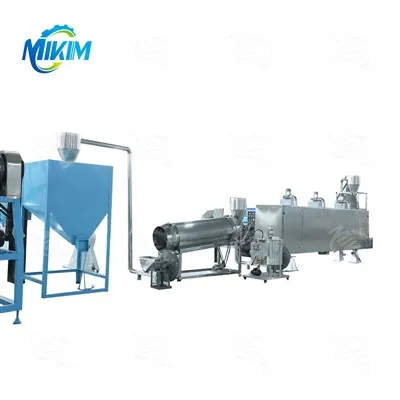


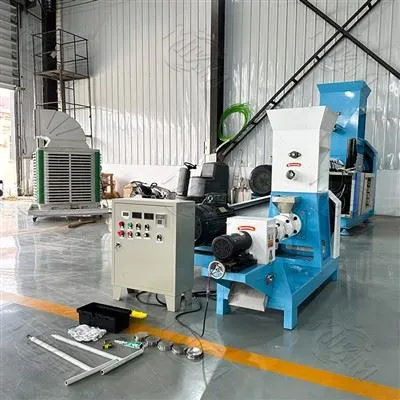
about Us
MIKIM's fish feed pellet production lines and supporting machinery offer excellent value for money. Not only are they affordable, eliminating middlemen markups and allowing small and medium-sized enterprises (SMEs) and fish farmers to purchase complete sets of equipment at reasonable costs, but they also boast exceptional efficiency. The fully automated process, from raw material crushing and precise ingredient mixing to extrusion pelleting and maturation, is completed in one continuous flow. This results in high starch gelatinization rates and uniform pellet formation, significantly improving production efficiency and feed quality, truly achieving "low cost, high output." Choosing a MIKIM fish feed pellet production line means enjoying comprehensive pre-sales and after-sales service, including 24-hour online customer support, a one-year warranty on the entire machine, professional on-site installation, commissioning, and maintenance, and a stable supply of spare parts. Customers can buy with confidence and use with peace of mind, with both excellent value and service quality!
Customer visit

Certificate of Honor

FAQ
1. What is the price of the fish food making machine?
The price ranges from approximately $1,500-$55,000
2. Do you provide maintenance services for your customers?
Yes, we offer comprehensive after-sales maintenance services to our customers.
If you would like to learn more about MIKIM machinery, please contact us. We offer one-stop service and welcome your inquiries!!!


