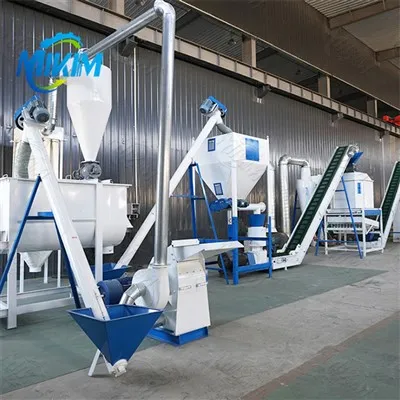
How Moisture Content Affects Single Screw Floating Fish Feed Pellet Extruder Machine Performance?
Leave a message

Why Moisture is the "Silent Controller"?
In single screw fish feed making machine, moisture is the primary variable that controls mechanical friction and steam pressure. For most grain-based floating feed, the ideal moisture "sweet spot" is 15% to 18%.
- Deviation < 12%: Leads to "over-cooking," high motor torque, and scorched, sinking pellets.
- Deviation > 22%: Causes "screw slip" (loss of friction), resulting in soft, unexpanded pellets that sink immediately.
1. The Moisture-Friction Paradox in single screw floating fish feed extruder machines
Unlike twin-screw machines, single screw fish feed extruder machines rely on friction-generated heat. Moisture acts as the internal lubricant that balances this heat.
| Moisture Level | Mechanical Effect | Final Product Result |
| Low (<12%) | Extreme friction; high wear on screw flights. | Hard, dark, burnt pellets; high sinking rate. |
| Optimal (15-18%) | Balanced shear; stable 100-120°C temperature. | Consistent expansion; 24h+ floating time. |
| High (>22%) | "Lubrication effect"; pressure drops in barrel. | Soft, "doughy" pellets; no expansion; zero buoyancy. |
2. 3 Ways Moisture Directly Affects Your Profitability
I. Starch Gelatinization (Digestibility)
Starch requires water to "unfold" its molecular structure. If moisture is too low, the starch cannot fully gelatinize, meaning the fish cannot digest the feed properly, leading to a poor FCR (Feed Conversion Ratio).
II. The "Flash Expansion" Effect
Floating feed depends on the moisture inside the pellet turning into steam instantly as it exits the die.
- The Science: If moisture is correct, the internal pressure creates a fine, porous sponge.
- The Failure: Too much moisture prevents the "flash" evaporation, leaving the pellet dense and heavy.
III. Machine Longevity
Running raw materials that are too dry is like using sandpaper on your machine. It increases the load on the main motor and can cut the lifespan of your screw and barrel liners by 50%.
3. Troubleshooting Table: Moisture-Related Problems
| Symptom | Primary Cause | Solution |
| Pellets sink immediately | Moisture too low OR too high. | Check if pellets are burnt (too dry) or soft (too wet). |
| High Motor Amperage | Moisture too low. | Increase water addition by 1-2% increments. |
| Uneven Pellet Length | Moisture fluctuation. | Ensure raw materials are mixed for at least 5-10 mins. |
| Surface Cracking | Material is too dry. | Check grinding fineness and increase moisture. |
| Machine Blockage | Sudden drop in moisture. | Stop feeding immediately; clear the die head. |
4. FAQ:
Q1: Can I use fresh ingredients with high moisture in a single screw floating fish extruder machine?
Answer: Only if balanced. If you add fresh fish paste, you must reduce the moisture of your dry powders (like corn or soybean meal) to compensate. The total mixed moisture entering the barrel must still fall within the 15-20% range for stable expansion.
Q2: Does "Dry Type" extrusion mean I don't need to add water?
Answer: No. "Dry Type" simply means you don't use an external steam boiler. You still need to add liquid water to the raw material mixer. The friction of the screw then turns this water into the steam required for expansion.
Q3: How do I test moisture without a lab?
Answer: The "Squeeze Test" is a practical field method. Squeeze a handful of mixed raw material; it should form a ball that breaks easily when poked. If it crumbles instantly, it's too dry. If it stays in a solid clump or leaks water, it's too wet.
Q4: Why does my feed float for 1 hour and then sink?
Answer: This is usually due to poor starch gelatinization caused by slightly low moisture or low temperature. The pellet structure is "weak," allowing water to seep in quickly. Increasing moisture by 1-2% can often create a tighter, more waterproof starch matrix.
Final Verdict: The Gold Standard for Operators
For a single screw floating fish feed making machine, Stability is King.
- Uniform Grinding: Materials should be ground to 60-80 mesh to absorb moisture evenly.
- Precision Mixing: Moisture must be distributed perfectly before it hits the extruder.
- Real-time Monitoring: Watch the pellet surface; a matte, slightly puffed surface usually indicates the perfect moisture balance.
Company Profile