


How to Fix a floating fish feed extruder machine That Is Not Working
Leave a message
content
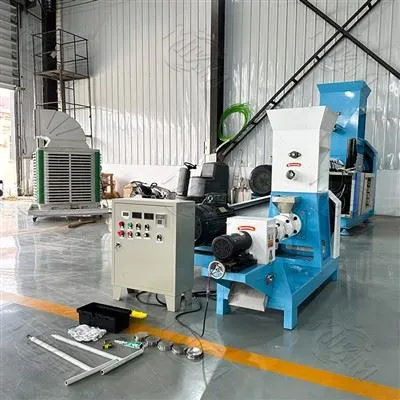
If your floating fish food extruder is not working, the first thing to check is the basic power supply. This is the easiest to resolve and most frequent problem. The first step is to check the power supply voltage. Most equipment has a rated voltage of 380V (industrial grade) or 220V (small household grade). Use a multimeter to measure the actual power supply voltage. If the voltage fluctuation exceeds ±10% (e.g., a 380V device with a voltage lower than 342V or higher than 418V), the motor will not start or will trip after starting. Solution: Contact the power supply company to stabilize the voltage, or install a voltage regulator to ensure a stable power supply. If it is a three-phase device, check for a missing phase. An imbalance in the three-phase current will trigger the motor protection device, causing the equipment to stop working. Tighten any loose terminals and repair any missing phases.
The second step is to check the electrical control components, including emergency stop buttons, air switches, contactors, relays, etc. Often, small floating fish feed pellet machines fail to work because the emergency stop button is not reset or the circuit breaker has tripped. First, check if the emergency stop button is pressed and reset it by rotating it clockwise. Check if the circuit breaker in the distribution box has tripped. If it has, check for overload (such as material blockage) and resolve it before resetting. If the circuit breaker trips repeatedly, check if the contactor and relay are damaged. Use a multimeter to measure the contact continuity; replace damaged components immediately. For example, in a small mini extrusion pellet machine, if pressing the start button has no effect, it's likely a relay fault in the control circuit; replacing it with the same model will restore operation.
The third step is to check the motor, temperature control, and pressure sensors. Motor malfunctions in small fish feed pellet extruders can directly cause equipment to stop working. If the motor makes a humming sound but cannot start, it may be due to a stuck bearing or a rotor fault. Power must be disconnected, and the motor shaft manually rotated. If rotation is difficult, the motor needs to be disassembled to remove obstructions or the rotor repaired. If the motor is completely unresponsive, the resistance of the motor windings needs to be measured. A resistance of zero or infinite indicates a short circuit or open circuit in the windings, requiring professional repair. Furthermore, faulty temperature and pressure sensors can send incorrect signals to the control system, preventing the equipment from starting. The sensors need to be calibrated; if calibration is ineffective, they should be replaced to ensure accurate temperature and pressure signal transmission.
When troubleshooting the electrical system of a small home use dog food making machine, safety precautions must be taken. All operations must be performed with the power off to avoid the risk of electric shock. It is recommended to use insulated tools, and non-professionals should not disassemble core electrical components such as motors and control cabinets. Regularly inspect electrical wiring, tighten loose terminals, and clean dust from inside the control cabinet to prevent aging and short circuits caused by damp environments, thus reducing equipment downtime caused by electrical faults.
Related equipment


about Us
MIKIM's fish feed pellet production lines and supporting machinery offer excellent value for money. Not only are they affordable, eliminating middlemen markups and allowing small and medium-sized enterprises (SMEs) and fish farmers to purchase complete sets of equipment at reasonable costs, but they also boast exceptional efficiency. The fully automated process, from raw material crushing and precise ingredient mixing to extrusion pelleting and maturation, is completed in one continuous flow. This results in high starch gelatinization rates and uniform pellet formation, significantly improving production efficiency and feed quality, truly achieving "low cost, high output." Choosing a MIKIM fish feed pellet production line means enjoying comprehensive pre-sales and after-sales service, including 24-hour online customer support, a one-year warranty on the entire machine, professional on-site installation, commissioning, and maintenance, and a stable supply of spare parts. Customers can buy with confidence and use with peace of mind, with both excellent value and service quality!!!
Customer visit

Certificate of Honor

FAQ
1. What is the price of the Best home use dog food making machine?
The price ranges from approximately $1,500-$55,000
2. Do you provide maintenance services for your customers?
Yes, we offer comprehensive after-sales maintenance services to our customers.
If you would like to learn more about MIKIM machinery, please contact us. We offer one-stop service and welcome your inquiries!!!


