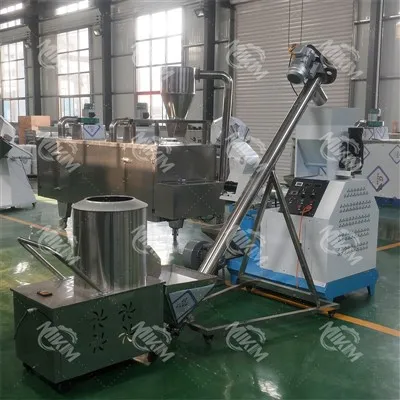
How to Reduce the Cost of small dog food manufacturing equipment?
Leave a message
content
Precisely controlling the core parameters of the extruder reduces the energy consumption of the drive motor. The drive motor of a fish pellet making machine accounts for over 60% of the total energy consumption. The core of parameter control is achieving a precise match between load and speed. For single-screw extruders, when producing conventional fish feed (such as sinking carp feed), the screw speed can be controlled at 300-320 r/min to avoid overloading the motor due to excessive speed. When producing highly extruded pet food, there is no need to blindly increase the speed; instead, optimizing the moisture content of the raw materials (controlled at 12%-14%) can enhance frictional heat and reduce the motor load. For twin-screw extruders, the screw speed and feed rate must be controlled synchronously to ensure uniform distribution of the raw materials in the extrusion chamber, avoiding localized overload that could lead to a surge in energy consumption. For example, a pet food factory optimized the screw speed of its twin-screw extruder from 350 rpm to 320 rpm, while simultaneously reducing the feed rate from 120 kg/h to 110 kg/h. This resulted in a decrease in energy cost per unit of feed from 380 yuan/ton to 320 yuan/ton, without affecting the uniformity of pellet extrusion. Furthermore, avoiding idle operation and timely shutdown during production breaks can reduce ineffective energy consumption.
Optimizing the heating and cooling system reduces auxiliary energy consumption. The steam heating system of small fish food making machines is a major source of auxiliary energy consumption. Optimization techniques include: First, precisely controlling steam pressure. When producing ordinary pet/fish feed, a steam pressure of 0.3-0.4 MPa is sufficient to meet the raw material melting requirements, without needing to rise above 0.5 MPa, which can reduce boiler energy consumption by 15%-20%. Second, recovering and utilizing waste heat. The high-temperature exhaust gas from the extruder outlet is piped into the raw material preheating chamber to preheat the raw material to 40-50°C, reducing the energy required for subsequent heating. Simultaneously, a recovery device is installed for the waste heat discharged from the cooler for use in workshop heating or hot water preparation. For dry-type fish feed making machines, the extrusion chamber cooling system needs to be optimized, and dust on the heat sinks cleaned to ensure heat dissipation efficiency and avoid overheating leading to increased motor overload and energy consumption. For example, a fish feed factory installed a waste heat recovery device on its wet extruder, preheating the raw material to 50°C, reducing steam boiler energy consumption by 18% and saving over 50,000 yuan in gas costs annually.
Equipment Energy-Saving Retrofitting and Operation Management. Long-term energy savings can be achieved through simple equipment modifications: Adding a variable frequency drive (VFD) to the drive motor of automatic fish food making equipment allows for dynamic speed adjustments based on production capacity, avoiding energy waste caused by constant motor speed operation. This is particularly suitable for small-batch, multi-batch production scenarios, reducing energy consumption by 10%-15%. Replacing traditional resistance heating elements with electromagnetic heating coils increases thermal efficiency from 70% to over 95%, reducing heating energy consumption by 25%. In terms of operation management, rationally scheduling production batches avoids frequent start-ups and shutdowns (energy consumption during equipment startup is 1.5 times that of normal operation), striving for continuous production. Regularly inspecting equipment transmission components and adding high-efficiency lubricating oil to bearings and gears reduces frictional resistance and lowers motor energy consumption. For example, a small pet food factory reduced ineffective energy consumption due to small-batch production by 12% after installing a VFD on its single-screw extruder, saving over 2000 yuan in electricity costs per month.
Related equipment


about Us
MIKIM's fish feed pellet production lines and supporting machinery offer excellent value for money. Not only are they affordable, eliminating middlemen markups and allowing small and medium-sized enterprises (SMEs) and fish farmers to purchase complete sets of equipment at reasonable costs, but they also boast exceptional efficiency. The fully automated process, from raw material crushing and precise ingredient mixing to extrusion pelleting and maturation, is completed in one continuous flow. This results in high starch gelatinization rates and uniform pellet formation, significantly improving production efficiency and feed quality, truly achieving "low cost, high output." Choosing a MIKIM fish feed pellet production line means enjoying comprehensive pre-sales and after-sales service, including 24-hour online customer support, a one-year warranty on the entire machine, professional on-site installation, commissioning, and maintenance, and a stable supply of spare parts. Customers can buy with confidence and use with peace of mind, with both excellent value and service quality!!!
Customer visit

Certificate of Honor

FAQ
1. What is the price of the Dry fish feed production equipment?
The price ranges from approximately $1,500-$55,000
2. Do you provide maintenance services for your customers?
Yes, we offer comprehensive after-sales maintenance services to our customers.
If you would like to learn more about MIKIM machinery, please contact us. We offer one-stop service and welcome your inquiries!!!