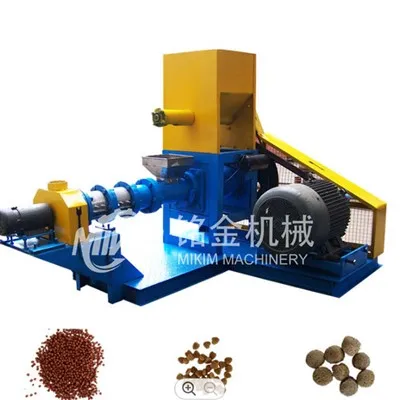
How to tell if a small fish food pellet making machine is bad?
Leave a message
Sinking fish feed pellet making machine in normal operation
content
Method 1: Observe the operating sound of the equipment; abnormal noises are a key sign of damage.
Under normal circumstances, a small fish feed extruder machine will emit a uniform, steady "humming" sound, without sharp noises, jamming sounds, or friction sounds. If the following three abnormal noises occur, it indicates that the equipment is damaged:
1. Sharp friction sound: This is often caused by severe wear of the screw or pressure roller, or by impurities such as metal shavings or stones mixed in with the raw material, leading to increased friction between parts. Over time, this will cause the screw and pressure roller to fail.
2. Jamming sound: Accompanied by uneven operation and fluctuating speed, this is often caused by a blocked feed inlet, worn gears, or motor failure. If not addressed promptly, it can lead to motor burnout.
3. "Clunking" sound: This is often caused by loose bolts or misaligned parts. Continued use will lead to parts falling off and the equipment disintegrating. When making a judgment, it is necessary to listen under both no-load and loaded conditions to ensure accurate diagnosis.
Method 2: Check the quality of the feed pellets. Substandard pellets indicate damage to the small floating fish feed extruder machine.
The quality of the feed pellets directly reflects the operating status of the equipment. If the following four conditions occur, it indicates that the equipment is damaged or has potential problems:
1. Poor pellet formation: Loose, easily crumbled, and dull pellets are often caused by worn pressure rollers, clogged die orifices, or improper pressure adjustment, resulting in insufficient extrusion of the raw material.
2. Uneven pellet size and coarseness: This is often caused by worn die, uneven feeding speed, or abnormal screw speed, indicating wear on core components.
3. Burnt smell and black color in the pellets: This is often caused by excessively high barrel temperature, damaged heating elements, or excessively long residence time of the raw material in the equipment, which will damage the barrel and screw over time.
4. Impurities and metal shavings mixed in with the pellets: This is often caused by wear and tear of internal components or failure to screen the raw material during feeding. The machine should be stopped immediately for inspection to prevent further damage.
Method 3: Touch the equipment temperature; abnormal temperature rise is a precursor to malfunction.
When a small electric fish feed extruder machine is running, the barrel, motor, and gearbox will generate normal heat. However, the temperature must be controlled within a reasonable range (barrel temperature 50-80℃, motor and gearbox temperature ≤60℃). Abnormal temperature rise indicates equipment damage.
1. a sudden rise in barrel temperature exceeding 90℃, accompanied by a burning smell, is often due to a short circuit in the heating element, a faulty temperature controller, or a clogged die head, preventing heat dissipation.
2. an excessively high motor temperature, hot to the touch, accompanied by abnormal motor noise and a decrease in speed, is often due to worn motor bearings, aging coils, or excessive equipment load. Prolonged overload can lead to motor burnout.
3. an excessively high gearbox temperature, accompanied by oil leaks and abnormal noise, is often due to worn gears, insufficient lubrication, or a damaged gearbox gasket. Timely inspection and repair are necessary.
Finished Product Display

about Us
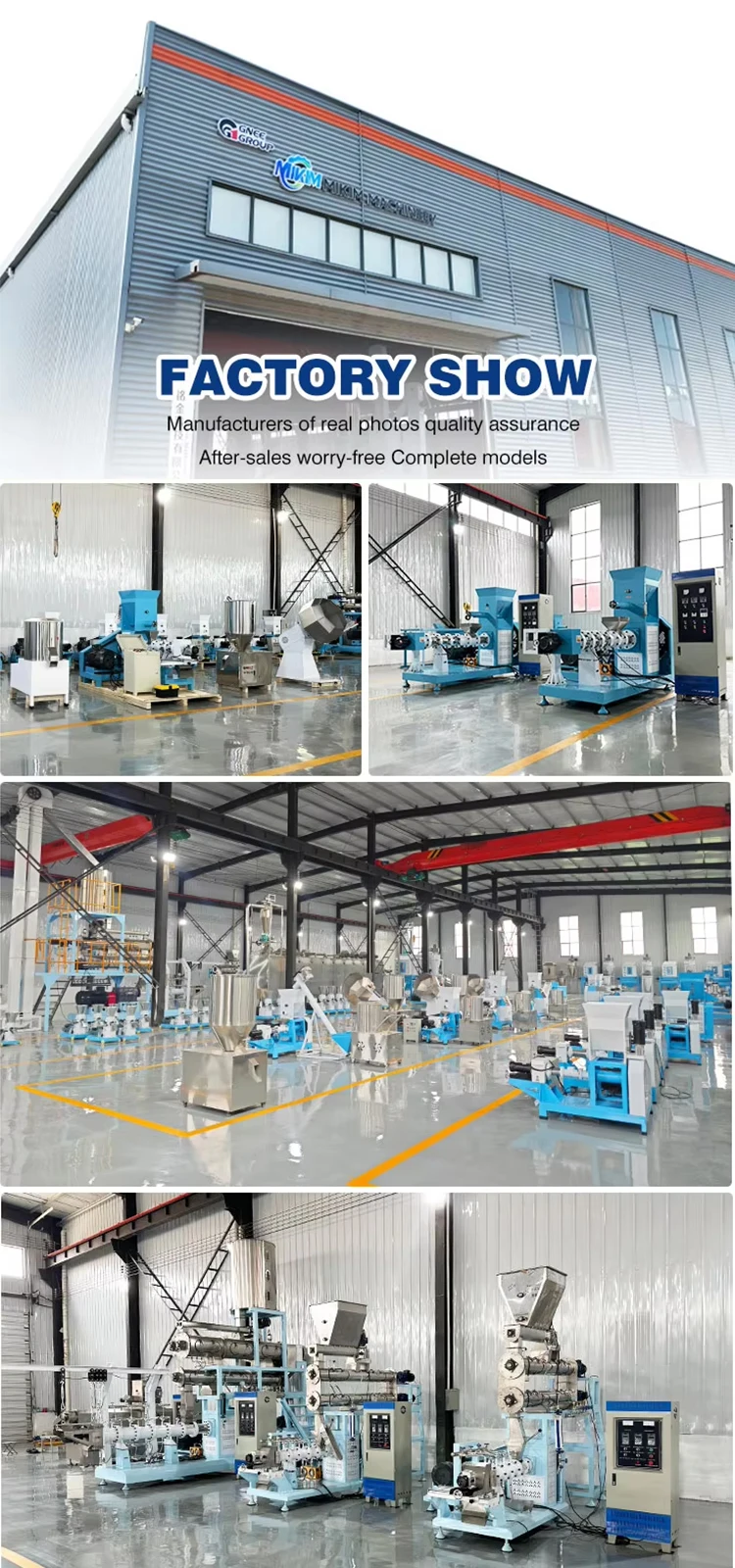
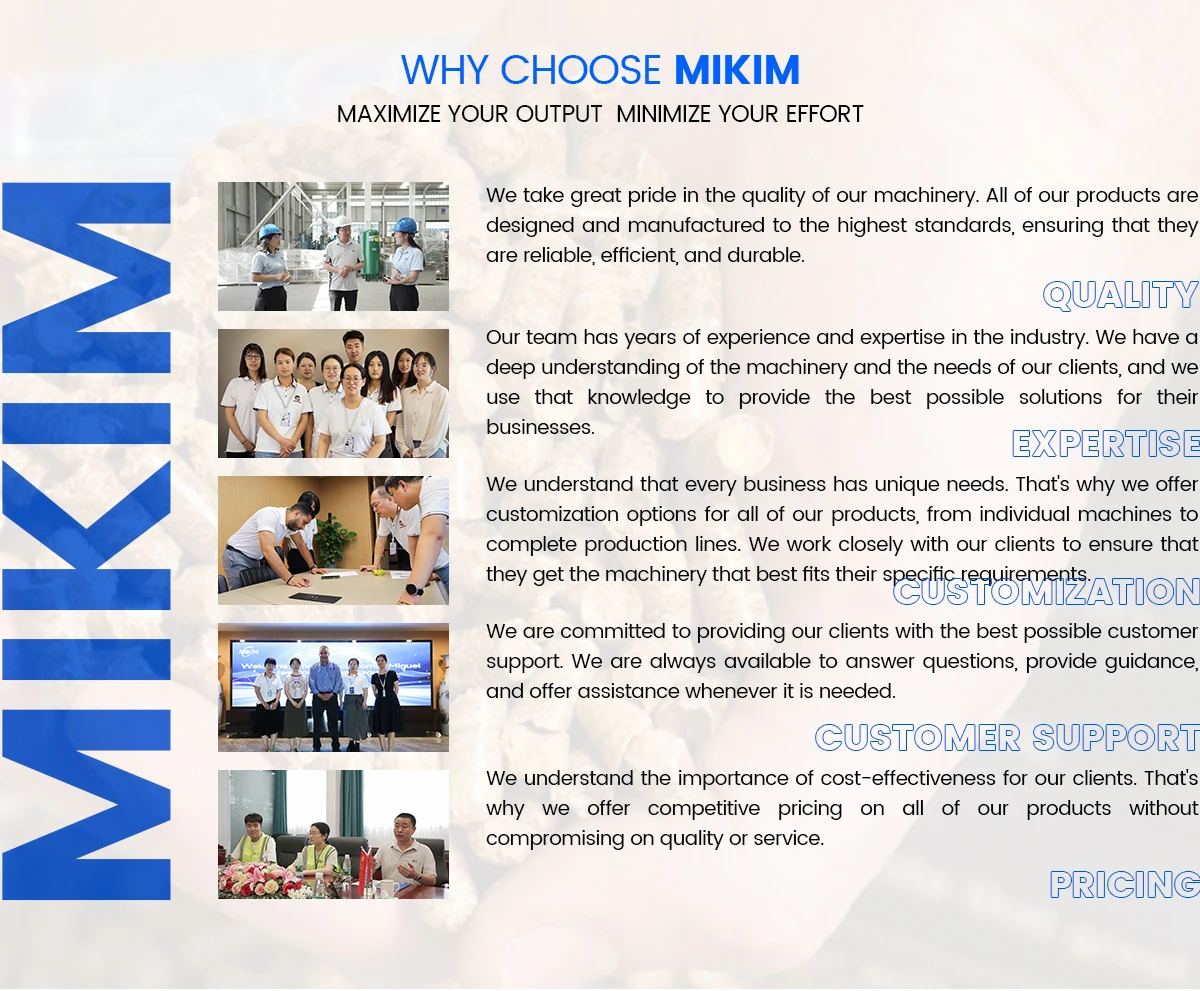
MIKIM's fish feed pellet production lines and supporting machinery offer excellent value for money. Not only are they affordable, eliminating middlemen markups and allowing small and medium-sized enterprises (SMEs) and fish farmers to purchase complete sets of equipment at reasonable costs, but they also boast exceptional efficiency.
Choosing a MIKIM fish feed pellet production line means enjoying comprehensive pre-sales and after-sales service, including 24-hour online customer support, a one-year warranty on the entire machine, professional on-site installation, commissioning, and maintenance, and a stable supply of spare parts. Customers can buy with confidence and use with peace of mind, with both excellent value and service quality!!!




FAQ
1. What is the price of the small fish feed making machine?
The price ranges from approximately $1,500-$55,000
2. Do you provide maintenance services for your customers?
Yes, we offer comprehensive after-sales maintenance services to our customers.
To explore which twin screw pet food machine model is suitable for your product line, view our full range of equipment or contact our team for a customized production plan.