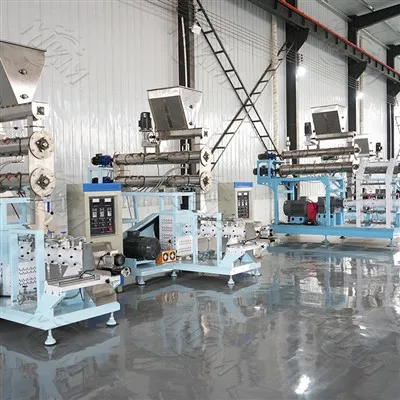
MIKIM Best Dog Food Pellet Making Machine Testing in Factory
Leave a message
1. What Is MIKIM Dog Food Pellet Making Machine Test in Factory?
MIKIM dog food pellet extruder machine test in factory refers to the real production trial process where the machine is operated using raw pet food ingredients to verify output capacity, pellet quality, extrusion stability, and continuous running performance before delivery. This ensures the machine can produce stable and nutritionally balanced dog food pellets for commercial pet food production.
2. Why Factory Testing Is Critical for dog food pellet machines?
Buyers of pet food equipment care less about specifications and more about final product quality consistency.
Factory testing is done to confirm:
whether pellets meet pet nutrition standards
if extrusion temperature is stable
whether starch gelatinization is sufficient
if pellet size is uniform and controllable
whether machine can run continuously without blockage
3. Raw Materials Used in MIKIM dog food pellet maker machine Test
During factory testing, real dog food formulas are used instead of empty trial materials.
Typical ingredients include:
- corn flour (energy source)
- soybean meal (protein source)
- chicken powder or fish meal
- rice bran or wheat flour
- vitamin and mineral premix

4. Step-by-Step Factory Testing Process
This is the core trust-building section.
Step 1: Material Mixing Test
Raw materials are mixed to ensure:
uniform protein distribution
stable moisture ratio
consistent formulation blending
Step 2: Extrusion Trial Run
The MIKIM machine is started under controlled load.
Key observations:
extrusion pressure stability
screw feeding smoothness
absence of clogging
uniform material flow
Step 3: Pellet Forming and Cutting Test
Operators check:
pellet diameter accuracy
cutting blade performance
surface smoothness
shape uniformity
Step 4: High Temperature Cooking Test
The extrusion chamber generates heat through friction and pressure.
Customers observe:
starch gelatinization level
odor control (no burning smell)
expansion ratio of pellets
Step 5: Final Cooling and Hardness Test
After extrusion, pellets are cooled to stabilize structure.
Tests include:
hardness level (not too soft, not too brittle)
breaking resistance
storage stability
5. Real Factory Test Performance Data
| Item | Result |
|---|---|
| Capacity | 200–500kg/h (adjustable models) |
| Pellet Size | 1–12mm |
| Moisture After Processing | 10–12% |
| Running Stability | Continuous 3–6 hours |
| Pellet Shape | Uniform |
| Suitable Formula | High-protein dog food |
6. Why MIKIM Household dog food extruder machine Performs Well in Testing?
Stable Screw Extrusion System
Ensures consistent pressure and avoids material blockage.
Precise Temperature Control
Prevents nutrient destruction during processing.
Strong Adaptability to Pet Food Formulas
Supports high-protein, high-fat dog food recipes.
Continuous Industrial Operation
Suitable for commercial pet food factories, not just small production.
7. What Customers Observe During Factory Testing
Buyers usually focus on very specific details:
- pellet surface texture (smooth or rough)
- smell of finished dog food
- uniformity of shape and size
- machine noise level during operation
- ease of cleaning after production
8. Application Scenarios
MIKIM dog food pellet making machine is suitable for:
- pet food manufacturing factories
- dog food production startups
- animal feed processing plants
- OEM pet food production lines
- export-oriented pet food businesses
9. FAQ
Why is factory testing important before purchasing a home-use dog food extruder machine?
It verifies real production capacity, pellet quality, and machine stability under working conditions.
Can MIKIM machine produce different dog food pellet sizes?
Yes, pellet size can be adjusted by changing molds.
Is the home-use dog food pellet machine suitable for high-protein pet food?
Yes, it supports meat meal, fish meal, and protein-rich formulas.
How long does factory testing usually take?
Typically 2–6 hours of continuous operation testing.
Company Profile