What are the advantages of sinking floating fish feed pellets?
Leave a message
The convenience of feeding significantly improves aquaculture efficiency. The pelleted feed produced by the floating fish feed making machine requires no complicated processing; it can be fed directly from the packaging. Combined with an automatic feeder, it allows for timed and quantitative feeding. One feeder can cover 5-10 acres of water surface, replacing 3-5 workers. In contrast, natural bait requires manual harvesting, washing, and chopping, which is not only time-consuming and labor-intensive but also greatly affected by weather conditions, making it difficult to obtain sufficient feed during rainy or hot weather. One crayfish farm, after using pelleted feed in conjunction with an automatic feeder, reduced its daily feeding time from 3 hours to 10 minutes, reducing labor costs by 8,000 yuan per month.
High feed utilization reduces waste costs. The pelleted feed produced by the best floating fish feed extruder machine has uniform density, good formability, and strong stability in water. Floating pellets can float for 30-60 minutes, while sinking pellets settle slowly, avoiding the problem of natural bait quickly disintegrating or being washed away by the water flow. Data shows that the feed conversion ratio (FCR) of pelleted feed (the number of kilograms of feed required to produce 1 kilogram of fish) is typically 1.2-1.8, while the FCR of natural bait is as high as 3-5. This means that for fish of the same weight, the consumption of pelleted feed is only half that of natural bait. A crucian carp farm in Zhejiang province reduced its feed waste rate from 25% to 5% after using pelleted feed, saving over 1500 yuan per mu (approximately 0.16 acres) in feed costs annually.
Furthermore, pelleted feed offers convenient storage and transportation, reducing distribution costs. After drying, the moisture content of pelleted feed is controlled below 12%, making it less prone to mold and allowing for long-term storage. With sealed packaging, the storage period can reach over 6 months. In contrast, natural bait, such as live bait or fresh bait, has a short shelf life and suffers significant losses during transportation. Long-distance transportation costs are more than 40% higher than for pelleted feed. This advantage is even more pronounced for farmers in remote areas, as they can purchase and store feed in bulk, avoiding feed supply interruptions.
Related equipment



about Us
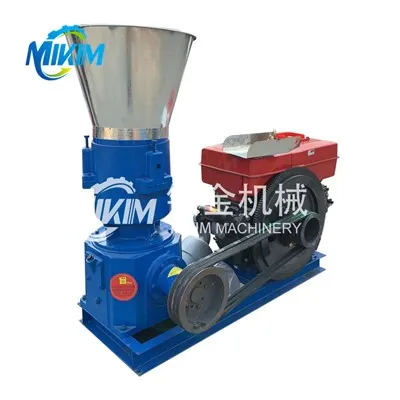
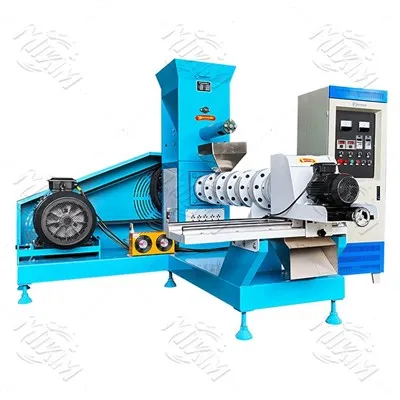
MIKIM's fish feed pellet production lines and supporting machinery offer excellent value for money. Not only are they affordable, eliminating middlemen markups and allowing small and medium-sized enterprises (SMEs) and fish farmers to purchase complete sets of equipment at reasonable costs, but they also boast exceptional efficiency. The fully automated process, from raw material crushing and precise ingredient mixing to extrusion pelleting and maturation, is completed in one continuous flow. This results in high starch gelatinization rates and uniform pellet formation, significantly improving production efficiency and feed quality, truly achieving "low cost, high output." Choosing a MIKIM fish feed pellet production line means enjoying comprehensive pre-sales and after-sales service, including 24-hour online customer support, a one-year warranty on the entire machine, professional on-site installation, commissioning, and maintenance, and a stable supply of spare parts. Customers can buy with confidence and use with peace of mind, with both excellent value and service quality!
Customer visit

Certificate of Honor

FAQ
1. What is the price of the Electric Fish Feed Extruder Machine?
The price ranges from approximately $3,500-$55,000
2. Do you provide maintenance services for your customers?
Yes, we offer comprehensive after-sales maintenance services to our customers.
If you would like to learn more about MIKIM machinery, please contact us. We offer one-stop service and welcome your inquiries!!!