


What are the benefits of feeding fish pellets
Leave a message
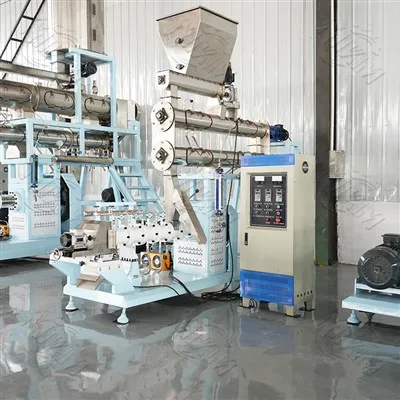
Small floating fish feed extruder's pelleted feed achieves a scientifically balanced nutritional composition, solving the problem of nutritional deficiencies in natural baits. High-quality fish pellets are precisely formulated based on the characteristics of different fish species, with core nutrients such as protein, fat, carbohydrates, vitamins, and minerals precisely balanced. For example, fishmeal accounts for over 50% of the feed for carnivorous bass to ensure high protein requirements; while feed for herbivorous grass carp is fortified with crude fiber and B vitamins to promote digestion and absorption. This formulation is not a simple mixture but rather a precise calculation. For instance, the protein content needs to be above 40% in juvenile fish, decreasing to 30%-35% in adult fish to avoid nutritional excess or deficiency.
Nutritional stability and controllability are another major advantage of pelleted feed. Natural baits are greatly affected by seasons and environment; for example, plankton is abundant in summer but scarce in autumn and winter, and the nutritional composition of live bait fluctuates with the growth environment. Pelleted feed, through industrial production, allows for batch-to-batch nutrient composition errors to be controlled within ±2%, ensuring a consistently stable nutrient intake for fish. Meanwhile, targeted nutritional fortifiers can be added to pelleted feed. For example, during periods of high fish disease incidence, immunomodulatory polysaccharides can be added to enhance fish's disease resistance; and before winter, unsaturated fatty acids can be added to enhance fish's cold resistance.
Pelleted feed produced by small fish feed pelleting machines can also improve nutrient absorption efficiency. Through extrusion and pelleting processes, the starch in the raw materials is fully gelatinized, and the protein structure is more easily broken down by fish digestive enzymes, resulting in a digestibility rate more than 30% higher than that of natural feed. A carp farming experiment showed that carp fed pelleted feed had an 85% protein absorption rate, while carp fed only soybean meal had an absorption rate of only 58%. This improved nutrient absorption efficiency directly translates into faster fish growth and higher farming profits, allowing farmers to achieve higher yields within the same farming cycle.
Related equipment


about Us
MIKIM's fish feed pellet production lines and supporting machinery offer excellent value for money. Not only are they affordable, eliminating middlemen markups and allowing small and medium-sized enterprises (SMEs) and fish farmers to purchase complete sets of equipment at reasonable costs, but they also boast exceptional efficiency. The fully automated process, from raw material crushing and precise ingredient mixing to extrusion pelleting and maturation, is completed in one continuous flow. This results in high starch gelatinization rates and uniform pellet formation, significantly improving production efficiency and feed quality, truly achieving "low cost, high output." Choosing a MIKIM fish feed pellet production line means enjoying comprehensive pre-sales and after-sales service, including 24-hour online customer support, a one-year warranty on the entire machine, professional on-site installation, commissioning, and maintenance, and a stable supply of spare parts. Customers can buy with confidence and use with peace of mind, with both excellent value and service quality!
Customer visit

Certificate of Honor

FAQ
1. What is the price of the floating fish feed pelleting process?
The price ranges from approximately $3,500-$55,000
2. Do you provide maintenance services for your customers?
Yes, we offer comprehensive after-sales maintenance services to our customers.
If you would like to learn more about MIKIM machinery, please contact us. We offer one-stop service and welcome your inquiries!!!


