


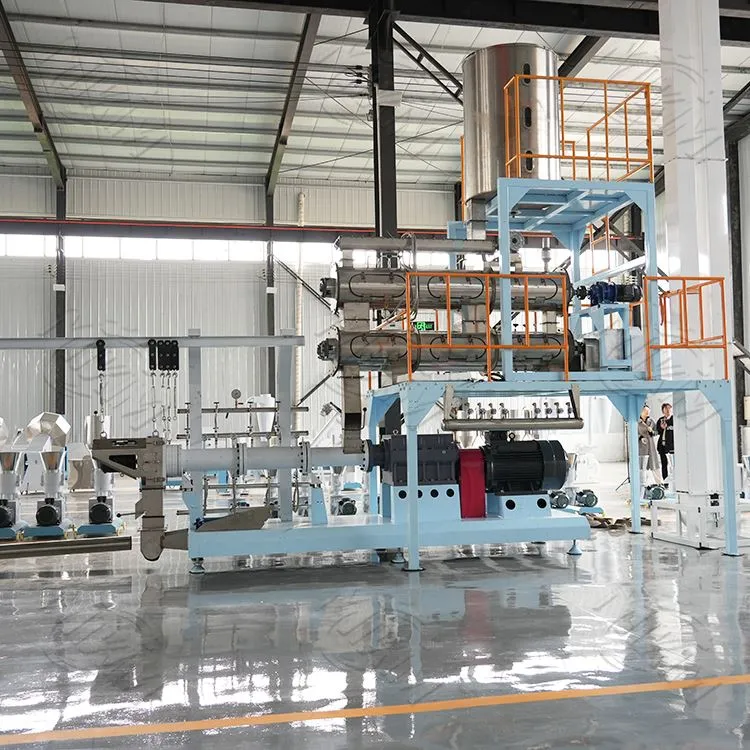


Multifunctional Fish Pellet Feed Machine
Production Capacity: 40–6,000 kg/h, depending on the model
Main Motor Power: 5.5–200 kW (customizable)
Voltage: 220V/380V/450V, 50/60 Hz (customizable according to local power supply)
Raw Materials: Grains, starch, meat, vitamins, minerals, and other additives
Description
What Is a Multifunctional Fish Pellet Feed Machine?
A Multifunctional Fish Pellet Feed Machine, also known as an aquafeed extruder, is industrial equipment that processes raw materials such as fish meal, soybean meal, and corn flour into nutritionally balanced pellets. It operates on the principle of high-temperature short-time (HTST) extrusion, achieving starch gelatinization rates above 90%. The resulting pellets can be formulated to float, sink, or slow-sink depending on the extrusion parameters and recipe.
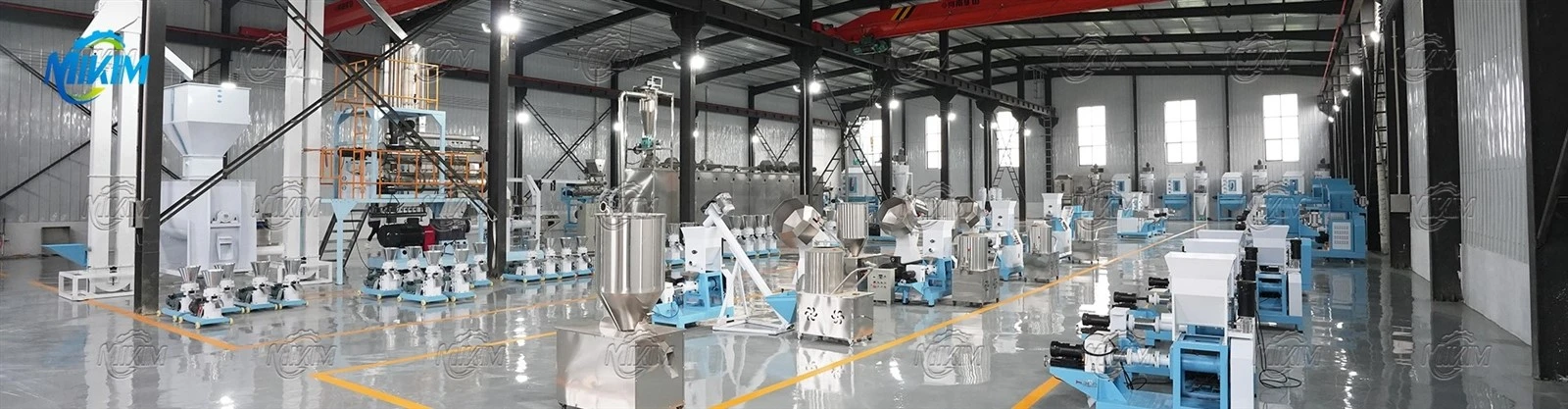
Our multifunctional fish feed extruder line covers capacities from 40 kg/h to 6,000 kg/h, enabling commercial farms and feed plants to produce premium floating, sinking, and slow-sinking pellets with a single machine platform.

Key Specifications
| Feature | Specification | Advantage |
|---|---|---|
| Capacity Range | 250 – 6,000 kg/h | Scales from small farms to commercial plants |
| Screw Material | 38CrMoAl (Nitriding treatment) | Wear-resistant; service life > 5,000 hours |
| Main Motor | Siemens / ABB (optional) | Stable power output; ~20% energy saving |
| Inverter | Schneider / Delta | Precise speed control |
| Starch Gelatinization | > 90% | 24h+ floating time; improved digestibility |
| Pellet Diameter | 0.5 mm – 9 mm+ | Covers fry, juvenile, and adult fish |
| Heating System | Electric or Steam-Assisted | Temperature accuracy ±1°C |
| Float Rate | 100% (with correct formulation) | Zero feed waste; better water quality |
| Pellet Shape | Uniform spherical / cylindrical | High marketability; easy ingestion |
1. One Platform, Three Feed Types
An aquatic feed pellet extruder is a complete thermal-mechanical processing unit. By precisely controlling the Specific Mechanical Energy (SME) and barrel temperature, operators can switch between feed types without changing the core machine.
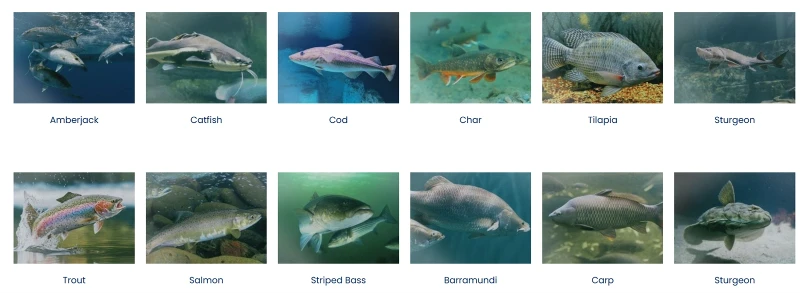
Floating Fish Feed
Floating pellets are designed for surface-feeding species such as tilapia, catfish, and carp. The extrusion process creates a porous internal structure that allows pellets to remain on the water surface for over 24 hours without dissolving, enabling farmers to monitor feeding behavior and reduce waste.
Sinking & Slow-Sinking Feed
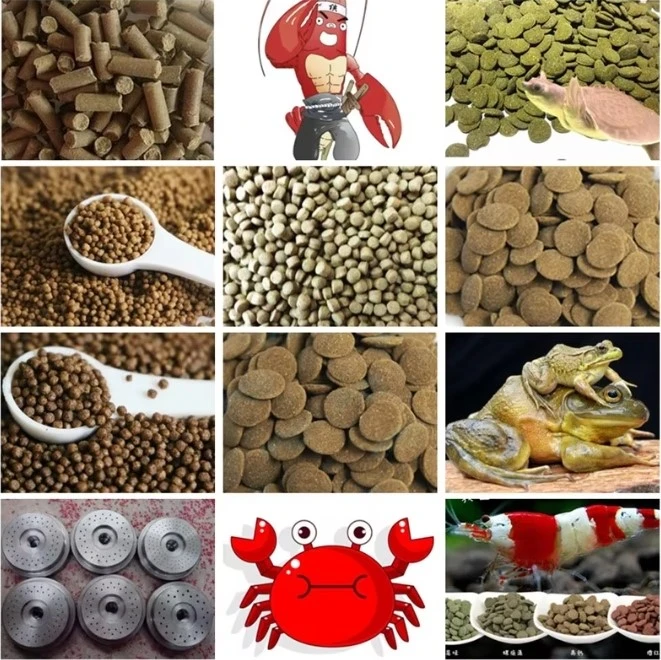
Sinking and slow-sinking pellets are ideal for shrimp, crab, and bottom-feeding species. High-density pellets are achieved by adjusting screw speed, moisture content, and reducing starch levels in the formulation.
Customizable Pellet Diameters
Replaceable dies allow production of pellets from 0.8 mm (fry/juvenile) to 12 mm+ (adult fish), covering the full growth cycle of most aquaculture species.
2. How an aquatic feed pellet making machine Works
- The extrusion process uses high-temperature, short-time (HTST) processing to preserve nutritional integrity while eliminating pathogens and anti-nutritional factors. The process consists of four stages:
- Conditioning: Ingredients are mixed with moisture and pre-heated to 60–80°C to initiate starch conversion.
- Compression & Shear: Inside the barrel, the screw subjects the material to intense pressure up to 40 bar and temperatures of 120–160°C.
- Expansion: As the material exits the die, the sudden pressure drop causes flash evaporation of moisture, creating the expanded porous structure characteristic of floating feed.
- Precision Cutting: A high-speed rotary cutter ensures each pellet has a consistent length-to-diameter ratio for uniform cooking and appearance.
3. Single-Screw vs. Twin-Screw Extruder: Which Do You Need?
Both configurations are available to match specific budget and production goals.
| Dimension | Single-Screw Extruder | Twin-Screw Extruder |
|---|---|---|
| Best For | Small to medium farms | Commercial feed plants |
| Cost | Lower initial investment | Higher initial investment |
| Mixing Quality | Standard | Superior (intermeshing screws) |
| Max Fat Content | ~8% oil | Up to 12% oil |
| Output Efficiency | Baseline | ~15% higher |
| Maintenance | Simple, lower cost | More complex |
| Recommended Capacity | < 500 kg/h | > 500 kg/h |
- Single-Screw floating fish food extruder machine: The most cost-effective solution for standard floating feed production. Easy to maintain and ideal for small to medium-scale farms.
- Twin screw floating fish feed pellet extruder machine: The gold standard for commercial feed plants. It offers superior mixing, handles high-fat formulations (up to 12% oil), and provides approximately 15% higher output efficiency.
4. Multifunctional Fish Pellet Feed Machine vs. Pellet Mill: What's the Difference?
A common question among new feed producers is whether to choose an extruder or a traditional pellet mill. The two machines operate on fundamentally different principles.
| Parameter | Aquatic feed pellet extruder | Pellet Mill |
|---|---|---|
| Processing Temperature | 120–160°C | 60–80°C |
| Starch Gelatinization | > 90% | 30–40% |
| Floating Feed Capability | Yes (floating, sinking, slow-sinking) | No (sinking only) |
| Pathogen Reduction | High (HTST sterilization) | Low |
| Digestibility | High (cooked starch) | Moderate |
| Energy Consumption | Higher | Lower |
| Suitable Formulations | High-starch, high-protein | High-fiber, low-starch |
| Pellet Water Stability | 24h+ | 2–4 hours |
| Capital Cost | Higher | Lower |
Key takeaway: If you need floating feed, high digestibility, or premium-quality pellets for commercial sale, an extruder is required. A pellet mill is sufficient only for basic sinking feed on small, low-budget operations.
5. How to Choose the Right Extruder Capacity
Selecting the correct capacity depends on your daily feed requirement and species.
| Daily Feed Requirement | Recommended Capacity | Configuration |
|---|---|---|
| < 5 tons/day | 100 – 300 kg/h | Single-screw, dry type |
| 5 – 20 tons/day | 500 – 1,000 kg/h | Single or twin-screw, wet type |
| > 20 tons/day | 1,500 – 2,000 kg/h | Twin-screw, wet type |
As a general rule, calculate your daily feed demand in tons, divide by your planned operating hours, and select a machine with 20–30% headroom for future expansion.
Not sure which machine to choose? Contact us for expert advice.
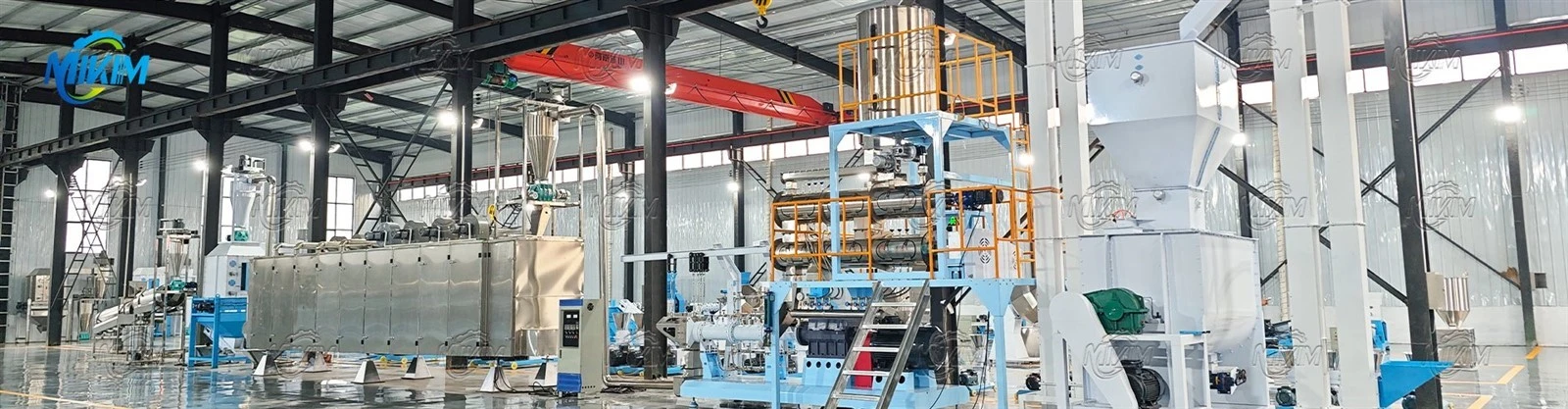
6. Complete Fish Feed Production Line
- For commercial operations, we provide a fully automated turn-key solution:
- Raw Material Grinding → Batch Mixing → Extrusion → Drying → Oil Coating → Cooling → Smart Packaging
- Integrated Oil Coater: Enhances pellet palatability and energy density post-extrusion.
- Multi-Layer Dryer: Reduces moisture to below 10% for a shelf life of 6–12 months.
- PLC Control System: Centralized monitoring of temperature, pressure, and motor load.

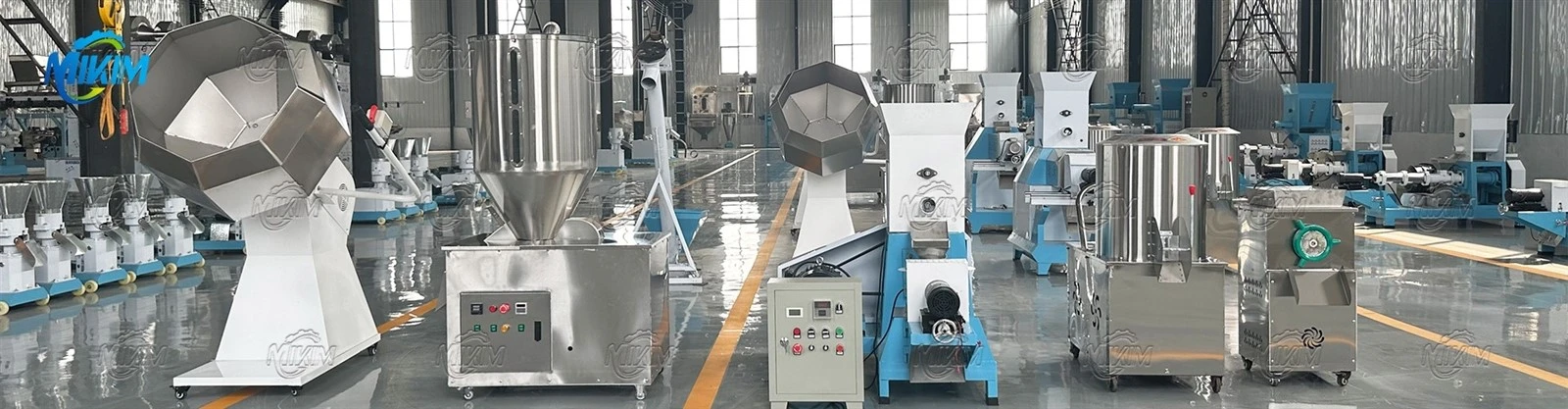
Our fish feed pellet production lines offer capacities ranging from 40 to 10,000 kg/h.Explore our complete fish feed extrusion lines and contact us for a customized turnkey solution based on your production requirements.
7. Common Floating aquatic feed pellet making machine Problems & Solutions
| Problem | Likely Cause | Solution |
|---|---|---|
| Pellets sink instead of float | Low barrel temperature; insufficient starch | Increase temperature to 130–150°C; increase starch to >25% |
| Machine clogs / material bridges | High moisture; low screw speed | Reduce moisture to 22–28%; increase screw RPM |
| Uneven pellet size | Worn cutter; blocked die holes | Replace cutter blades; clean die with cleaning compound |
| High motor current / overload | Die too small for capacity; excessive feed rate | Verify die specification; reduce feeder speed |
| Pellets crack / powder high | Moisture too low; rapid cooling | Increase conditioning moisture; slow cooling rate |
| Low output vs. rated | Worn screw/barrel; wrong die compression | Inspect screw wear; replace die with correct compression ratio |
8. FAQ
Can I produce both floating and sinking feed with the same Floating aquatic feed pellet extruder machine?
Yes. While the Floating aquatic feed pellet extruder machine is the same, you must adjust two variables: (1) extrusion parameters - lower temperature and higher moisture for sinking feed; (2) formulation - reduce starch and increase mineral density for sinking pellets. We provide a digital manual with specific setting charts for each feed type.
What is the best protein source for a Floating aquatic feed pellet maker machine?
Commonly used materials include fish meal, soybean meal, corn gluten meal, and corn flour. Our extruder is designed to handle high-fiber and high-protein blends without clogging. The optimal protein source depends on your target species and local ingredient availability.
Does the Aquatic feed pellet extruder require a steam boiler?
We offer two versions: Dry Type uses friction and electric heating and is ideal for capacities below 500 kg/h; Wet Type requires a steam boiler and is recommended for capacities above 500 kg/h to increase output and improve pellet quality.
What is the price range of a Aquatic feed pellet making machine?
Prices vary by capacity, configuration, and optional components. A 100 kg/h dry-type single-screw extruder starts from approximately USD 3,500, while a 2,000 kg/h twin-screw wet-type line can exceed USD 80,000. Contact our team for a detailed quotation based on your specific requirements.
How much electricity does a floating fish feed pellet extruder machine consume?
Power consumption depends on capacity: a 100 kg/h unit uses approximately 11–15 kW, a 500 kg/h unit uses 37–45 kW, and a 2,000 kg/h twin-screw unit uses 110–132 kW. Siemens/ABB motor options reduce energy consumption by approximately 20% compared to standard motors.
Can the machine process shrimp feed or pet food?
Yes. By adjusting the die, screw speed, and formulation, the same extruder can produce shrimp feed, crab feed, and even pet food (dog/cat kibble). twin-screw aquatic feed extruder machines are preferred for shrimp feed due to their superior mixing of high-mineral formulations.
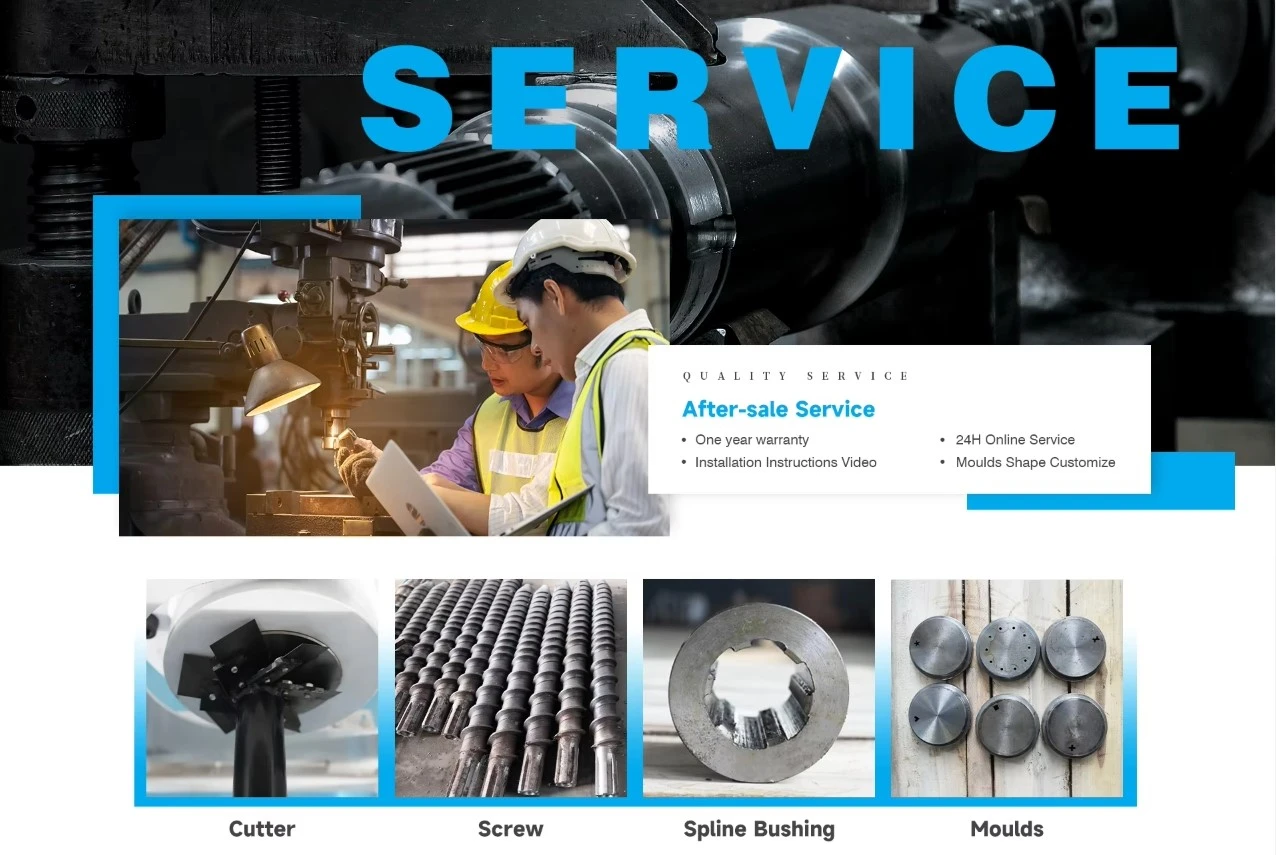
What is the warranty and after-sales service?
We provide a 12-month warranty on all main components, with local spare parts availability. Our engineering team offers 24/7 technical support via remote access, and on-site installation with staff training is available worldwide.
How long does installation and training take?
For a single extruder, installation and commissioning typically takes 3–5 days. A complete production line requires 7–15 days depending on line complexity. Training covers operation, maintenance, feed formulation, and troubleshooting.
9. About Our Engineering Team
We provide:
- Free Formulation Design: Nutritionists create cost-effective feed recipes based on your local ingredients.
- On-Site Installation: Engineers dispatched to your facility for setup and staff training.
- 12-Month Warranty: Full coverage on all main components with local spare parts availability.

Ready to Start Your Feed Production?
Contact our technical team today for a customized ROI analysis and a free machine quotation.
Request a Quote & Free Formula Support
Hot Tags: multifunctional fish pellet feed machine, China multifunctional fish pellet feed machine manufacturers, suppliers, factory, reliable fish feed making equipment, automatic aquaculture feed making equipment, commercial fish feed production machine, advanced fish pellet production machine, Fish Feed Extruder Machines, professional fish pellet shaping machine
Send Inquiry
You Might Also Like


