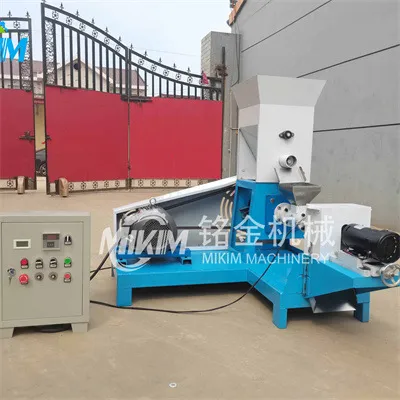
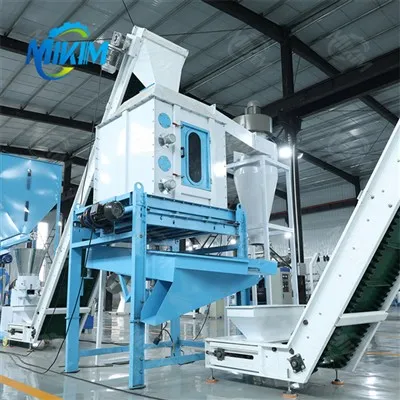
What dangers can arise from improper operation of a floating fish feed pellet machine?
Leave a message
The chain of risks arising from improper operation of floating fish food extruders manifests in four main aspects. First, unauthorized removal of protective devices: For ease of operation or quick cleaning, safety guards on the feed inlet, ring die, and other parts are removed without authorization. This not only directly increases the risk of mechanical injury but may also cause raw material splashing and dust pollution. Simultaneously, it reduces equipment stability, making parts prone to loosening and detachment, causing secondary injuries. Second, unauthorized overloading: Forcibly increasing the feeding speed to meet deadlines, exceeding the equipment's rated capacity, not only leads to motor overload and burnout or engine knocking but also reduces feed formation rate. Accumulation of substandard feed further increases cleaning difficulty, creating a vicious cycle of "overload - equipment failure - lower efficiency." Third, improper emergency handling: When equipment malfunctions such as jamming or abnormal noises, failing to shut down and disconnect power as required, and instead forcibly intervening with hands or tools, easily causes mechanical injury and may exacerbate the problem, increasing repair costs. Fourth, improper maintenance: Failure to change engine oil and clean filters as required leads to accelerated equipment wear, frequent power or electrical system failures, and indirectly causes safety accidents.
Standardized operation and prevention of chain risks require a comprehensive safeguard system built from three aspects: regulations, training, and supervision. At the regulatory level, establish comprehensive equipment operating procedures and safety management systems, clearly defining the entire process from pre-start inspections and in-operation monitoring to post-shutdown maintenance, and establishing clear penalties for violations. At the training level, provide systematic safety training to all operators, covering equipment structure, hazard identification, standardized operation, and emergency response. Only those who pass the training are allowed to work. Regular refresher training and emergency drills should be conducted to improve operators' safety awareness and emergency response capabilities. At the supervision level, appoint dedicated safety supervisors to oversee the entire equipment operation process and promptly correct any non-standard operating behaviors. Install operation monitoring devices on the floating fish feed pellet making machine to record the operation process for traceability and assessment. Furthermore, establish equipment operation and maintenance logs to record each operation, inspection, and repair in detail. Data analysis can help identify weaknesses in operation and facilitate targeted improvements and training. By implementing these measures, a large-scale aquaculture base increased the rate of standardized operation by its staff from 60% to 98%, reduced the equipment failure rate by 75%, and completely eliminated safety accidents caused by non-standard operation.
Related equipment
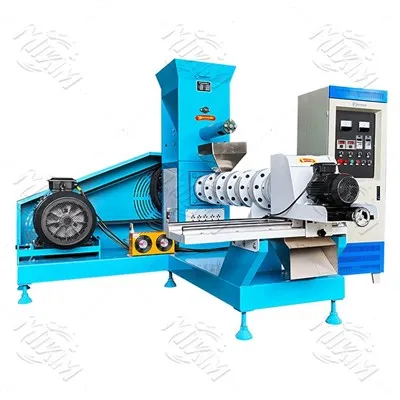

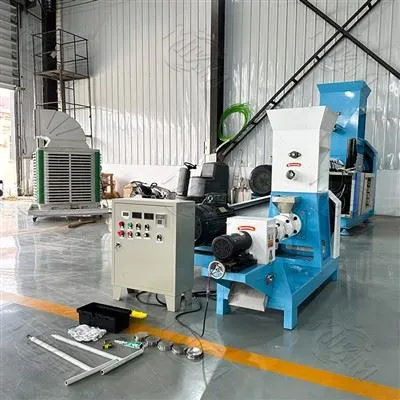

about Us
MIKIM's fish feed pellet production lines and supporting machinery offer excellent value for money. Not only are they affordable, eliminating middlemen markups and allowing small and medium-sized enterprises (SMEs) and fish farmers to purchase complete sets of equipment at reasonable costs, but they also boast exceptional efficiency. The fully automated process, from raw material crushing and precise ingredient mixing to extrusion pelleting and maturation, is completed in one continuous flow. This results in high starch gelatinization rates and uniform pellet formation, significantly improving production efficiency and feed quality, truly achieving "low cost, high output." Choosing a MIKIM fish feed pellet production line means enjoying comprehensive pre-sales and after-sales service, including 24-hour online customer support, a one-year warranty on the entire machine, professional on-site installation, commissioning, and maintenance, and a stable supply of spare parts. Customers can buy with confidence and use with peace of mind, with both excellent value and service quality!
Customer visit

Certificate of Honor

FAQ
1. What is the price of the small fish feed pellet extruder?
The price ranges from approximately $3,500-$55,000
2. Do you provide maintenance services for your customers?
Yes, we offer comprehensive after-sales maintenance services to our customers.
If you would like to learn more about MIKIM machinery, please contact us. We offer one-stop service and welcome your inquiries!!!