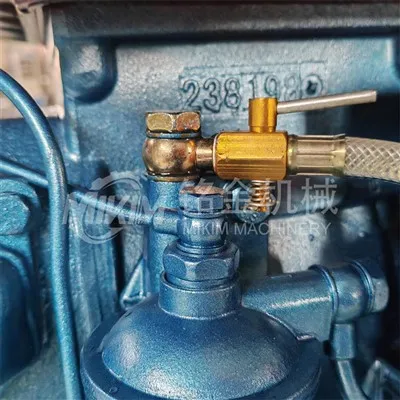
What are the tips and precautions for installing a fish feed processing line?
Leave a message
The installation of screw conveyors in fish food processing lines requires careful attention to sealing and tilt angle control. Screw conveyors are used for short-distance horizontal or inclined conveying. During installation, their axis must be coaxial with the equipment's inlet and outlet, with a deviation not exceeding 3mm. For horizontal installation, rubber gaskets must be installed at the connection between the conveyor and the equipment, and tightened with bolts to prevent material leakage. For inclined installation, the tilt angle should not exceed 45°, otherwise, material accumulation and blockage may occur inside the machine. After installation, a no-load test must be performed to observe whether the conveyor runs smoothly and without abnormal noise. Simultaneously, check for material leakage at the seals. If leakage is found, replace the gaskets or adjust the connection position.
The installation of bucket elevators in floating fish feed production lines is critical for verticality and tension adjustment. Bucket elevators are used for long-distance vertical conveying. During installation, a plumb line must be used to calibrate their verticality, with a verticality error not exceeding 1mm/m, to avoid collisions between the buckets and the machine casing during operation. The conveyor belt tension of the elevator must be moderate. Too loose a tension will cause the conveyor belt to slip, while too tight a tension will increase the motor load. Tension adjustment is achieved through the tensioning device at the top. After adjustment, the conveyor belt deflection should be controlled within 10-15mm. The connection between the hopper and the conveyor belt must be secure. Each hopper should be fitted with at least four bolts, and after tightening, spot welding should be applied to prevent loosening and hopper detachment during operation.
The connection of auxiliary equipment must match the process requirements. The connection between the conditioner and the pellet mill should use a flexible connection, employing canvas or rubber hoses, to prevent vibrations from the pellet mill from being transmitted to the conditioner and affecting the conditioning effect. The steam pipe of the conditioner should be equipped with a filter and a pressure regulating valve to ensure that the steam pressure is stable at 0.3-0.5MPa, avoiding pressure fluctuations that could lead to uneven conditioning of the raw materials. The connection between the cooler and the pellet mill must ensure smooth feed entry into the cooler. The height of the cooler's inlet should be lower than the pellet mill's outlet, and a guide plate should be installed at the connection point to prevent feed accumulation. The cooler's fan installation must ensure the correct airflow direction, large and stable air volume. After installation, the cooling effect must be tested to ensure that the feed temperature does not exceed room temperature +5℃ when it exits the cooler, and the moisture content is controlled below 12%.
Related equipment

about Us
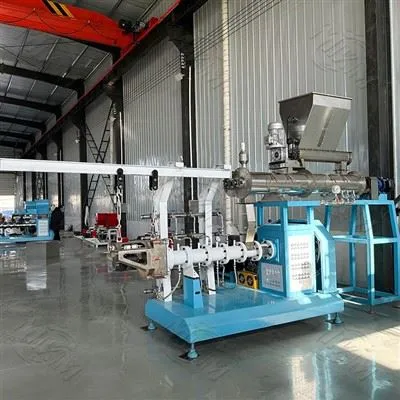
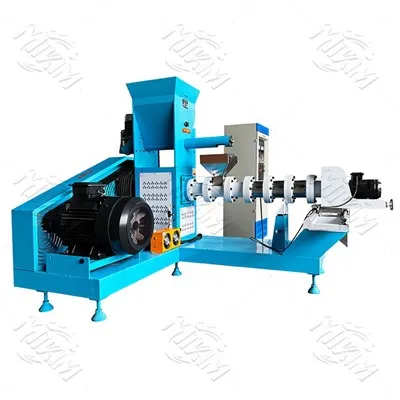
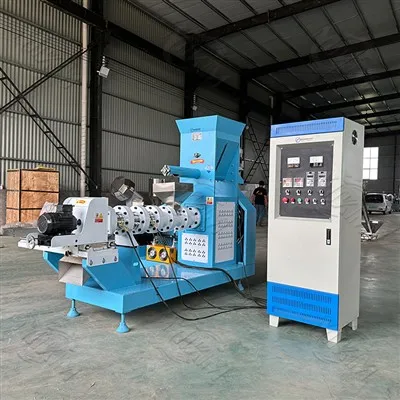
MIKIM's fish feed pellet production lines and supporting machinery offer excellent value for money. Not only are they affordable, eliminating middlemen markups and allowing small and medium-sized enterprises (SMEs) and fish farmers to purchase complete sets of equipment at reasonable costs, but they also boast exceptional efficiency. The fully automated process, from raw material crushing and precise ingredient mixing to extrusion pelleting and maturation, is completed in one continuous flow. This results in high starch gelatinization rates and uniform pellet formation, significantly improving production efficiency and feed quality, truly achieving "low cost, high output." Choosing a MIKIM fish feed pellet production line means enjoying comprehensive pre-sales and after-sales service, including 24-hour online customer support, a one-year warranty on the entire machine, professional on-site installation, commissioning, and maintenance, and a stable supply of spare parts. Customers can buy with confidence and use with peace of mind, with both excellent value and service quality!
Customer visit

Certificate of Honor

FAQ
1. What is the price of the fish feed pellet extruder?
The price ranges from approximately $3,500-$55,000
2. Do you provide maintenance services for your customers?
Yes, we offer comprehensive after-sales maintenance services to our customers.
If you would like to learn more about MIKIM machinery, please contact us. We offer one-stop service and welcome your inquiries!!!