


What is the installation process for a floating fish feed production line?
Leave a message
The electrical wiring of the fish food making production line must strictly adhere to the principles of "safety, standardization, and orderliness." First, cables must be protected using cable trays or conduits to prevent direct exposure to the ground or under equipment, thus avoiding crushing or corrosion. Cable trays must be installed at a height of at least 2.5 meters, and conduits must be made of galvanized steel with a bending radius of at least 10 times the conduit diameter to ensure smooth cable laying. Cables for equipment with different power ratings must be laid separately. The distance between high-voltage cables (such as crusher and granulator cables) and low-voltage cables (such as sensor and control system cables) should be at least 30 cm to avoid electromagnetic interference. Sufficient cable length must be reserved during wiring, with 1-1.5 meters reserved at the equipment end for easy maintenance and repair.
The installation of a grounding protection system for the fish feed making production line is crucial for safety. Each piece of equipment must have its own protective grounding wire, using copper core wire with a cross-sectional area of at least 4 mm² and a grounding resistance not exceeding 4Ω. High-power equipment such as pellet mills and crushers require repeated grounding. An additional grounding wire should be installed between the equipment base and the grounding electrode to ensure reliable grounding. The grounding of distribution boxes and control cabinets must be connected to the plant-wide grounding network to form a complete grounding system. After installation, a grounding resistance tester must be used to check the grounding resistance. If the resistance exceeds the standard, the number of grounding electrodes must be increased until the requirements are met.
The electrical system commissioning of the fish food pellet production line needs to be carried out in stages. The first stage is individual machine commissioning, connecting the power supply to each piece of equipment one by one and checking whether the motor rotation is correct. If the crusher motor rotates in the wrong direction, the power phase sequence must be changed promptly. Simultaneously, the sensitivity of the equipment's start-stop control and the effectiveness of safety devices such as limit switches and overload protection are tested. The second stage is integrated commissioning, starting the control system, simulating the production process, and testing the coordination between equipment. For example, the screw conveyor can only start after the crusher starts, and the conditioner cannot feed material when the pellet mill is not running, ensuring that each piece of equipment operates according to the process sequence. The third stage is load testing, which involves putting a small amount of raw materials into the production line to test the operation of the electrical system under load. Observe whether the voltage and current are stable, and whether there is any abnormal heating or abnormal noise. If the current is found to be excessive, it is necessary to check whether the equipment is stuck or overloaded.
Related equipment


about Us
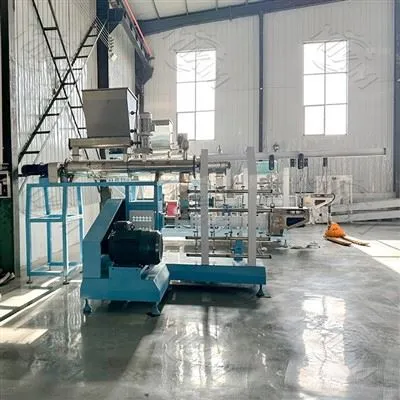
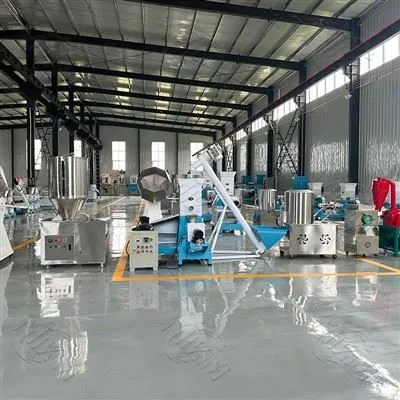
MIKIM's fish feed pellet production lines and supporting machinery offer excellent value for money. Not only are they affordable, eliminating middlemen markups and allowing small and medium-sized enterprises (SMEs) and fish farmers to purchase complete sets of equipment at reasonable costs, but they also boast exceptional efficiency. The fully automated process, from raw material crushing and precise ingredient mixing to extrusion pelleting and maturation, is completed in one continuous flow. This results in high starch gelatinization rates and uniform pellet formation, significantly improving production efficiency and feed quality, truly achieving "low cost, high output." Choosing a MIKIM fish feed pellet production line means enjoying comprehensive pre-sales and after-sales service, including 24-hour online customer support, a one-year warranty on the entire machine, professional on-site installation, commissioning, and maintenance, and a stable supply of spare parts. Customers can buy with confidence and use with peace of mind, with both excellent value and service quality!
Customer visit

Certificate of Honor

FAQ
1. What is the price of the fish feed pellet extruder?
The price ranges from approximately $3,500-$55,000
2. Do you provide maintenance services for your customers?
Yes, we offer comprehensive after-sales maintenance services to our customers.
If you would like to learn more about MIKIM machinery, please contact us. We offer one-stop service and welcome your inquiries!!!


