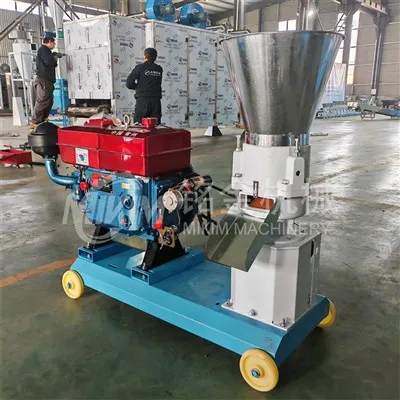
What problems might you encounter when using the Fish Feed Twin Screw Type Extruder?
Leave a message
The complexity of equipment operation is reflected in multiple aspects. The control system of a twin-screw floating fish feed extruder involves the coordinated adjustment of multiple parameters such as temperature, pressure, speed, and feed rate. These parameters vary significantly depending on the feed formulation (e.g., grass carp feed, bass feed, shrimp feed). Taking the processing of floating bass feed and sinking grass carp feed as examples, not only do the temperatures of different sections of the barrel need adjustment, but the screw speed and feed rate also need precise matching, which is difficult to master based on experience alone. During equipment operation, it is also necessary to monitor various data on the touch screen in real time, promptly identify and handle faults such as "abnormal temperature" and "excessive pressure." Improper operation may lead to a decline in feed quality or even equipment damage. In contrast, single-screw extruders are simple to operate, require fewer parameter adjustments, and can be trained by ordinary workers in 1-2 days.
The shortage of professional operators is becoming increasingly prominent. Currently, there is a severe shortage of personnel in the market who possess both knowledge of feed formulation and familiarity with twin-screw extruder operation. Such personnel need to master feed nutrition knowledge, understand the processing characteristics of different raw materials, be proficient in operating PLC control systems, be able to adjust equipment parameters according to feed quality, and also possess basic equipment maintenance capabilities. If companies want to cultivate such talent, they need to invest significant time and money in organizing professional training for employees, with training periods lasting 3-6 months. Recruiting externally not only involves high salary demands but also presents recruitment challenges.
Talent shortages directly lead to low equipment operating efficiency. Many companies, lacking specialized personnel, can only have ordinary workers operate the equipment in a basic manner, unable to accurately adjust parameters according to raw material characteristics and product requirements. This results in a 10%-15% drop in feed qualification rates and significant raw material waste. Some companies experience minor problems escalating into major malfunctions due to operators' inability to diagnose early equipment failures, leading to prolonged downtime and monthly losses exceeding ten thousand yuan. One feed mill, for example, suffered a 20,000 yuan repair cost and a 60-ton capacity loss due to a three-day downtime caused by an operator misjudging an abnormal pressure.
The professional skills of frontline maintenance personnel also need improvement. While modular maintenance of twin-screw floating fish feed extruder machines is convenient, it requires maintenance personnel to be familiar with the equipment structure, master the disassembly and installation techniques of components such as the screw and mold, and understand the working principles of the lubrication and cooling systems. Currently, most maintenance personnel are skilled in maintaining single-screw equipment but lack knowledge of maintaining twin-screw equipment, resulting in inadequate equipment maintenance, shortened lifespan of vulnerable parts, and increased equipment failure rate.
Related equipment


about Us
MIKIM's fish feed pellet production lines and supporting machinery offer excellent value for money. Not only are they affordable, eliminating middlemen markups and allowing small and medium-sized enterprises (SMEs) and fish farmers to purchase complete sets of equipment at reasonable costs, but they also boast exceptional efficiency. The fully automated process, from raw material crushing and precise ingredient mixing to extrusion pelleting and maturation, is completed in one continuous flow. This results in high starch gelatinization rates and uniform pellet formation, significantly improving production efficiency and feed quality, truly achieving "low cost, high output." Choosing a MIKIM fish feed pellet production line means enjoying comprehensive pre-sales and after-sales service, including 24-hour online customer support, a one-year warranty on the entire machine, professional on-site installation, commissioning, and maintenance, and a stable supply of spare parts. Customers can buy with confidence and use with peace of mind, with both excellent value and service quality!
Customer visit

Certificate of Honor

FAQ
1. What is the price of the fish pellet making machine?
The price ranges from approximately $3,500-$55,000
2. Do you provide maintenance services for your customers?
Yes, we offer comprehensive after-sales maintenance services to our customers.
If you would like to learn more about MIKIM machinery, please contact us. We offer one-stop service and welcome your inquiries!!!