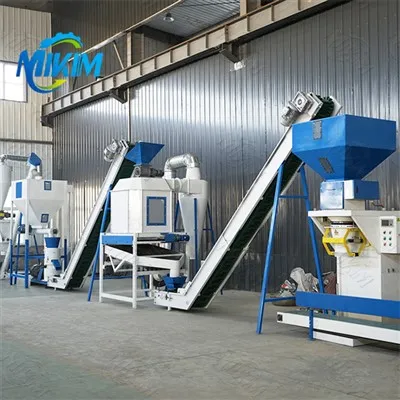
Twin-Screw Fish Feed Extruders: Costs and Problems
Leave a message
What a Twin-Screw Floating Fish Feed Extruder Offers
A twin-screw extruder uses two intermeshing screws instead of one, which gives it stronger mixing, more stable conveying and better control over cooking conditions than a single-screw machine. For floating fish feed, these advantages translate into higher starch gelatinization, more uniform expansion and greater flexibility with difficult raw materials. The same capabilities, however, come with a higher price in three areas: procurement cost, energy and maintenance cost, and raw material pre-treatment requirements. Understanding these problems before purchase is essential, because they decide whether the machine pays for itself in a given plant.
Problem 1: High Procurement Cost
The core components of a twin-screw extruder, such as the alloy screw and the tungsten-carbide die, are expensive because of their special materials and complex manufacturing. As a reference example, a twin-screw extruder with a capacity of about 5 tons per hour may cost 4-5 times as much as a single-screw machine of the same capacity. For a small feed mill or a startup with limited capital, this means a large initial investment and real financial risk. Some companies borrow to buy the machine, but the monthly repayment can strain working capital for years. Buyers should calculate the payback period against their actual production volume before committing.
Problem 2: Energy and Maintenance Costs
Twin-screw machines draw more power. Motor ratings commonly fall in the 55-160 kW range, and although energy per ton of output can be lower than a single-screw machine, total consumption is still high. A 10 t/h twin-screw extruder running 16 hours a day consumes about 1920 kWh per day; at an industrial electricity price of, for example, 0.8 yuan per kWh, that is about 1500 yuan a day and more than 40,000 yuan a month. Maintenance is the second burden. Wear parts last longer on a twin-screw machine, but when they fail, replacement is costly: an alloy screw set can cost several times the equivalent single-screw parts, and a tungsten-carbide die set is also expensive. Monthly maintenance on a medium line can run thousands of yuan more than on a comparable single-screw line. These figures vary by region, brand and duty cycle, so each plant should build its own cost model.
| Cost item | Reference example | Notes |
|---|---|---|
| Procurement (5 t/h twin-screw) | 4-5x a single-screw of same capacity | Alloy screw and carbide die drive the price |
| Motor power | 55-160 kW | Higher total consumption on long shifts |
| Daily energy (10 t/h, 16 h) | About 1920 kWh | At 0.8 yuan/kWh, about 1500 yuan/day |
| Wear parts | Screw and die sets are expensive | Longer life, but high replacement cost |
Problem 3: Stricter Raw Material Pre-Treatment
A twin-screw extruder is flexible about raw materials, but it is demanding about their preparation. Materials should be ground fine, for example to at least 80 mesh, and mixed with a uniformity above 95 percent, so that the two screws receive a consistent, homogeneous feed. Meeting these standards usually requires high-precision grinding and mixing equipment beyond what a basic feed plant already owns, adding to the initial investment. The pre-treatment stage also consumes extra energy and labor, which raises operating cost further. Plants should check their existing grinding and mixing capacity before budgeting for a twin-screw line.
How to Decide Whether It Fits Your Plant
Base the decision on numbers, not reputation. Estimate annual production volume, compare energy consumption between twin-screw and single-screw options for that volume, price the required pre-treatment equipment, and add realistic maintenance reserves. A twin-screw extruder is usually justified when the plant runs long shifts, processes varied or difficult formulas, and needs the high gelatinization that floating feed demands at scale. For small volumes or simple formulas, the lower cost of a single-screw machine often delivers a faster return. The right answer depends on the plant's own figures.
FAQ
Why is a twin-screw extruder so much more expensive?
The alloy screw and tungsten-carbide die are made from special materials with complex manufacturing, and the twin-screw design adds drive and control complexity, pushing the price well above a single-screw machine.
Are twin-screw machines more energy-hungry?
They consume more total electricity because motors commonly range from 55-160 kW, although energy per ton of output can be lower than single-screw machines at high utilization.
How expensive are the wear parts?
An alloy screw set and a tungsten-carbide die set are major cost items, and although they last longer than single-screw parts, the replacement bill is much higher when they do fail.
What pre-treatment do twin-screw extruders need?
Raw materials should be ground to at least about 80 mesh and mixed with uniformity above 95 percent, which often requires high-precision grinders and mixers in addition to existing equipment.
Is a twin-screw extruder worth it for a small feed mill?
Only if long shifts and difficult formulas justify the higher procurement, energy and maintenance costs. For small volumes, a single-screw machine often pays back faster.
How should I compare the two options?
Build a cost model with your own numbers: annual volume, energy consumption, pre-treatment equipment and maintenance reserves, then compare the payback period of each option.