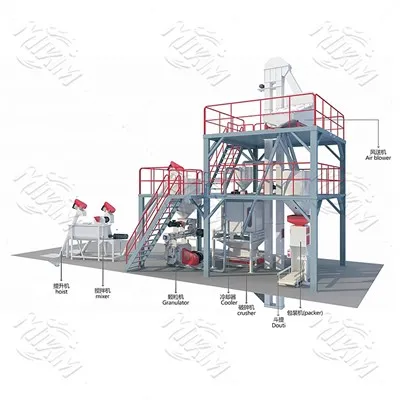
What sets an extruded aquatic feed pellet production line apart from a typical feed pellet production line
Leave a message
Core differences: Molding principle and core equipment
1. Animal extrusion production line (commonly known as a puffing production line)
Core principle: Similar to "making popcorn," the raw materials are heated and humidified in a conditioner, then enter the extruder and are pushed at high speed by the screw. Inside the machine, a pressure of 3-5 MPa and a temperature of 110-130℃ are created, causing the starch in the raw materials to gelatinize and generate gas. As the gas is extruded through the die, the pressure drops sharply, and the volume expands to form porous particles.
Key equipment: An extrusion puffing machine (the core components are the screw and sleeve), a coating machine (for aquatic feed), and a matching ultrafine pulverizer (the raw materials need to be pulverized to 0.8-1.2 mm) are required.


2. Feed Pellet Production Line (Conventional Pelletizing Production Line)
Core Principle: Similar to "pressing biscuits," the raw materials are mixed and directly fed into the pellet mill. Through the extrusion of the rollers and the die, the raw materials are forcibly pressed into the die holes to form the pellet. The process involves low temperature (85-90℃) and gentle pressure, relying solely on the adhesive properties of the raw materials themselves.
Key Equipment: The core is a ring die/flat die pellet mill (pressure rollers + die), paired with a standard pulverizer (for pulverizing raw materials to 1.5-2.0mm). No extruder or coating machine is required.

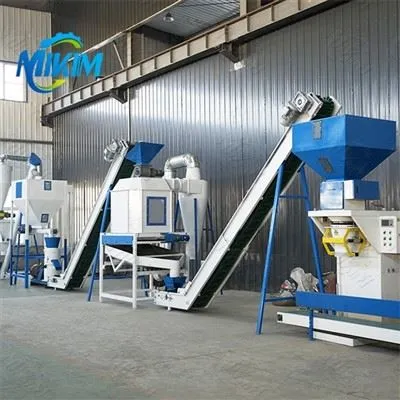


Both particle diagrams
Fish and shrimp feed production line finished product

Poultry feed pellet production line finished products

about Us
Customer visit

FAQ
1. What is the price of the fish feed making machine?
The price ranges from approximately $5,000-$55,000
2. Do you provide maintenance services for your customers?
Yes, we offer comprehensive after-sales maintenance services to our customers.