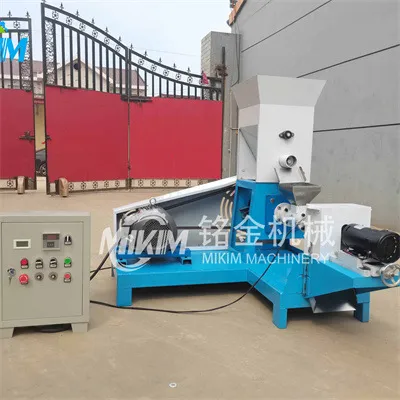
Why Is the Main Motor Current of My Small Fish Feed Pellet Mill Abnormal?
Mar 25, 2026
Leave a message
I. Typical symptoms of abnormal current in floating fish feed extruder machines
1. Excessive Current (High-Risk, Easy Shutdown)
Signals:
- Ammeter exceeds rated value or stays near the limit
- Motor overheating, strong vibration
- Possible tripping / overload shutdown
- Slower discharge, uneven density, burnt odor
Hidden Danger:
Sustained high current = pressure buildup → die blockage + equipment damage
2. Insufficient Current (Quiet but Costly)
Signals:
- Current far below rated value
- Motor runs smoothly but "underpowered"
- Low output, weak extrusion, poor puffing
Typical Scenario:
Seen in wet extrusion when moisture is too high → screw slips instead of pushing
3. Current Fluctuation (The "Ghost Problem")
Signals:
Current swings unpredictably
- Mild vibration + unstable noise
- Product quality inconsistent (density, shape, crispness)
Long-Term Impact:
Like a flickering heartbeat, it slowly wears out motors, screws, and gearboxes.
II. The root cause of abnormal current in cat feed extruder machine
1. Raw Material Issues (Over 60% of Cases)
- Moisture too high (>20%) → sticky mass → high resistance → high current
- Moisture too low (<10%) → poor flow → friction spike → high current
- Foreign objects (metal, stones) → sudden load surge
- Uneven feeding → current fluctuation or low current
Key Insight:
Material inconsistency = unstable load = unstable current
2. dog food pellet maker machine Component Failures
- Worn screw/barrel → backflow → higher load
- Bearing damage or poor lubrication → increased resistance
- Die blockage → pressure buildup → current surge
- Motor aging (coil/rotor issues) → unstable or excessive current
Pattern:
Mechanical wear quietly amplifies electrical stress.
3. Process & Operation Errors
- No proper preheating → poor plasticization → resistance spike
- Feeding too fast → chamber overload
- Temperature/pressure mismatch → unstable material flow
Golden Rule:
Bad process settings = instant current instability.
4. Electrical & Transmission Problems
- Voltage instability → fluctuating motor speed
- Loose belts / damaged couplings → uneven load transfer
- Poor wiring contact → abnormal signals
Often Overlooked:
Electrical issues mimic mechanical faults-don't skip this check.
III. Targeted Solutions
1. Solving the problem of excessive current in small fish feed extruder machine
- Reduce or stop feeding immediately
- Check and clean die blockage
- Adjust moisture to 12%–18%
- Remove impurities (install magnetic separator)
- Inspect screw, bearings, lubrication
- Stabilize voltage and wiring
2. Fixing Low Current
- Clear hopper blockage, stabilize feeding
- Reduce excessive moisture (dry materials)
- Check screw wear and adjust clearance (0.1–0.3 mm)
- Inspect motor condition
3. Eliminating Current Fluctuations
- Use variable-frequency feeding for stable input
- Tighten belts, align couplings
- Stabilize temperature (150–180℃) & pressure (0.3–0.5 MPa)
- Install voltage stabilizer
- Record current trends for early warning
IV. Floating fish feed making machine long-term prevention
1. Daily Monitoring
- Check current, voltage before startup
- Monitor real-time current during operation
- Stop immediately if abnormal spikes occur
2. Raw Material Control
- Moisture: 12%–18%
- Remove impurities before feeding
- Adjust parameters after material batch changes
3. Maintenance Strategy
- Weekly: inspect screw & barrel wear
- Monthly: calibrate clearance & sensors
- Quarterly: motor + electrical system inspection
- Continuous: proper lubrication schedule
V. Practical Insight: Turn Current into a Predictive Tool
- Instead of reacting to failures, use current trends as an early warning system:
- Rising trend → upcoming blockage
- Falling trend → feeding or screw inefficiency
- Fluctuating pattern → instability in process or transmission
Company Profile