Are You Familiar With The Operating Procedures For The Animal Floating Meal Extruder Line?
Leave a message
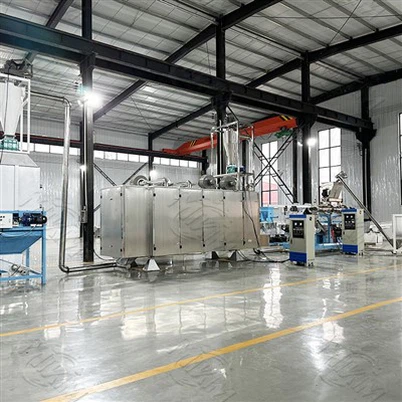
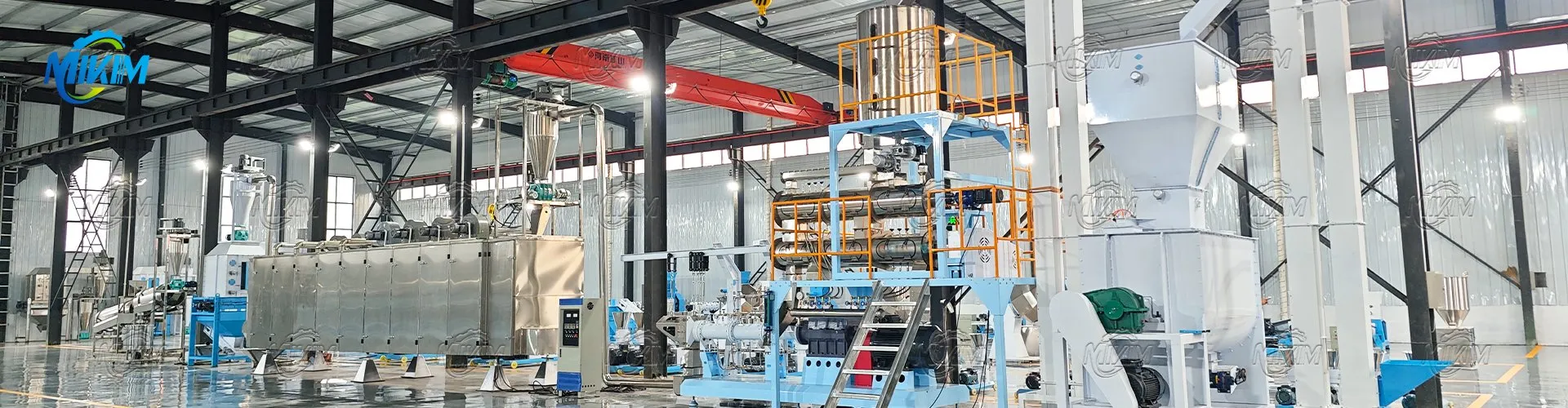
Pet food production lines differ drastically from livestock and poultry feed production lines. Many pet owners wonder, "Why are pet food pellets so plump and flavorful?" The answer lies in the meticulously designed production line process. Pet food production lines primarily use chicken meal, beef meal, and fresh fruits and vegetables as raw materials. The process encompasses raw material selection, low-temperature pretreatment, precise mixing, low-temperature extrusion, flavor coating, and cooling packaging. Each step revolves around "preserving nutrients and improving palatability," a stark contrast to the "high-efficiency mass production" logic of livestock and poultry feed.
The "low-temperature" approach in raw material selection and pretreatment is a hallmark of pet food. Livestock and poultry feed raw materials prioritize cost, while pet food raw materials undergo sensory inspection and component testing. After passing inspection, they are temporarily stored in a 0-4℃ cold storage to prevent meat spoilage. During pretreatment, meat is minced to 5-10mm, and fruits and vegetables are diced and then dried in a vacuum dryer at 60-70℃, preserving nutrients such as vitamin C and dietary fiber. This contrasts sharply with the high-temperature drying process used in livestock and poultry feed. Grain-free pet food production lines also incorporate colloid milling equipment to grind starchy raw materials such as potatoes and sweet potatoes to a finer mesh (80 mesh or finer), ensuring a smooth texture suitable for cats and dogs to digest.
The precision of the mixing and extrusion processes determines feed quality. Mixing employs a step-by-step mixing process: first, meat meal and starch raw materials are mixed for 2 minutes; then, oils and amino acids are added and mixed for 1 minute; finally, heat-sensitive ingredients such as probiotics and enzymes are added and mixed for 30 seconds, avoiding prolonged mixing that could lead to nutrient loss. Extrusion is the core of the pet food production line, using a twin-screw low-temperature extruder with the temperature strictly controlled between 85-95℃, 20-30℃ lower than livestock and poultry feed, ensuring a retention rate of over 90% for active ingredients such as taurine and Omega-3. The extruder's ring die can be changed according to pet breed: 2-3mm aperture for small dog food and 6-8mm aperture for large dog food. The pellet shape can also be adjusted to round, diamond, etc., through the die to enhance the pet's eating interest.
The "specialized" flavor coating and packaging processes are the finishing touches in pet food production. This is a step absent in livestock and poultry feed production lines. After extrusion, the feed is cooled to below 40°C, and then flavoring agents such as chicken essence oil and fish extract are sprayed onto the surface using specialized spraying equipment. The spraying amount is controlled at 1%-2%, giving the feed a natural meaty aroma. Some high-end pet foods undergo a second coating process, adding lecithin to enhance the gloss and texture of the pellets. Packaging utilizes a vacuum nitrogen-filling packaging machine, which vacuums the surface and then fills it with nitrogen, extending the shelf life to over 12 months and preventing feed oxidation and spoilage. The entire pet feed processing line is equipped with near-infrared detectors to monitor protein and fat content in real time, ensuring that each batch of feed meets the formulation requirements.
Why choose us?
The MIKIM extruder is constructed entirely of food-grade 304 stainless steel, fully complying with food processing hygiene standards. It is corrosion-resistant, easy to clean, and eliminates potential contamination at the source. The core screw is made of high-quality alloy steel through special heat treatment, offering outstanding wear resistance and corrosion resistance. Combined with its integrated structural design, this significantly extends its service life. The entire machine has passed CE and ISO international authoritative certifications, aligning with global quality standards and ensuring safer and more reliable processing.
Our equipment


Our Services
We offer:
One-Year Whole Machine Warranty Service
On-site Installation, Commissioning, and Technical Guidance
24/7 Online Technical Support
Qualifications and Honors

Customer visit

FAQ
1. What is the price of the floating pet feed production line?
The price ranges from approximately $7,500-$50,000
2. How do you deliver to customers?
MIKIM Machinery's machinery delivery follows a complete process of "customized preparation - safe and fast delivery - precise handover - after-sales extension", with 3-day fast delivery, multi-layer protective packaging, global logistics tracking and 1-year warranty + on-site technical service to ensure that the equipment is delivered efficiently and in good condition and put into use smoothly.