How Familiar Are You With The New Poultry Pellet Feed Production Line Process?
Leave a message
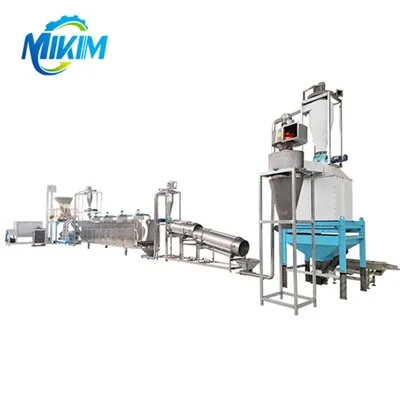
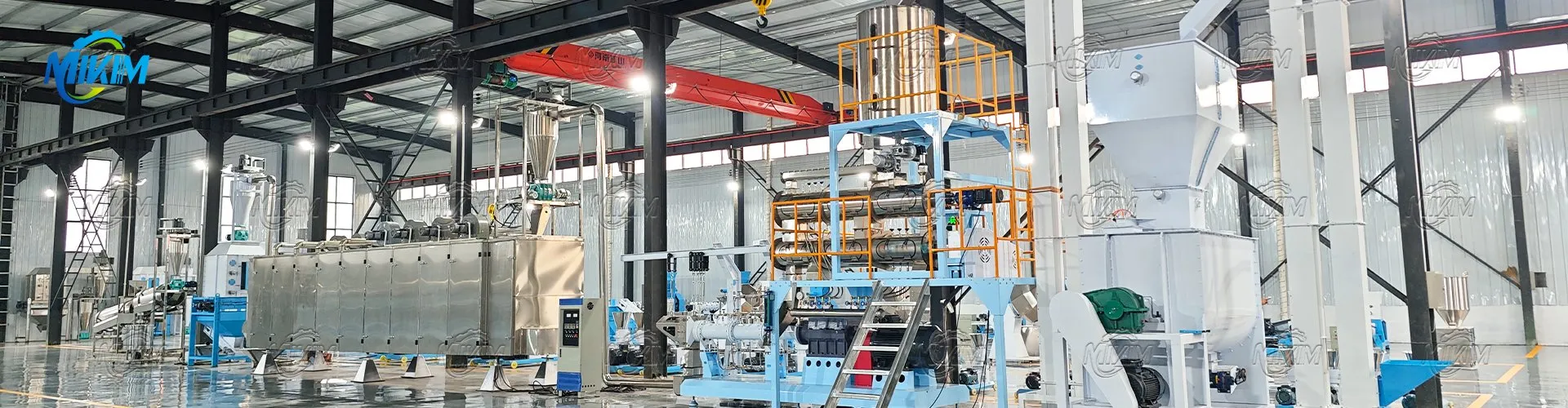
Poultry feed accounts for over 70% of farming costs, and the process flow of a chicken pellet feed production line directly impacts feed costs and farming efficiency. Many farmers know that extruded feed improves poultry digestibility, but they are unaware of the "high-efficiency" design logic behind its production line. The poultry extruded feed production line uses corn, soybean meal, and wheat bran as main raw materials. The process encompasses raw material cleaning, crushing and mixing, conditioning and extrusion, forming, and finished product packaging, achieving fully automated assembly line operation with an hourly capacity of 500-1000 kg, 2-3 times that of ordinary pelleting lines.
"Grading" in the raw material cleaning and crushing stages is key to improving efficiency. Corn is first peeled to remove husks, then passes through a drum cleaning screen to remove dirt and stones, achieving a 98% impurity removal rate. Soybean meal, with its high hardness, employs a two-step "coarse crushing + fine crushing" method: first, it is coarsely crushed to 20 mesh by a hammer mill, then finely crushed to 40-50 mesh by a roller mill, ensuring both crushing effectiveness and reduced energy consumption. Unlike fish and shrimp feed, poultry feed does not require ultra-fine grinding. A particle size of around 50 mesh is sufficient for digestion while reducing energy consumption during grinding, saving 15-20 yuan in electricity costs per ton of feed.
Continuous operation of the mixing and extrusion processes in the Nutritional Pellet Feed Production Line is the core of mass production. The batching system uses a compartmentalized batching system of "bulk raw materials + trace components." Bulk raw materials such as corn and soybean meal are conveyed to a large-volume batching silo via a screw conveyor, automatically weighed by an electronic scale, and then fed into a zero-gravity mixer. The mixing time is 3-4 minutes, ensuring uniform distribution of vitamins, minerals, and other components. The extruder uses a single-screw model, which is simple in structure, has high capacity, a screw speed of 200-250 r/min, and an extrusion temperature of 110-120℃, enabling rapid extrusion of raw materials. For chick feed, some raw materials require extrusion pretreatment to destroy anti-nutritional factors in soybeans and improve feed safety. This step involves adding dedicated extrusion pretreatment equipment to ensure that chicks are less likely to experience diarrhea after consuming the feed. The forming and packaging processes prioritize cost optimization. Extruded feed is compressed into 3-5mm pellets using a ring die pellet mill. The gap between the pressure roller and the ring die is controlled at 0.1-0.3mm to ensure a smooth pellet surface, minimizing powder loss and reducing feed waste. Cooling utilizes a combination of air and water cooling, reducing feed temperature to room temperature within 10 minutes, with moisture content controlled at 11%-12%.
Unqualified pellets are recycled back into the crusher via a return system, achieving a raw material utilization rate of over 99%. Packaging employs a fully automated packaging machine, sealing in 50kg bags. Equipped with a weight detection device, the error is no more than ±0.2kg. The machine automates sealing, labeling, and palletizing, requiring only 2-3 operators per production line, significantly reducing labor costs.
Why choose us?
The MIKIM extruder is constructed entirely of food-grade 304 stainless steel, fully complying with food processing hygiene standards. It is corrosion-resistant, easy to clean, and eliminates potential contamination at the source. The core screw is made of high-quality alloy steel through special heat treatment, offering outstanding wear resistance and corrosion resistance. Combined with its integrated structural design, this significantly extends its service life. The entire machine has passed CE and ISO international authoritative certifications, aligning with global quality standards and ensuring safer and more reliable processing.
Our equipment


Our Services
We offer:
One-Year Whole Machine Warranty Service
On-site Installation, Commissioning, and Technical Guidance
24/7 Online Technical Support
Qualifications and Honors

Customer visit

FAQ
1. What is the price of the Livestock feed complete equipment?
The price ranges from approximately $7,500-$50,000
2. How do you deliver to customers?
MIKIM Machinery's machinery delivery follows a complete process of "customized preparation - safe and fast delivery - precise handover - after-sales extension", with 3-day fast delivery, multi-layer protective packaging, global logistics tracking and 1-year warranty + on-site technical service to ensure that the equipment is delivered efficiently and in good condition and put into use smoothly.