

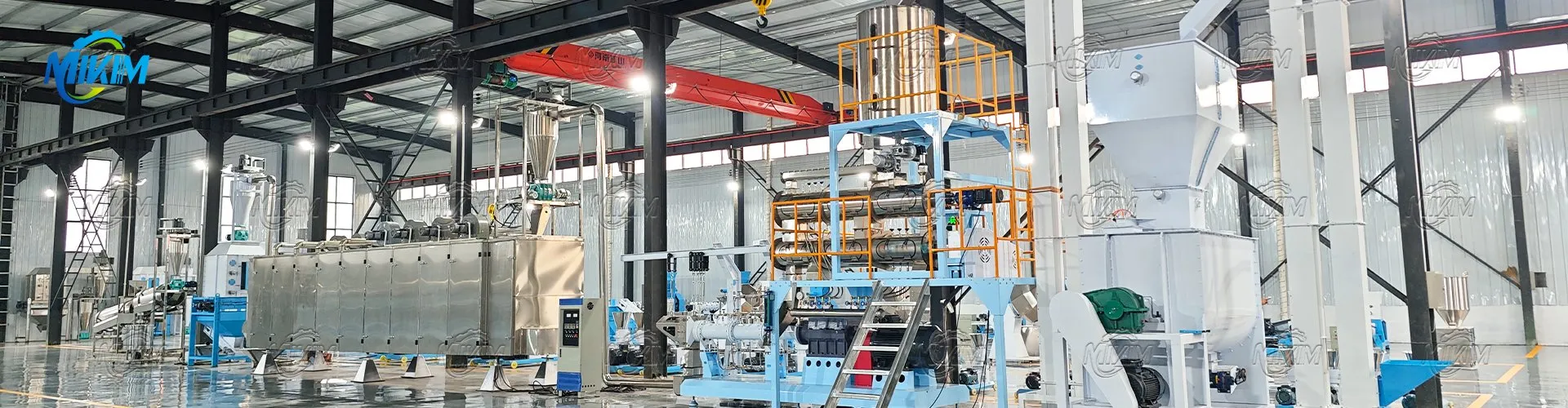
Best Practices For Using A Small Feed Pellet Machine.
Leave a message
Raw material pretreatment and equipment debugging are key to preventing blockages. Crush coarse fiber raw materials such as straw and alfalfa to below 50mm, mix them with corn and soybean meal in a 6:3:1 ratio, and add 1% cellulase and 0.5% bentonite to improve the material's flowability and binding properties. Before starting the extruder, check the feeding system to ensure that an electromagnetic vibrator (50Hz frequency) is installed at the feed inlet to prevent material bridging and blockage. Set the feeder speed to 180r/min and use a "small amount, multiple times" feeding mode to avoid feeding too much material at once. Simultaneously adjust the extruder parameters, reducing the screw speed to 180-200r/min to extend the residence time of the material in the barrel and ensure sufficient softening of the coarse fibers.
Operating techniques improve efficiency. Monitor the extruder load in real time, judging the operating status by the motor current. Normal current should be stable at 80%-90% of the rated value. If the current suddenly increases, immediately reduce the feed speed and check for blockages. For minor blockages, add 5-10 kg of corn flour to the feed inlet to facilitate its flow and clear the blockage. For severe blockages, immediately stop the machine and clean it using specialized tools; do not attempt to restart it. Adjust the extrusion temperature according to the characteristics of the raw materials: control the temperature at 115-120℃ for feeds primarily composed of corn stalks, and at 110-115℃ for feeds primarily composed of alfalfa, ensuring a crude fiber softening rate of over 85% to improve feed digestibility.
Extend equipment lifespan through maintenance. After each shutdown, rinse the screw, barrel, and ring die with a high-pressure water gun to remove residual crude fibers, then wipe them dry with a clean cloth to prevent wear caused by fiber entanglement. Inspect the wear-resistant coating of the screw and barrel weekly; if the coating peels off, promptly perform nitriding treatment to increase the hardness to HRC65 or higher. The ring die should be made of a high-wear-resistant alloy and rotated periodically during use to ensure even wear and extend its service life. Establish a raw material compatibility file to record the extrusion parameters corresponding to different coarse fiber raw materials.
For example, oat straw feed is compatible with an extrusion speed of 200 r/min and a temperature of 110℃, while corn stalk feed is compatible with an extrusion speed of 180 r/min and a temperature of 120℃, enabling precise control. In addition, operators need to undergo professional training to master the skills of diagnosing blockages and handling emergencies, thereby reducing losses from malfunctions.
Why choose us?
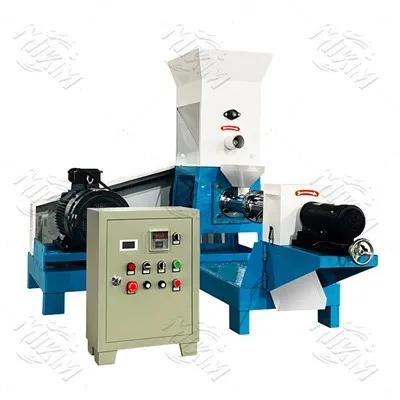
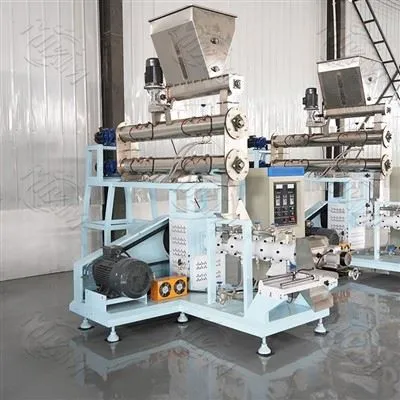
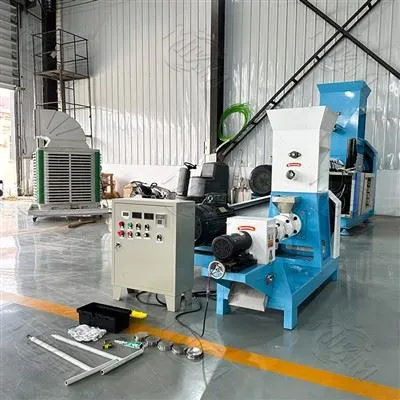
The MIKIM extruder is constructed entirely of food-grade 304 stainless steel, fully complying with food processing hygiene standards. It is corrosion-resistant, easy to clean, and eliminates potential contamination at the source. The core screw is made of high-quality alloy steel through special heat treatment, offering outstanding wear resistance and corrosion resistance. Combined with its integrated structural design, this significantly extends its service life. The entire machine has passed CE and ISO international authoritative certifications, aligning with global quality standards and ensuring safer and more reliable processing.
Our equipment

Our Services
We offer:
One-Year Whole Machine Warranty Service
On-site Installation, Commissioning, and Technical Guidance
24/7 Online Technical Support
Qualifications and Honors

Customer visit


